


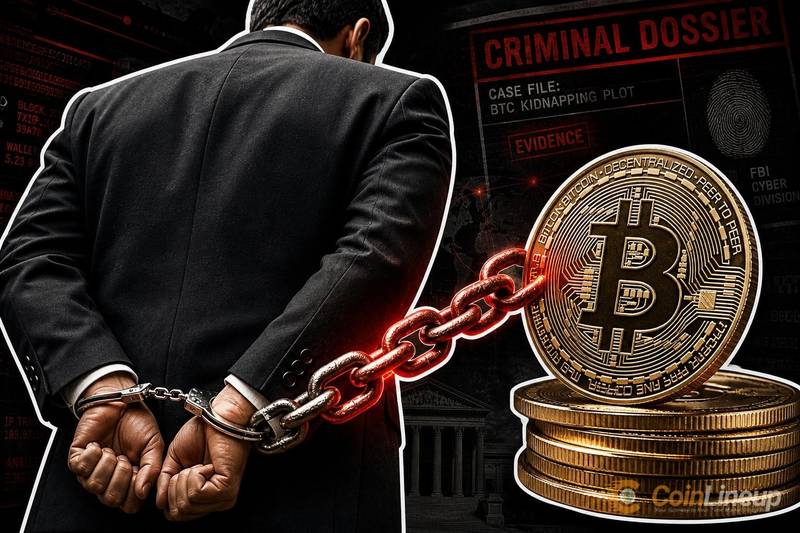
Saif Faiq, a 22-year-old Missouri man, pleaded guilty in Hartford federal court on June 8, 2026, to conspiracy charges tied to a Bitcoin kidnapping plot in Danbury, Connecticut, and now faces up to 20 years in prison.
Faiq admitted to one count of conspiracy to interfere with commerce by robbery, known as Hobbs Act robbery conspiracy, in connection with an attempted Bitcoin robbery and kidnapping that took place in Danbury in August 2024.
Federal prosecutors said Faiq recruited participants for the planned home invasion and kidnapping, traveled to Connecticut, coordinated with co-conspirator Adam Iza, and helped surveil the victims.
What Faiq Admitted and What Comes Next
The kidnapping plot was linked to the theft of 4,100 BTC, valued at roughly $245 million at the time, from a victim in Washington, D.C. Faiq’s role centered on organizing and executing the physical robbery attempt that followed the digital theft.
The charge carries a maximum prison term of 20 years. Sentencing is scheduled for August 28, 2026.
It is important to note that 20 years represents the statutory maximum, not a guaranteed outcome. The final sentence will depend on federal sentencing guidelines, the judge’s discretion, and any cooperation agreements.
Faiq has been in custody since his arrest on November 12, 2025. Co-conspirator Adam Iza pleaded guilty to the same Hobbs Act robbery conspiracy charge on June 1, 2026, and is scheduled for sentencing on August 12, 2026.
A Growing Pattern of Physical Crypto Crime
The case highlights the physical dangers that increasingly accompany large cryptocurrency holdings. Unlike the digital exploits that have hit NFT platforms, this scheme involved real-world violence, including kidnapping and home invasion, to seize Bitcoin from its owners.
The FBI New Haven Violent Crimes Task Force, FBI Los Angeles, FBI St. Louis, and the Danbury Police Department investigated the case. The multi-agency response reflects how seriously federal law enforcement treats crypto-motivated violent crime.
For crypto holders, the prosecution sends a clear message: federal authorities are applying traditional violent crime statutes, like the Hobbs Act, to cryptocurrency robbery schemes. As regulators worldwide tighten oversight of digital assets, enforcement actions against crypto-linked violent crime are also intensifying.
Bitcoin was trading near $62,543 at the time of publication, down about 1.65% over 24 hours, with the Fear & Greed Index sitting at 10, indicating extreme fear in the market.
At current prices, the 4,100 BTC stolen in the underlying heist would be worth approximately $256 million. The case underscores why the crypto industry continues to push for clearer regulatory frameworks that address both digital security and the physical safety risks tied to holding significant amounts of cryptocurrency.
Faiq’s sentencing on August 28 will be closely watched as one of the most significant federal prosecutions involving a violent crypto robbery scheme in recent years.
Disclaimer: This article is for informational purposes only and does not constitute financial or investment advice. Cryptocurrency and digital asset markets carry significant risk. Always do your own research before making decisions.

About the author


Saif Faiq Pleads Guilty in Bitcoin Kidnapping Plot, Faces Up to 20 Years
Saif Faiq pleads guilty in a Bitcoin kidnapping plot case and could face up to 20 years in prison. Here is what the plea means and what comes next.

Strategy Buys 1,550 Bitcoin as Cash Reserve Tops $1B
Strategy purchased 1,550 Bitcoin for $101.3 million, marking another treasury move as its cash reserve reaches the $1 billion milestone.
Strategy Buys 1,550 BTC for $101.3M, Holdings Reach 845,256 BTC
Strategy bought 1,550 BTC for $101.3 million, lifting its total bitcoin holdings to 845,256 BTC as the company extends its treasury strategy.
Spot BTC, ETH, SOL ETFs See Outflows as XRP, HYPE Gain
Spot BTC, ETH and SOL ETFs posted weekly net outflows, while XRP and HYPE ETFs attracted inflows. Here is what the split says about current crypto market positioning.

Judge Stays Lawsuit Over Ownership of Nearly 40,000 Dormant Bitcoin
A New York Supreme Court judge has stayed a lawsuit tied to the ownership of nearly 40,000 dormant Bitcoin, shifting focus to the legal dispute and next steps.

Strategy CEO Says Company Plans to Grow Bitcoin and Bitcoin Per Share
Strategy’s CEO says the company wants to grow both its Bitcoin holdings and Bitcoin per share over time. Here’s the core message, why it matters, and what investors may watch next.
Related
Strategy Buys 1,550 Bitcoin as Cash Reserve Tops $1B
Strategy purchased 1,550 Bitcoin for $101.3 million, marking another treasury move as its cash reserve reaches the $1 billion milestone.
Strategy Buys 1,550 BTC for $101.3M, Holdings Reach 845,256 BTC
Strategy bought 1,550 BTC for $101.3 million, lifting its total bitcoin holdings to 845,256 BTC as the company extends its treasury strategy.
Judge Stays Lawsuit Over Ownership of Nearly 40,000 Dormant Bitcoin
A New York Supreme Court judge has stayed a lawsuit tied to the ownership of nearly 40,000 dormant Bitcoin, shifting focus to the legal dispute and next steps.
Strategy CEO Says Company Plans to Grow Bitcoin and Bitcoin Per Share
Strategy’s CEO says the company wants to grow both its Bitcoin holdings and Bitcoin per share over time. Here’s the core message, why it matters, and what investors may watch next.

US Bitcoin ETFs See $4.4B in Outflows During Record 13-Day Streak
US Bitcoin ETFs logged $4.4 billion in outflows across a record 13-day streak. Explore the scale, what drove the selling, and what it signals for Bitcoin.

BlackRock’s IBIT Leads Bitcoin ETF Outflows as BTC Price Slides
BlackRock's IBIT led Bitcoin ETFs back into outflows as BTC fell. Here's the market context, what drove the reversal, and what traders should watch next.