



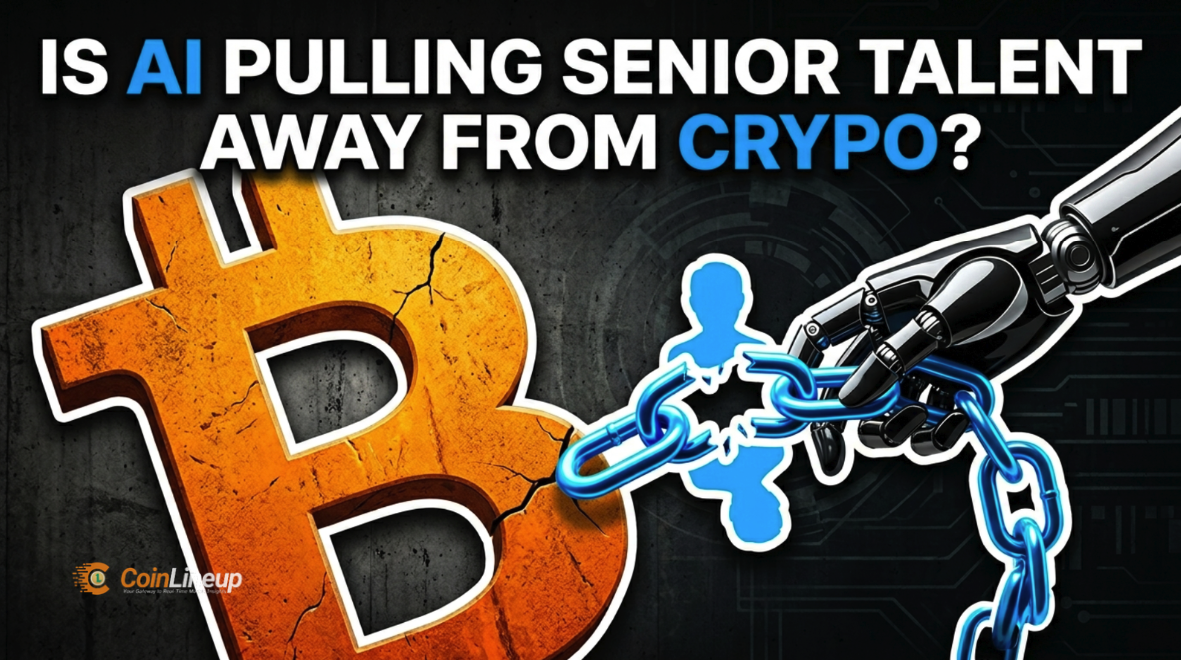
The crypto market has not broken, even as more senior operators and engineers spend time in AI instead of crypto. But does that mean crypto is losing its strongest builders, or is the market simply becoming more selective?
That is the real question behind the recent debate over AI talent leaving crypto. It is easy to frame the shift as a broad exodus. The harder and more useful question is whether AI is draining the people who matter most: the senior contributors who shape product direction, ship infrastructure, raise capital, and keep technical execution on track.
This analysis looks at the data behind crypto vs AI talent rotation, what it means for crypto developer activity, which parts of the market remain resilient, and what investors should monitor next.
Quick Take
The short version is that AI is clearly winning more attention, capital, and hiring urgency than crypto right now. But that does not automatically mean crypto is collapsing as a builder ecosystem.
Three things can be true at once:
- AI vs crypto funding is now heavily skewed toward AI.
- Crypto has become more selective, especially for new entrants and weaker teams.
- Experienced builders still appear more resilient than headline narratives suggest.
That distinction matters. If senior talent rotation is concentrated in cross-functional, research-heavy, or infrastructure-adjacent roles, crypto may face real strategic pressure without suffering a total breakdown in developer activity.
Table of Contents
What “Talent Rotation to AI” Actually Means
This is not the same as a full crypto exodus
When people ask whether AI is taking talent from crypto, they often imagine a sector-wide collapse in conviction. That is too simplistic.
What is happening looks more like a reallocation of attention, prestige, compensation, and founder ambition. AI currently offers a stronger mix of institutional demand, venture backing, media legitimacy, and enterprise adoption. That pulls in exactly the kind of people who can move across sectors: senior engineers, product leads, research talent, and operators who are not tied to one ideological stack.
That does not mean the entire crypto labor base is disappearing. It means the competition for elite builders is getting tougher.
Which roles are most exposed
The roles most exposed to the shift are not generic junior software positions. They are the people closest to strategic leverage:
- product leaders
- research engineers
- applied AI engineers
- forward-deployed engineers
- infrastructure builders working near model deployment, agents, and data systems
These people are valuable because they can turn ambiguous technical momentum into products, revenue, or adoption. When AI firms are raising capital aggressively and shipping faster, those profiles become easier to attract away from crypto.
Why the senior layer matters most
This is why senior rotation matters more than raw headcount loss.
A team can still show commits, contributors, and roadmap activity while quietly losing decision-making depth. When senior people leave, the immediate damage is often not visible in a single metric. It shows up later in slower product cycles, weaker coordination, and thinner execution under pressure.
That is the real risk behind the crypto developers moving to AI narrative.
The Data Behind the Shift
AI funding vs crypto funding
If you want to understand why AI is attracting more senior talent, start with capital.
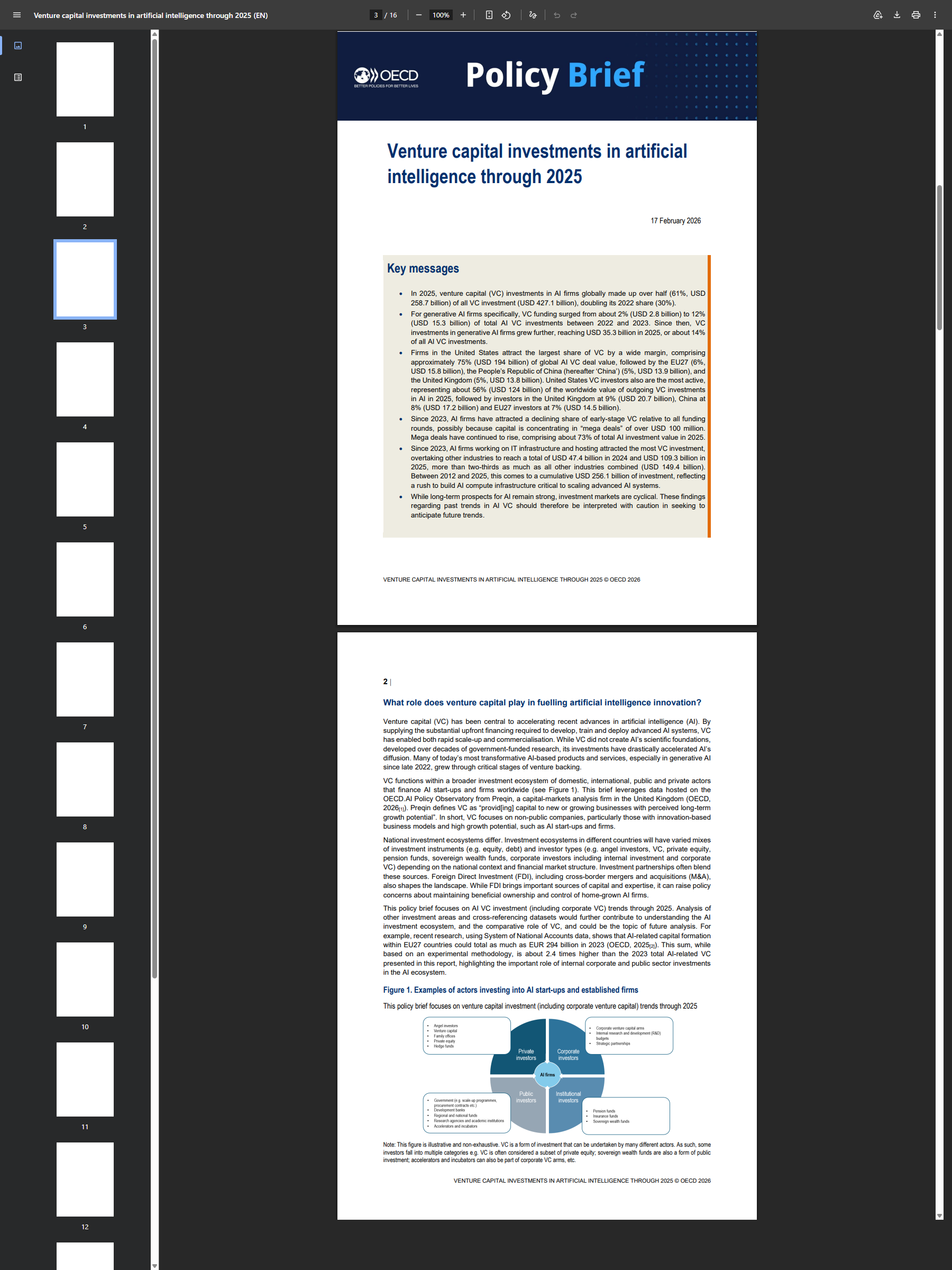
The OECD’s February 2026 report on venture capital investments in AI found that global VC investment in AI firms reached $258.7 billion in 2025, accounting for 61% of all global VC investment. The same report says VC investment in generative AI firms alone reached $35.3 billion in 2025.
The Stanford AI Index 2026 reinforces the same direction. Its economy chapter says global corporate AI investment more than doubled in 2025, while U.S. private AI investment reached nearly $285.9 billion. Stanford also highlights how concentrated that spending has become around large-scale compute, model development, and AI infrastructure.
Crypto, by comparison, is recovering, but from a much smaller base. According to Galaxy’s Q4 2025 crypto venture report, more than $20 billion was invested in crypto and blockchain startups in 2025, the largest annual total since 2022. That is a meaningful rebound. It is also nowhere near the scale of AI capital formation.
That gap matters because capital shapes compensation, hiring confidence, founder ambition, and the willingness of senior people to switch sectors.
Crypto developer activity is changing, not disappearing
The more bearish version of the story would say AI is draining crypto’s developer base so aggressively that the sector is structurally weakening. The data does not fully support that.
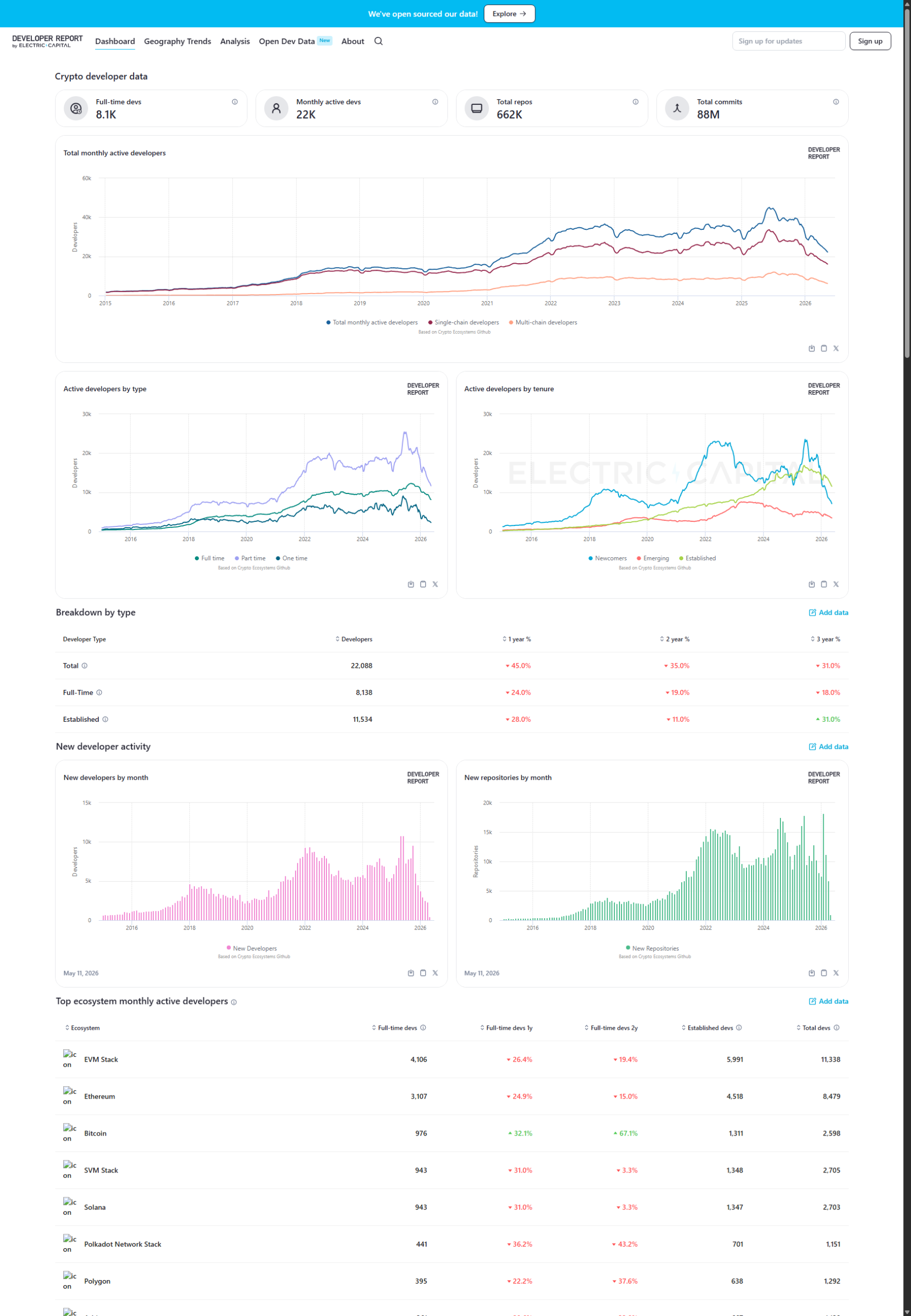
Electric Capital’s Developer Report platform remains one of the most widely cited sources on open-source crypto builder activity. Its methodology matters because it tracks code contributions across millions of repositories and distinguishes between different kinds of contributors instead of treating all activity as interchangeable.
A useful summary came from CoinDesk’s December 2024 coverage of the annual Electric Capital report, which said crypto’s monthly active developer count stood at 23,613 in November 2024, with the total developer base down a statistically insignificant 7% year over year. The same report said experienced contributors remained relatively stable while newer entrants were more likely to leave.
That is the most important nuance in the entire debate. Crypto developer activity is not disappearing. It is becoming more selective. The fragile layer is the newcomer layer, not necessarily the experienced core.
So if you are looking for crypto developer activity 2026 signals, the better framework is not “growth or collapse.” It is “which contributors are staying, and which types of teams are still shipping.”
Hiring growth explains why AI is attracting more senior talent
Funding is not just about valuation optics. It creates labor-market pull.
The OECD report shows that AI investment is increasingly concentrated in large rounds and infrastructure-heavy segments. That naturally favors teams building models, tooling, data platforms, compute infrastructure, and enterprise-facing AI systems. Those teams tend to need senior technical and product talent immediately, not just speculative community growth.
In other words, AI is not merely more fashionable. It is offering clearer near-term hiring logic.
That is a stronger magnet for senior people than a generic narrative about innovation. If you are an experienced operator deciding where to spend the next three years, a sector with deeper capital pools, clearer enterprise demand, and faster product monetization will often look more attractive than a sector still sorting out post-cycle discipline.
Why Crypto Has Not Broken Despite the Shift
Experienced contributors still matter more than raw headcount
Crypto has not broken because experienced builders still matter more than absolute top-line contributor counts.
A smaller but more seasoned builder base can still support major protocols, core infrastructure, settlement layers, security tooling, wallets, and exchange connectivity. That matters far more than inflated counts driven by short-lived narrative cycles.
If anything, a more selective builder environment may improve signal quality. It can force capital and talent to concentrate around projects that have real product-market fit, recurring usage, or durable infrastructure value.
Core crypto use cases remain sticky
Some of crypto’s most important use cases are not dependent on social hype:
- settlement
- stablecoins
- payments
- composability
- tokenization rails
These are not the easiest categories to meme into relevance, but they are the categories most likely to survive talent pressure if the remaining teams are competent.
CoinLineup has already covered some of these stickier areas directly, especially in pieces on stablecoin infrastructure, cross-border stablecoin payments, and self-custodial USDC spending tools.
That is one reason crypto markets can hold up better than the most bearish talent headlines imply. The sector is no longer being judged only as a frontier ideology trade. In some areas, it is increasingly judged as infrastructure.
Some crypto sectors look more resilient than others
The market is not equally exposed.
The areas that look more resilient under talent competition are the ones tied to real throughput, institutional demand, or hard infrastructure:
- Bitcoin infrastructure
- stablecoins and payments
- exchange and custody rails
- tokenization and real-world asset infrastructure
The areas that look weaker are usually the ones where differentiation is thin, token incentives do most of the work, and execution risk is already high.
That infrastructure-heavy reading fits CoinLineup’s earlier reporting on tokenized credit and loan products, RWA funding initiatives, and exchange-led tokenization experiments.
Agentic AI may still create a bridge back to crypto
This is where the story gets more interesting than a simple zero-sum fight between sectors.
The rise of agents, autonomous workflows, and AI-native software raises questions around payments, auditability, wallet logic, machine identity, and programmable settlement. Those are areas where crypto can still matter.
That does not mean every token suddenly becomes relevant because agentic ai news is hot. It means some of the infrastructure questions created by AI may still point back to crypto rails, especially when systems need open settlement, traceable ownership, or machine-native payments.
So while AI may be pulling talent away from crypto in the short run, it may also create new reasons for crypto infrastructure to remain strategically useful.
Where the Risk Is Real
Narrative risk can pressure markets before fundamentals break
One reason this theme matters is that narrative damage usually arrives before hard fundamentals visibly break.
Repeated stories about AI pulling the best people away from crypto can weigh on valuations, founder psychology, hiring confidence, and media framing even when core usage remains stable.
That makes talent rotation a real market variable, not just an HR story.
Early-stage crypto projects face real execution risk
The weakest part of the market is probably not Bitcoin, stablecoin rails, or exchange infrastructure. It is the long tail of small crypto teams that already struggled to differentiate.
When senior operators split focus or leave entirely, early-stage teams lose more than output. They lose prioritization, fundraising credibility, hiring leverage, and strategic clarity.
That is where the execution risk from AI talent leaving crypto becomes concrete.
Funding pressure will hit weaker teams first
The Galaxy report suggests crypto funding improved in 2025, but the mix has shifted. Capital is more concentrated, later-stage deals matter more, and investors are less willing to spray money indiscriminately across speculative stories.
That environment is survivable for strong teams. It is much harder for thin-roadmap tokens and narrative-first startups.
You can see that selection effect in CoinLineup’s own coverage of large infrastructure raises and capital flowing into scaling and network-usage plays.

What Investors and Builders Should Watch Next
Developer retention and shipping velocity
The best signal is not social noise. It is whether the most important teams keep shipping on time.
Monitor:
- retention of senior contributors
- roadmap execution
- release cadence
- ecosystem tooling depth
- whether infrastructure teams continue attracting long-term builders
If crypto can maintain strategic velocity with a more selective developer base, the market may prove more resilient than the current narrative assumes.
AI infrastructure and capital allocation
The bigger AI story is not just consumer hype. It is infrastructure.
Both the OECD and Stanford reports show that AI capital is increasingly flowing toward compute, hosting, model builders, and enterprise-scale deployment. That matters more than social virality because it affects the kinds of jobs that get funded and the kinds of senior people who are most in demand.
So when reading AI infrastructure news, the key question for crypto investors is not whether AI is exciting. It clearly is. The better question is whether AI’s infrastructure buildout is creating a long-term funding gap that crypto teams cannot match.
Open-source AI and crypto-native opportunities
There is also a more constructive possibility.
If open-source AI becomes cheaper, more modular, and easier to deploy, crypto-native teams may be able to stay relevant without matching the closed-model giants dollar for dollar. That is one reason open source ai news matters here. It may reduce the advantage of the most heavily funded incumbents and leave more room for smaller, crypto-adjacent teams to build useful systems.
Regulation and policy risk
Policy matters because it affects startup formation, compliance costs, and where talent chooses to build.
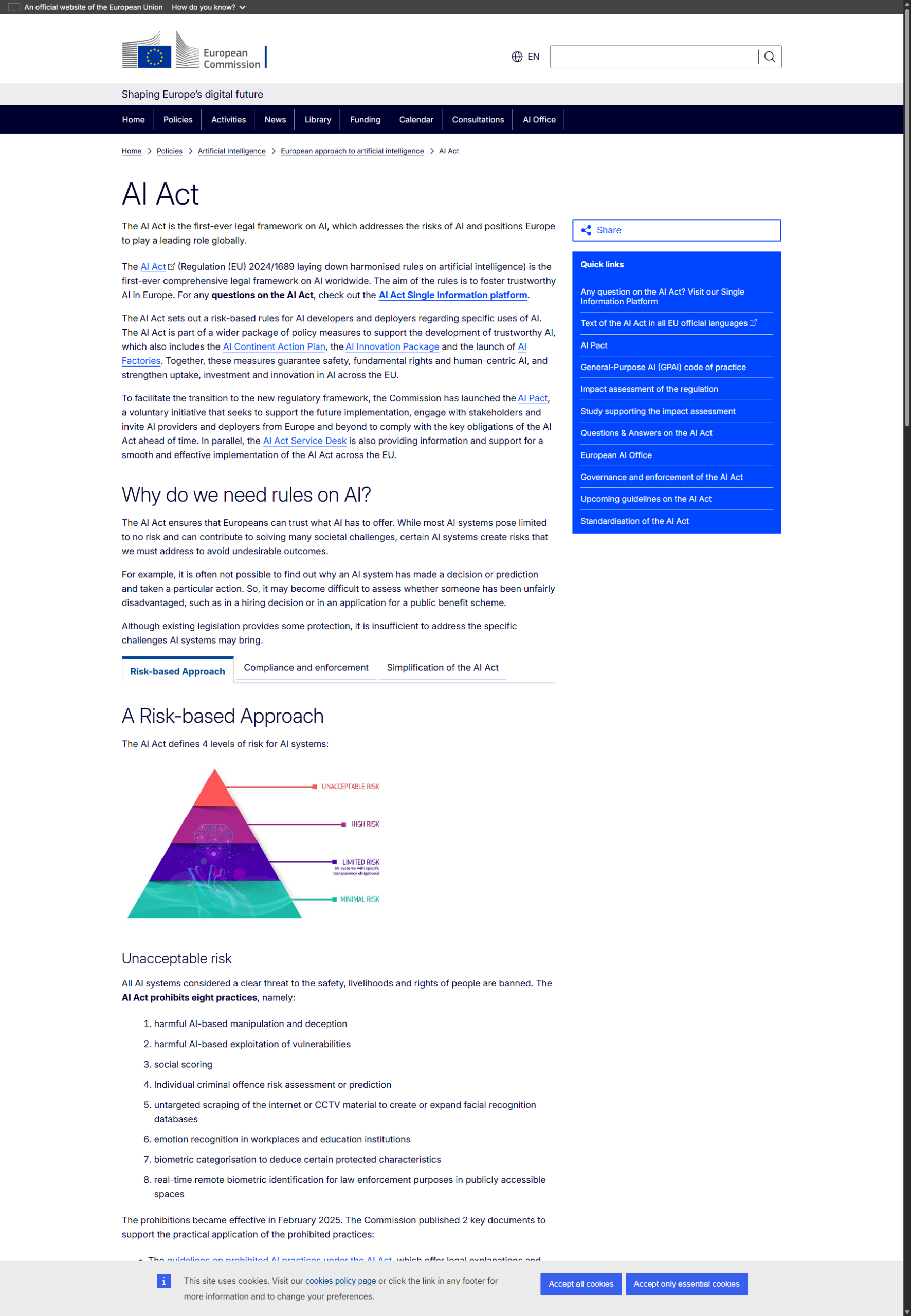
The European Commission’s AI Act overview says the Act entered into force on 1 August 2024 and will become fully applicable on 2 August 2026, with some rules phased in earlier and some high-risk system obligations pushed further out. That timeline matters because ai regulation news increasingly shapes where startups, capital, and top technical talent decide to cluster.
For crypto, the implication is indirect but important: if AI regulation raises barriers in some regions while concentrating capital in others, it could change the geography of new company formation and technical hiring across both sectors.
CoinLineup’s View
The more important question is whether crypto’s remaining builder base is becoming stronger, more specialized, and more durable. Right now, that looks more plausible than the collapse narrative suggests. A smaller but more experienced builder pool may still be enough to support the most valuable parts of crypto, especially where the product is infrastructure rather than pure speculation.
That does not make the risk fake. It just changes where the risk actually sits.
The biggest threat is not that every serious builder leaves crypto at once. It is that the weakest projects lose strategic depth, the middle tier loses momentum, and only the highest-quality infrastructure and payments layers keep compounding.
If that is the outcome, then talent rotation will matter less as a sector-wide death sentence and more as a filter that separates durable crypto businesses from the rest.
Conclusion
AI is attracting senior talent at a meaningful rate. The funding gap is real, the hiring pull is real, and the prestige gap is real.
But crypto has not broken because of it.
The evidence so far suggests that crypto is under genuine competition for builders, yet the impact is uneven. Experienced contributors remain more resilient than newer entrants, and the parts of crypto tied to settlement, stablecoins, exchange rails, and tokenization look far sturdier than thin-roadmap narrative plays.
The takeaway for investors is straightforward: focus less on panic headlines and more on builder quality, funding durability, and execution strength. If crypto keeps its best infrastructure teams and continues shipping in the sectors that already have sticky demand, the market may stay more resilient than the talent-rotation narrative implies.
Methodology
This article combines source reporting with CoinLineup-style editorial interpretation. The goal is not to claim that AI is replacing crypto wholesale, but to test whether the strongest available data supports that conclusion.
Data check date: May 18, 2026.
Disclaimer: CoinLineup.com provides cryptocurrency and financial market information for educational and informational purposes only. The content on this site does not constitute financial, investment, or trading advice. Cryptocurrency and stock markets involve significant risk, and past performance is not indicative of future results. Always conduct your own research and consult a qualified financial advisor before making any investment decisions.


About the author


Iran Eyes Bitcoin Ship Insurance for Strait of Hormuz
Iran is reportedly considering a Bitcoin-based insurance model for ships passing through the Strait of Hormuz. Here is the core proposal, why it matters and what to watch.

Bitcoin Will Never Reach Exactly 21 Million BTC
Bitcoin's hard cap is slightly below 21,000,000 BTC because block rewards are paid in whole satoshis. Here's how the rounding works and why it matters.

HYPE ETFs Post 2026’s Strongest Altcoin Debut
HYPE ETFs opened with the strongest altcoin ETF debut of 2026. The next question is whether sustained inflows can confirm long-term market demand.

VanEck and Grayscale Update SEC Filings for BNB ETFs
VanEck and Grayscale have updated SEC filings tied to BNB ETFs. Here is what changed, why the filings matter, and what crypto investors should watch next.

THORChain Exploit Triggers Emergency Chain Halt
THORChain halted its chain after an exploit, raising urgent questions about validator response, user impact, and the protocol's next recovery steps.
US Bitcoin ETFs Lose $1B as Inflation Fears Trigger Outflows
US Bitcoin ETFs saw $1 billion in outflows as inflation fears flipped fund flows negative. This outline covers the reversal, its drivers, and what investors watch next.
Related

Bitmine Adds 71,672 ETH, Treasury Reaches 5.28M ETH
Bitmine added 71,672 ETH in one week, raising its Ethereum treasury to 5.28 million ETH. Here is the key context, scale, and market angle.

Patrick Witt Says Clarity Act Could Aid Crypto Industry
White House crypto advisor Patrick Witt says passing the Clarity Act could help the crypto industry. Here is the key context, market relevance, and what to watch next.
Aave WETH LTV Restored Across Affected V3 Markets
Aave says WETH loan-to-value ratios are back to pre-incident levels across affected V3 deployments. Here is what changed and what users should know now.
HYPE ETFs Post 2026’s Strongest Altcoin Debut
HYPE ETFs opened with the strongest altcoin ETF debut of 2026. The next question is whether sustained inflows can confirm long-term market demand.

DOJ Charges Dream Market Admin Over Crypto-to-Gold Laundering
The DOJ has charged an alleged Dream Market admin in a case centered on laundering cryptocurrency into gold. Here is the legal and market angle to cover.

Dubai crypto scam raid leads to 276 arrests
Dubai Police, the FBI, and Chinese authorities dismantled nine crypto scam centers in Dubai, with 276 arrests tied to investment fraud schemes worldwide.