


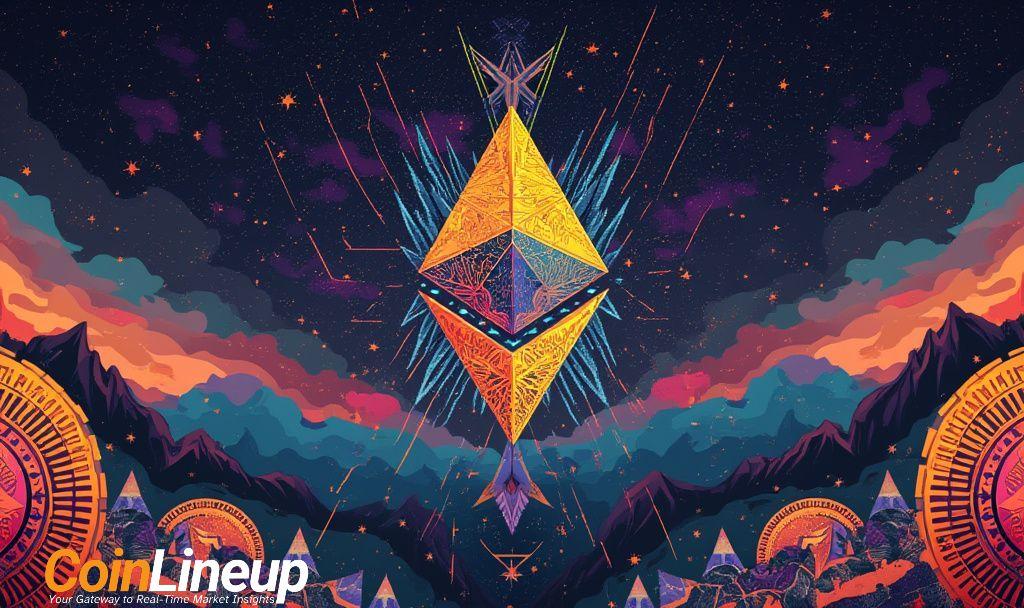
- Ethereum’s major protocol upgrade targets scalability and staking efficiency.
- Raises validator balance cap significantly.
- Enhanced infrastructure for Layer-2 solutions.
In a significant move for the cryptocurrency ecosystem, Ethereum implemented the Pectra upgrade on May 7, 2025, aimed at enhancing staking capabilities and Layer-2 scalability.
As Ethereum continues its development path, the Pectra upgrade offers significant implications for network efficiency and institutional staking, with muted immediate market reaction.
Ethereum’s latest Pectra upgrade focuses on increasing scaling efficiency and modifying staking protocols. Rollouts were led by Ethereum’s core developer team, involving critical figures like Vitalik Buterin. Core developers and open-source contributors coordinated closely throughout the integration process. The core changes include a substantial increase in the maximum effective staking balance per validator, paving the way for more efficient institutional involvement. By raising this cap, the changes potentially streamline operations and reduce costs for larger validators.
“Pectra enables institutional staking and unleashes a new phase for Ethereum scalability and L2 ecosystems.” — Tim Beiko, Ethereum Foundation.
The Pectra upgrade impacts the Ethereum network and its users by enhancing transaction efficiency and scalability for Layer-2 solutions. Such adjustments boost data handling capacity, benefitting rollup protocols like Arbitrum and Optimism. This adjustment has critical implications for financial strategies, as it brings institutional validators into a more favorable economic environment. Although the market’s short-term response was muted due to previous anticipation, the long-term effects on ETH and Layer-2 tokens are noteworthy.
Initial data post-upgrade highlights broader validator activity and more pronounced institutional engagement. Increasing validator consolidation suggests a more robust staking structure. This scenario aligns with historical trends seen in previous network upgrades where scalability enhancements led to strengthened fundamentals. While the direct financial impact remains subdued, the groundwork laid by Pectra signals a positive trajectory for Ethereum’s scaling ambitions and institutional acceptance. Ethereum’s roadmap towards future improvements indicates a focus on consistent advancements, spotlighting the upcoming Fusaka upgrade planned for later in 2025. This move reaffirms Ethereum’s drive to maintain its market leadership through innovative and practical enhancements.


About the author


AI Key to Web3 Competitiveness, Says Gate CEO
Gate.io's CEO Dr. Han states AI will drive Web3's future, enhancing usability and integration.

Binance Initiates First Alpha Box Airdrop Event
Binance launches Alpha Box airdrop, starting at 18:00 UTC, requiring 242 points minimum.

Hong Kong SFC Introduces New Virtual Asset Regulations
Hong Kong's Securities and Futures Commission, led by CEO Julia Leung Fung-yee, announced new virtual asset regulations at Consensus 2026, introducing margin financing and perpetual contracts for select investors.

European Parliament Endorses Digital Euro With Dual Functionality
Pasquale Tridico and 48 EU lawmakers led the February 10, 2026 move in the European Parliament to endorse a digital euro proposal with online and offline capabilities.

Galaxy Digital CEO Predicts Decline in Cryptocurrency Speculation
Galaxy Digital's Mike Novogratz anticipates a shift from speculative to institutional investments in cryptocurrency.
Crypto.com CEO Acquires AI.com for $70 Million in Crypto
Crypto.com CEO Kris Marszalek acquired AI.com for $70 million in cryptocurrency. Unverified claims of a subsequent $500 million offer arise.
Related
Key Takeaways: What factors drive cryptocurrency market movements?How do regulatory announcements affect digital asset prices?What should investors consider before entering crypto markets?Are there risks specific to digital asset investments?How can investors stay informed about market developments? Coinlineup Editorial TeamThis article was prepared and reviewed by the Coinlineup editorial team using public market data, blockchain sources, and industry reports to ensure transparent coverage of cryptocurrency markets. Investment DisclaimerThe information on Coinlineup is provided for informational and educational purposes only and should not be considered financial or investment advice. Cryptocurrency markets are highly volatile and involve significant risk. Readers should conduct their own research (DYOR) and consult a qualified financial advisor before making investment decisions. Content Disclaimer · Terms · Privacy · Affiliate

Oil Surges as US-Iran Tensions Rise, IEA Taps Reserves
Oil prices jump as US-Iran conflict intensifies; IEA approves strategic reserve release to stabilize supply. Market impact analysis.

BlackRock Ethereum Staking ETF Hits $15.5M on Day One
BlackRock launched ETHB, a new Ethereum ETF that earns staking rewards like interest. It traded $15.5 million on day one with $106.7 million in assets.

Whale Opens 20x Oil Short on Hyperliquid With $5.6M USDC at Risk
A crypto whale deposited 5.6 million USDC into Hyperliquid to short crude oil with 20x leverage. Here is what it means and why the last oil short lost $1.55M.
Khamenei’s Wife Status Unverified After February 2026 Reports
Reports surfaced in February 2026 regarding Mansoureh Khojasteh Bagherzadeh, wife of Ayatollah Ali Khamenei. Iranian state media has not confirmed her status.

Bitcoin draws scrutiny as Tether touts 550M USDT users
Tether's claim of a 550M USDT user base faces review as analysts compare on-chain activity to off-chain wallets for Bitcoin; methods and risks outlined.