


Key Takeaways:
- Supreme Court restricts IEEPA use for broad, emergency-based tariff actions.
- Trump pivots, plans executive order imposing a 10% global import tariff.
- He denounces ruling, cites Trade Act Section 122 as alternative authority.
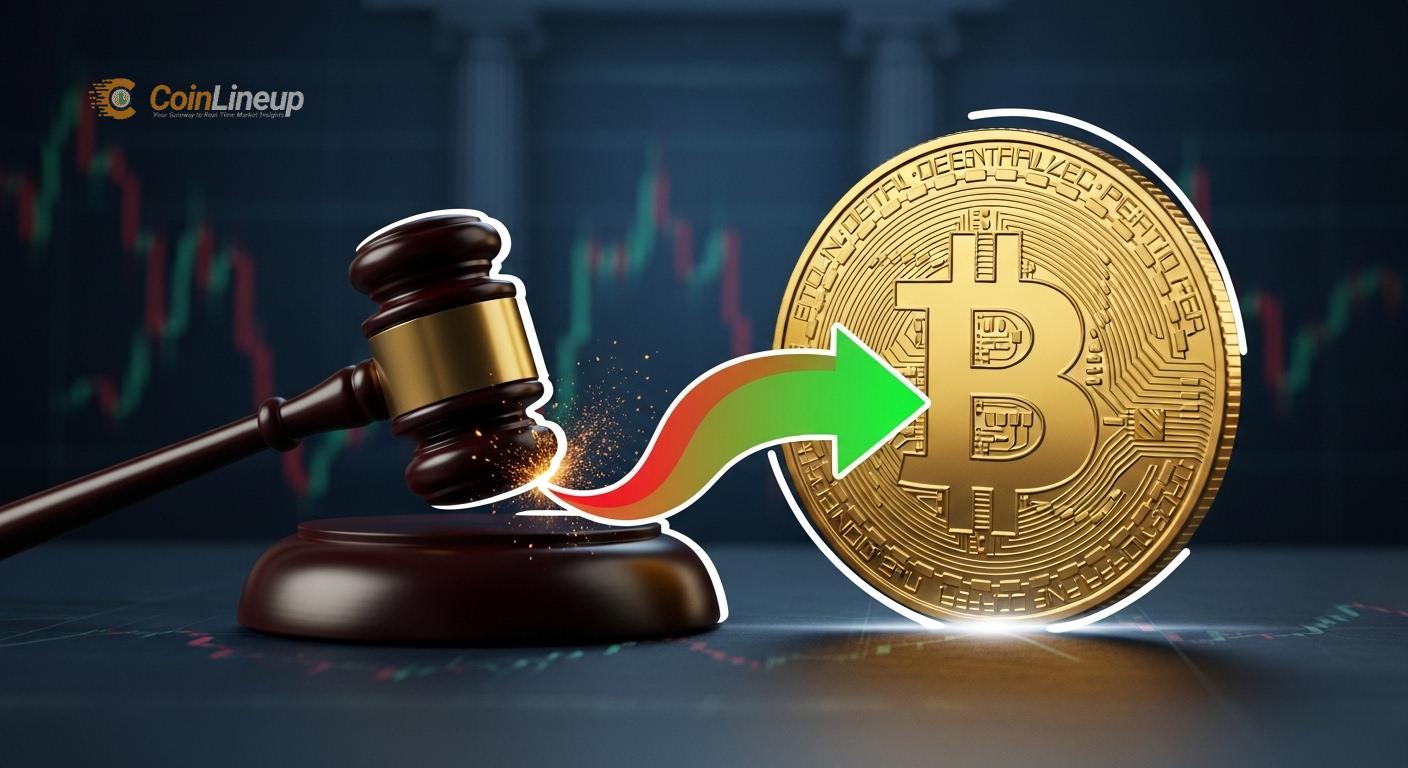
The U.S. Supreme Court limited the use of the International Emergency Economic Powers Act (IEEPA) for sweeping tariffs, curbing presidential authority to levy broad duties without Congress. According to Al Jazeera, the IEEPA Supreme Court ruling on February 20, 2026, found tariffs imposed under a national-emergency rationale exceeded the statute’s scope.
Hours later, policy plans shifted toward a uniform import duty. As reported by Axios, President Donald Trump said he would sign an executive order to impose a 10% global tariff on all nations, replacing portions of the tariffs the Court overturned.
Trump also attacked the decision and outlined a different legal basis for new duties. According to People.com, he called the Court “a disgrace to our nation” and said he would proceed under Section 122 of the Trade Act of 1974, a statute permitting temporary tariff measures.
It is a flat, across-the-board 10% duty proposal covering nearly all imported goods, with additional levies contemplated for some major trading partners. Based on reporting by The Washington Post, the International Monetary Fund warned such a 10% global tariff could weigh on growth via trade disruptions and inflationary pressures, projecting global growth at 2.8% in 2025 and U.S. growth at 1.8%.
The same report noted private-sector forecasters adjusted outlooks to reflect likely pass-through to prices and higher business uncertainty. The Washington Post also cited BMO Capital Markets as having downgraded U.S. growth expectations and raised inflation projections amid the tariff policy backdrop.
Exposure varies by region and supply-chain structure. As reported by The Guardian, Capital Economics estimated the EU could see roughly 0.25% slower growth and China about 0.75% under higher tariff settings.
Economists have warned that broad, uniform duties act like a self-imposed supply shock that raises costs across the economy. “The biggest U.S. economic policy mistake since the Second World War,” said Lawrence H. Summers, former U.S. Treasury Secretary, as reported by The Harvard Crimson.
Legally, the administration’s pivot points to Section 122 of the Trade Act of 1974, which authorizes temporary tariff increases. According to People.com, officials have framed this as an alternative path following the Court’s IEEPA ruling, with implementation details to be set by executive action.
At the time of this writing, Apple Inc. (AAPL) traded at 261.40, up 0.31% intraday, based on data from Nasdaq real-time prices. This market snapshot provides context as investors assess trade-policy headlines.
Disclaimer: CoinLineup.com provides cryptocurrency and financial market information for educational and informational purposes only. The content on this site does not constitute financial, investment, or trading advice. Cryptocurrency and stock markets involve significant risk, and past performance is not indicative of future results. Always conduct your own research and consult a qualified financial advisor before making any investment decisions.

About the author


$LIBRA Crashes 99% After Argentine Prosecutor Findings
$LIBRA token plummets 99% after Argentine prosecutors present evidence linking President Milei to the cryptocurrency scandal. TRM Labs forensic analysis cited.
$LIBRA Token Scandal Expands as Milei Probed
Argentine President Milei faces investigation over $LIBRA token scandal that caused $80-100M in investor losses. Judicial documents show $5M payment allegation.

Cornell Unveils Institutional Voice Policy Amid Academic Freedom Debate
Cornell University releases new institutional voice policy guidelines. The Presidential Task Force outlines framework for university speech on social and political issues.

Bitcoin Strategy Purchases Exceed 30,000 BTC Forecast
Strategy's Bitcoin purchases this week surpass analysts' 30,000 BTC forecast, marking a significant acceleration in the company's accumulation strategy.
Key Takeaways: What factors drive cryptocurrency market movements?How do regulatory announcements affect digital asset prices?What should investors consider before entering crypto markets?Are there risks specific to digital asset investments?How can investors stay informed about market developments? Coinlineup Editorial TeamThis article was prepared and reviewed by the Coinlineup editorial team using public market data, blockchain sources, and industry reports to ensure transparent coverage of cryptocurrency markets. Investment DisclaimerThe information on Coinlineup is provided for informational and educational purposes only and should not be considered financial or investment advice. Cryptocurrency markets are highly volatile and involve significant risk. Readers should conduct their own research (DYOR) and consult a qualified financial advisor before making investment decisions. Content Disclaimer · Terms · Privacy · Affiliate

Oil Surges as US-Iran Tensions Rise, IEA Taps Reserves
Oil prices jump as US-Iran conflict intensifies; IEA approves strategic reserve release to stabilize supply. Market impact analysis.
Related

Michael Selig Says Blockchain Can Modernize Finance
CFTC Chair Michael Selig said blockchain and DeFi can modernize U.S. markets, but the viral quote about outdated finance is not verified in CFTC texts.
Canada Stablecoin Framework Requires 1:1 Reserves
Canada's stablecoin framework will require 1:1 reserves, Bank of Canada registration, at-par redemptions, and new rules for issuers serving Canadians.

TOKEN2049 Dubai postponed: Why Paris matters next
TOKEN2049 Dubai was postponed to 2027, not cancelled. Here is what changed, why Paris Blockchain Week matters, and what ticket holders should know now.

UPDATE: Arthur Hayes Questions Whether Solana Native Multisig Could Have Prevented the Drift Hack
Arthur Hayes has raised a fresh question after the Drift hack: could native multisig on Solana have reduced the risk? Here is the news angle and why it matters.

Ledger CTO Ties $280M Drift Hack to North Korea Suspects
Ledger CTO suspects the $280 million Drift Protocol hack may be linked to North Korea threat actors. Here is what happened and what markets should watch.
Arizona Crypto Bills Clear House Rules Committee: 24-Hour Crypto News Roundup
Catch up on the last 24 hours in crypto news, led by Arizona's crypto bills clearing the House Rules Committee and what that could signal next.