
Bitcoin buying from institutional players and ETF vehicles is failing to absorb a sustained wave of selling by large holders, leaving BTC hovering near $68,000 as apparent demand turned deeply negative at the end of March 2026.
Why Bitcoin Buying Is Not Absorbing Large-Holder Selling
Bloomberg reported on April 1, 2026 that Bitcoin demand remained under pressure even as institutional buying picked up, citing on-chain analytics from CryptoQuant. The core problem: broader-market selling is still outweighing institutional absorption.
At the time of the report, BTC was trading around $68,000. The price has since slipped further, with live market data on April 2 recording Bitcoin at $66,939, down roughly 1% over 24 hours. That decline underscores the fragility of demand even after a modest March rebound.
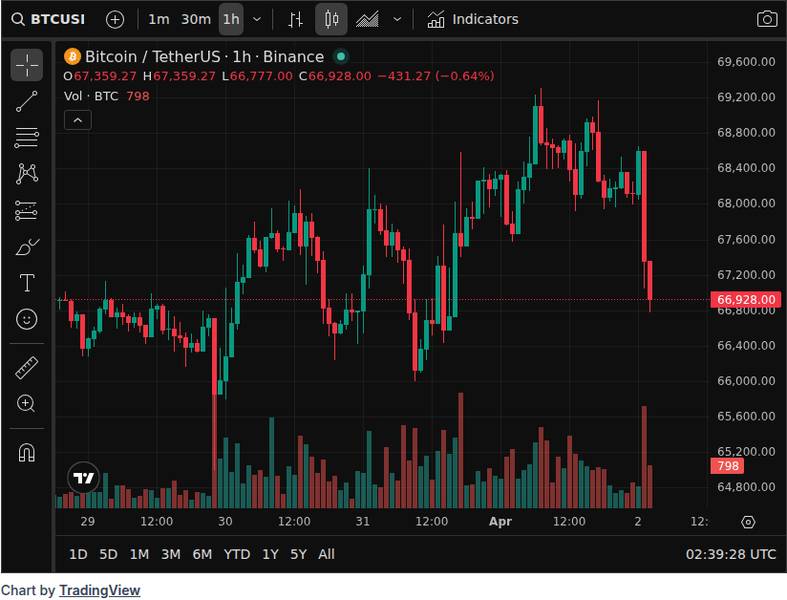
Strategy Inc. and spot Bitcoin ETFs have been among the most visible buyers, yet their combined accumulation has not been enough to flip the supply-demand balance. The mismatch between institutional inflows and whale-driven distribution is the defining tension in Bitcoin's current market structure.
What the Demand and Whale Data Suggest About BTC Momentum
CryptoQuant's apparent demand metric, which measures new buying against newly mined supply and existing holder selling, fell to roughly negative 63,000 BTC by the end of March. That figure means the market absorbed tens of thousands fewer coins than were made available through mining and distribution.
The selling pressure traces back to whales who accumulated approximately 200,000 BTC during the 2024 bull market. Those large holders have been distributing heavily since mid-2025, with the pace of selling accelerating through Q4 2025 and into early 2026.
A separate signal reinforces the bearish read: the Coinbase premium, which tracks the price spread between Coinbase and offshore exchanges, turned negative. A negative premium typically indicates weakening demand from U.S.-based investors, a group that had been a key driver during earlier rallies fueled by corporate treasury adoption and ETF momentum.
BTC Price, Sentiment, and the Next Levels Traders Will Watch
Bitcoin posted a 2.2% gain in March, snapping a five-month losing streak. But the recovery looks shallow in context: BTC remains roughly 45% below its October high near $126,000, and the live price has already dipped below the $68,000 level cited in early April reports.
Market sentiment reflects the strain. The Fear and Greed Index sat at 12, deep in Extreme Fear territory. Bitcoin dominance held at about 56%, suggesting altcoins are not absorbing rotational flows either, a dynamic visible in how exchange on-chain holdings have shifted across major platforms.

With a $1.34 trillion market cap and roughly $50.8 billion in 24-hour trading volume, Bitcoin is far from illiquid. The issue is directional conviction. Until new buying consistently outpaces the ongoing whale distribution, the path of least resistance remains lower.
Traders watching for a shift should monitor CryptoQuant's apparent demand metric for a return to positive territory and the Coinbase premium for signs that U.S. spot demand is re-engaging. A sustained move above $70,000 with improving demand data would mark the first meaningful challenge to the current bearish structure since the October highs, a period when even high-profile capital events failed to sustain broader risk appetite.
Disclaimer: This article is for informational purposes only and does not constitute financial or investment advice. Cryptocurrency and digital asset markets carry significant risk. Always do your own research before making decisions.