
DeFi lost roughly $13 billion in total value locked within 48 hours this month after an exploit drained KelpDAO's rsETH bridge, triggering the largest community rescue effort in DeFi history and exposing deep structural weaknesses in cross-chain security.
A $13 Billion Drawdown in 48 Hours
Galaxy Research reported that DeFi's total value locked fell from approximately $99.5 billion to roughly $86.3 billion within two days of the April 18 drain. Aave absorbed the worst of the outflow, with its TVL dropping from $26.4 billion to $17.9 billion, an $8.45 billion loss in 48 hours.
KEY TAKEAWAYS
- DeFi TVL fell ~$13 billion in 48 hours after the KelpDAO rsETH exploit on April 18, 2026.
- DeFi United has raised over 102,000 ETH from 116,000+ wallets, the largest community-driven rescue in DeFi history.
- A residual funding gap of ~75,081 ETH remains, and full recovery depends on actions from KelpDAO, Arbitrum's Security Council, and multiple DAOs.
The exploit itself was approximately $290 million, according to LayerZero's incident statement. LayerZero attributed the breach to KelpDAO's use of a single 1-of-1 DVN (Decentralized Verifier Network) configuration, which allowed an attacker to unlock 116,500 rsETH from Ethereum mainnet escrow.
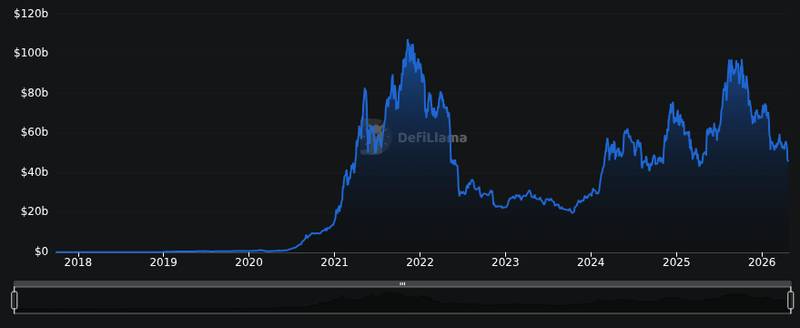
A monthly loss of this magnitude dwarfs most individual exploit totals and puts the drawdown in the same conversation as past contagion events. For context, the broader crypto market's Fear & Greed Index sat at 33 (Fear) at press time, with ETH trading near $2,375. The Ethereum Foundation's recent decision to unstake 17,035 ETH worth about $40 million added further complexity to sentiment around Ethereum-linked assets.
Lucas Tcheyan of Galaxy Research noted that the speed of withdrawals reflected a crisis of confidence rather than just direct loss exposure.
"Within 48 hours of the drain, DeFi's TVL fell by roughly $13 billion."
— Lucas Tcheyan, Galaxy Research
The Rescue: 102,000 ETH and Counting
The community response has been unprecedented. The DeFi United recovery effort has raised 102,439 ETH across more than 126,000 transfers from over 116,000 unique wallets. That pace far outstrips earlier reporting; competitors cited figures as low as 43,500 ETH just days ago.
The original rsETH shortfall stood at approximately 163,183 ETH. After initial recoveries, the residual funding gap has narrowed to roughly 75,081 ETH, according to Aave governance records. The gap between what DeFi United has raised and what remains outstanding suggests the rescue could cover the deficit, but only if several preconditions are met.
This kind of coordination, thousands of wallets contributing without a central intermediary, represents DeFi's best argument for itself. No bank organized a bailout. No regulator mandated a response. Wallet holders across the ecosystem voluntarily pooled capital in days, not weeks. In a sector where fraud cases like the Evan Tangeman scam ring dominate headlines, the rescue is a counterpoint worth noting.
Why the Rescue Also Exposes DeFi's Worst
The need for a $200 million+ community rescue is itself the indictment. KelpDAO's 1-of-1 DVN setup meant a single point of failure guarded hundreds of millions in bridged assets. LayerZero's architecture supported more robust configurations, but KelpDAO chose the minimum.
That choice was not visible to most depositors. Users who bridged rsETH had no practical way to audit KelpDAO's verifier setup before depositing. The transparency that DeFi promises at the smart-contract level did not extend to the cross-chain verification layer where the actual risk lived.
Full recovery still depends on a chain of third-party actions: KelpDAO reopening rsETH withdrawals, the Arbitrum Security Council releasing approximately 30,766 frozen ETH, and DAO governance votes to authorize the largest pledged contributions. Any link in that chain can stall or fail.
According to unconfirmed preliminary indicators cited in LayerZero's statement, the exploit may be attributable to DPRK's Lazarus Group. If confirmed, it would place the incident alongside a growing list of state-sponsored attacks on DeFi infrastructure, a risk category that community rescues cannot structurally prevent.
The tension at the heart of this story is not new, but the scale is. DeFi's capacity for rapid collective action is real, as 116,000 wallets have now demonstrated. But that capacity only becomes visible after a failure that should not have been possible in the first place. The recent surge of institutional capital into crypto ETFs suggests mainstream appetite for digital assets is growing, which makes unresolved bridge security gaps an increasingly urgent problem for the entire ecosystem.
Disclaimer: This article is for informational purposes only and does not constitute financial or investment advice. Cryptocurrency and digital asset markets carry significant risk. Always do your own research before making decisions.