


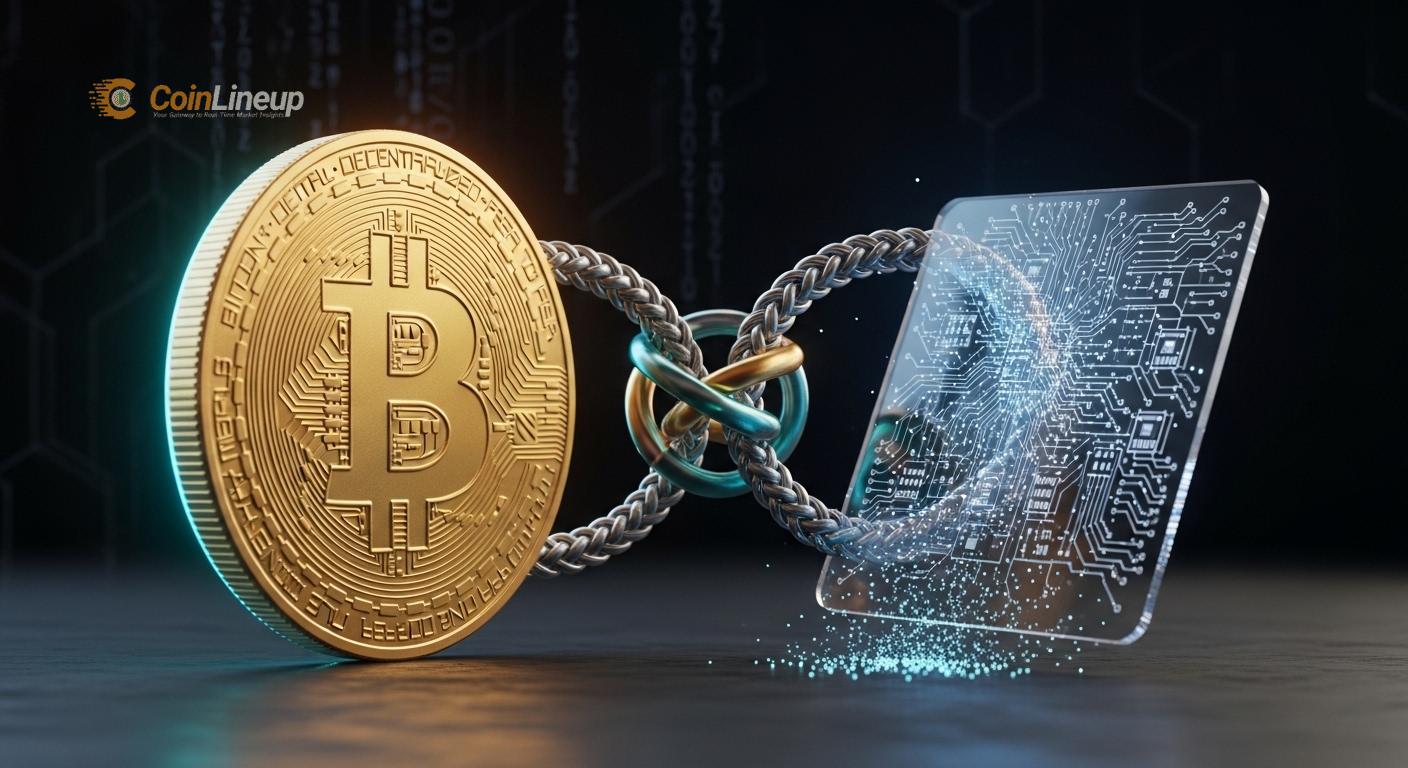
Key Takeaways:
- BIP 360 merged, formalizing quantum-defense discussions without changing consensus rules.
- Focuses on P2MR to reduce public key exposure and protect value.
- Maintains Taproot/Tapscript compatibility; signals active review, not activation timeline.
Bitcoin’s quantum-defense roadmap advanced as BIP 360 was added to the Bitcoin Improvement Proposal repository, according to CryptoTimes. The merge formalizes discussion but does not change consensus rules. The proposal targets long-horizon cryptographic risks.
As reported by CoinSpeaker, BIP 360 centers on Pay-to-Merkle-Root (P2MR) to curb public key exposure that could be exploitable by future quantum computers. By changing how spending conditions are revealed, it aims to protect long-term value.
Bitcoin Magazine has noted the design keeps compatibility with Taproot and Tapscript to limit disruption. Inclusion in the repository signals active review by developers, not an activation timeline.
P2MR binds an output to a Merkle root instead of exposing a public key at spend time. This reduces opportunities for attackers to harvest keys from transaction history, particularly where addresses were reused.
The proposal also contemplates Pay-to-Quantum-Resistant-Hash (P2QRH) paths so future post-quantum signatures can be integrated as standards mature. Co-author Jameson Lopp has positioned the change as aligning incentives for users to migrate to safer output types over time.
Expert views diverge on timing. Some engineers argue for early hardening while others expect a longer runway before large-scale quantum threats materialize. Reflecting the latter view, Adam Back, Blockstream co-founder, said, “Bitcoin is probably not vulnerable for 20–40 years … there are quantum secure signatures … Bitcoin can add over time,” as reported by CryptoNews.
NIST, the U.S. National Institute of Standards and Technology, has standardized several post-quantum algorithms such as Dilithium and is evaluating others for broad deployment. That institutional work provides context for Bitcoin’s exploration of PQC without implying any mandate for the network.
At the time of this writing, Bitcoin traded near 66,908 with very high short-term volatility around 12.19% and a bearish sentiment reading. Metrics show the 50-day and 200-day simple moving averages, 85,734 and 101,435 respectively, sit above spot.
Disclaimer: CoinLineup.com provides cryptocurrency and financial market information for educational and informational purposes only. The content on this site does not constitute financial, investment, or trading advice. Cryptocurrency and stock markets involve significant risk, and past performance is not indicative of future results. Always conduct your own research and consult a qualified financial advisor before making any investment decisions.

About the author

$LIBRA Crashes 99% After Argentine Prosecutor Findings
$LIBRA token plummets 99% after Argentine prosecutors present evidence linking President Milei to the cryptocurrency scandal. TRM Labs forensic analysis cited.
$LIBRA Token Scandal Expands as Milei Probed
Argentine President Milei faces investigation over $LIBRA token scandal that caused $80-100M in investor losses. Judicial documents show $5M payment allegation.

Cornell Unveils Institutional Voice Policy Amid Academic Freedom Debate
Cornell University releases new institutional voice policy guidelines. The Presidential Task Force outlines framework for university speech on social and political issues.
Bitcoin Strategy Purchases Exceed 30,000 BTC Forecast
Strategy's Bitcoin purchases this week surpass analysts' 30,000 BTC forecast, marking a significant acceleration in the company's accumulation strategy.
Key Takeaways: What factors drive cryptocurrency market movements?How do regulatory announcements affect digital asset prices?What should investors consider before entering crypto markets?Are there risks specific to digital asset investments?How can investors stay informed about market developments? Coinlineup Editorial TeamThis article was prepared and reviewed by the Coinlineup editorial team using public market data, blockchain sources, and industry reports to ensure transparent coverage of cryptocurrency markets. Investment DisclaimerThe information on Coinlineup is provided for informational and educational purposes only and should not be considered financial or investment advice. Cryptocurrency markets are highly volatile and involve significant risk. Readers should conduct their own research (DYOR) and consult a qualified financial advisor before making investment decisions. Content Disclaimer · Terms · Privacy · Affiliate

Oil Surges as US-Iran Tensions Rise, IEA Taps Reserves
Oil prices jump as US-Iran conflict intensifies; IEA approves strategic reserve release to stabilize supply. Market impact analysis.
Related

US Authorities Freeze $344M in Crypto Tied to Iran
US authorities froze $344 million in crypto tied to Iran, putting sanctions enforcement, seizure mechanics, and crypto compliance in focus.
Report: Grayscale Stakes 102,400 ETH Worth About $237 Million
A report says Grayscale has staked 102,400 ETH valued at about $237 million. Here is what the figure means, why it matters, and what to watch next.

US Freezes $344M in Iran-Linked Crypto, Targets IRGC Flows
The US has frozen $344 million in crypto tied to Iran, with Treasury targeting IRGC-linked flows. Here's what happened and why it matters.

Chainlink Data Services Go Live on AWS Marketplace
Chainlink data services are now live on AWS Marketplace. This article breaks down what the launch confirms, why the listing matters, and what it could signal for blockchain infrastructure distribution.
Coinbase to List Fluent (BLEND) USD Spot Pair
Coinbase is set to list Fluent (BLEND) against USD in spot trading. Here’s what the announcement means and what traders should watch next.
Cardano Teams Seek $50M for Bitcoin DeFi, Vision 2030
Cardano teams are seeking nearly $50 million for Bitcoin DeFi projects and Vision 2030, marking a major funding request tied to the network's roadmap.