



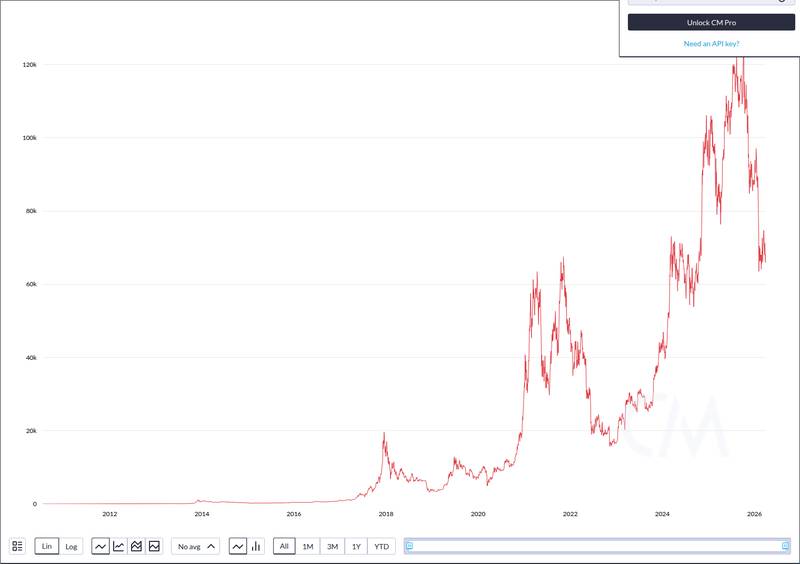
Bitcoin is struggling to break through $70,000, and on-chain data points to a specific group of holders creating a wall of sell pressure that keeps capping every rally attempt.
Why Bitcoin Keeps Stalling Near $70K
The resistance isn’t random. A Glassnode report identified the 1-week to 1-month (1W-1M) holder cohort as the group responsible for the supply overhang near $70,000. These are investors who bought Bitcoin within the past week to 30 days, and their average cost basis sits right around that level.
That cost basis creates a resistance and distribution zone between roughly $68,500 and $71,500. Many of these recent buyers are underwater or barely breaking even, so when the price approaches their purchase level they sell to recover losses or lock in small gains.
The result is a ceiling. Each time Bitcoin rallies into that band, fresh supply from this group floods the market and pushes prices back down. Bitcoin has not produced a daily close above $70,000 since early February, reinforcing the zone as a meaningful near-term barrier.
What the Latest Market Data Says About Demand
Bitcoin traded at $66,938 at press time, down 2.61% over the past 24 hours. The pullback came even as the broader market waited for a catalyst strong enough to absorb the overhead supply.
Profit-taking momentum has collapsed. Glassnode noted the 30-day simple moving average of realized profit fell from above $1 billion per day to about $370 million per day, a decline of roughly 63%. Realized profit measures the value holders lock in when they move coins at a gain, so the sharp drop signals that fewer participants are willing to sell into strength.
Only about 57% of Bitcoin’s total supply is currently in profit, below the minus-one standard-deviation threshold near 60%. When that large a share of holders is underwater, rallies tend to meet resistance as those holders look to exit at breakeven rather than hold for further upside. Security concerns across the broader crypto ecosystem, highlighted by incidents like the $280 million Drift hack tied to North Korea suspects, have added to the cautious mood.
Sentiment reflects that caution. The Fear and Greed Index read 12 at press time, classified as Extreme Fear. The market is far from euphoric, even as Bitcoin attempts to rebuild toward $70,000. In a separate but related development, Moody’s recently proposed a Bitcoin haircut framework that could act as a forced-selling trigger, adding another layer of risk for institutional holders.
What Bitcoin Holders Should Watch Next
For Bitcoin to break cleanly above $70,000, demand needs to be strong enough to absorb the supply that 1W-1M holders are distributing in the $68,500 to $71,500 zone. Until buyers outpace that selling, the price is likely to keep bouncing between $60,000 and $70,000.
One potential source of renewed demand is U.S. spot Bitcoin ETFs. Glassnode noted that ETF flows have started to stabilize after a stretch of outflows earlier this year. Stabilization is not the same as aggressive buying, but it removes one source of downward pressure. Questions around whether better security infrastructure could have prevented recent high-profile hacks continue to shape institutional risk appetite as well.
The practical takeaway: the $68,500 to $71,500 zone is the level to watch. A sustained daily close above $71,500 would signal that the seller overhang has been absorbed, while continued rejections near $70,000 would reinforce the current range. With sentiment deep in Extreme Fear and realized-profit momentum still declining, the burden of proof sits with buyers.
Disclaimer: This article is for informational purposes only and does not constitute financial or investment advice. Cryptocurrency and digital asset markets carry significant risk. Always do your own research before making decisions.


About the author


Thom Tillis Says He’ll Vote Against Senate Crypto Bill Without Ethics Language
Sen. Thom Tillis says he will vote against the Senate crypto bill unless ethics language is added, putting fresh pressure on the measure's path forward.

Strategy Bought 3,273 BTC for $255M, Total Holdings Hit 818,334 BTC
Strategy purchased 3,273 BTC for $255 million, lifting its total Bitcoin holdings to 818,334 BTC as corporate treasury accumulation continues.

Grayscale Moves Custody Away From Coinbase for New ETF Product
Grayscale is moving custody away from Coinbase for a new ETF product. Here is what the shift may signal for custody strategy, ETF structure, and crypto market sentiment.

Bitcoin Moves Above $79,000, Nearing $80,000 as BTC Momentum Builds
Bitcoin climbed above $79,000 and is pushing toward $80,000. Here is what the move means, what may be driving BTC, and the key levels to watch.

35% of European Investors Would Switch Banks for Better Crypto Services
A new survey suggests 35% of European investors would switch banks for better crypto services, highlighting rising demand for digital asset access in banking.

US Spot Bitcoin ETFs Saw $1.9B in 7-Day Inflows, Led by BlackRock
US spot Bitcoin ETFs recorded $1.9 billion in inflows across seven sessions, with BlackRock leading the trend. Here is what the streak signals for Bitcoin demand.
Related
Strategy Bought 3,273 BTC for $255M, Total Holdings Hit 818,334 BTC
Strategy purchased 3,273 BTC for $255 million, lifting its total Bitcoin holdings to 818,334 BTC as corporate treasury accumulation continues.
Bitcoin Moves Above $79,000, Nearing $80,000 as BTC Momentum Builds
Bitcoin climbed above $79,000 and is pushing toward $80,000. Here is what the move means, what may be driving BTC, and the key levels to watch.
US Spot Bitcoin ETFs Saw $1.9B in 7-Day Inflows, Led by BlackRock
US spot Bitcoin ETFs recorded $1.9 billion in inflows across seven sessions, with BlackRock leading the trend. Here is what the streak signals for Bitcoin demand.

Five Entities Hold Nearly 22% of Bitcoin Supply, Data Shows
A focused breakdown of the claim that five entities control nearly 22% of Bitcoin supply, what the figure includes, and why it matters for the market.

US Spot Bitcoin ETFs Add $1.9B in 7 Days, Led by BlackRock
US spot Bitcoin ETFs pulled in $1.9 billion over seven days, with BlackRock leading inflows. Here is what the streak signals for BTC demand.

BlackRock Bitcoin ETF Sees $900M Net Inflows in Five Days
BlackRock's Bitcoin ETF logged about $900 million in net inflows over five days, highlighting sustained investor demand and broader spot ETF momentum.