



Cardano Foundation has unveiled the initial phase of an $80 million strategic ecosystem fund designed to bridge Bitcoin liquidity into Cardano’s DeFi infrastructure, setting the stage for a $3 billion total value locked target by 2030.
The Orion Fund, announced on April 7, 2026, is a joint initiative between Cardano Foundation and venture firm Draper Dragon. It targets institutional DeFi and real-world asset applications built on Cardano.
What the $80 Million Orion Fund Is Designed To Do
The fund’s $80 million target breaks down into two components. A $75 million treasury withdrawal spread across three tranches over six years forms the core, with up to $5 million from external limited partners completing the total.
The governance proposal includes built-in risk controls that most coverage has overlooked: a 175 million ADA aggregate withdrawal cap, individual tranche caps of 50 million and 85 million ADA, and a 20% ADA-price volatility buffer tied to capital-call mechanics.
The fund adviser operates as an exempt reporting adviser regulated by the U.S. SEC, while Cardano Foundation serves as constitutional administrator rather than investment manager. This structure separates fiduciary oversight from ecosystem governance.
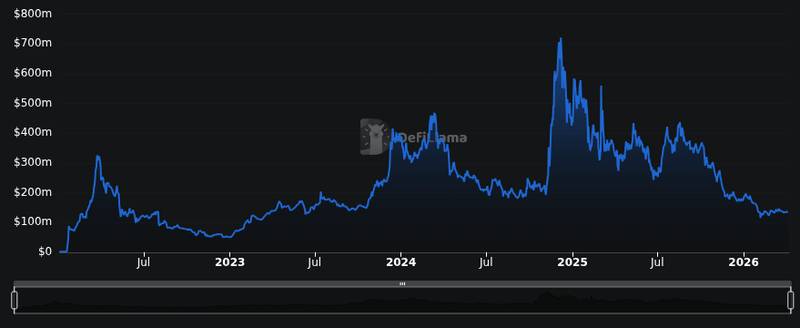
Capital deployment timing matters here. Cardano’s current TVL sits at roughly $140 million, meaning the fund alone represents more than half the ecosystem’s existing locked value.
Why Bitcoin Liquidity Matters for Cardano’s DeFi Strategy
The core thesis rests on a technical detail: both Cardano and Bitcoin use UTXO-based transaction models. Cardano Foundation described this shared architecture as “a massive opportunity to bridge Bitcoin’s liquidity with Cardano’s advanced functionality.”
“This shared architecture presents a massive opportunity to bridge Bitcoin’s liquidity with Cardano’s advanced functionality.”
— Cardano Foundation
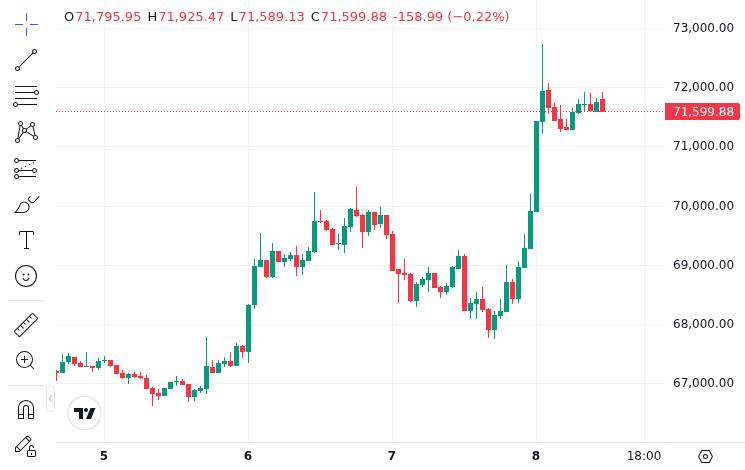
Bitcoin liquidity in this context refers to the vast pool of BTC that sits idle in wallets without participating in DeFi. With Bitcoin trading near $71,681 and carrying a market cap above $1.4 trillion, even a small percentage redirected into Cardano-based applications could meaningfully shift TVL figures.
The practical routes would likely involve wrapped BTC tokens or cross-chain bridges that allow Bitcoin holders to deploy capital into Cardano lending, liquidity pools, and RWA protocols. Recent data showing Bitcoin long-term holders accumulating 4.37 million BTC underscores how much capital remains parked rather than productive.
Execution risks are significant. Bridge security remains a persistent vulnerability across crypto, trust assumptions around wrapped assets have not been fully resolved, and adoption depends on Cardano DeFi protocols offering competitive yields. The current market environment, with the Fear & Greed Index at 17 (Extreme Fear), adds headwinds to any capital formation strategy.
Can Cardano Reach $3 Billion in DeFi by 2030?
The Cardano 2030 Strategy draft sets an explicit TVL KPI of $3 billion, split between $1.5 billion in RWA and $1.5 billion in DeFi. From the current $140 million baseline, that requires roughly 21x growth over four years.
For context, the broader stablecoin market has demonstrated that rapid DeFi scaling is possible. Ethereum’s stablecoin supply recently hit $180 billion, up 150% in three years, showing that on-chain capital can grow quickly when infrastructure and incentives align.
Near-term checkpoints to watch: whether the first tranche of treasury funds deploys on schedule, how many DeFi protocols launch or migrate to Cardano in 2026, and whether any BTC-bridge infrastructure reaches mainnet this year.
Mid-term indicators include TVL crossing $500 million (a roughly 3.5x increase from today) and institutional participation materializing through the RWA vertical. The growing institutional interest in crypto infrastructure could work in Cardano’s favor if the fund executes well.
The downside scenario is straightforward. If bridge infrastructure stalls, if ADA price volatility erodes fund capitalization through the built-in buffer mechanism, or if competing L1s capture BTC liquidity first, the $3 billion target becomes aspirational rather than achievable.
According to unconfirmed reports, some observers have suggested the Orion Fund alone could achieve the full $3 billion DeFi target. That claim lacks supporting evidence given the fund’s $80 million size, and reaching the goal will likely require multiple capital sources beyond a single vehicle.
The next governance milestone is the community vote on the first tranche withdrawal. That outcome will signal whether Cardano’s on-chain governance can execute large-scale capital deployment, not just propose it.
Disclaimer: This article is for informational purposes only and does not constitute financial or investment advice. Cryptocurrency and digital asset markets carry significant risk. Always do your own research before making decisions.

About the author


Cardano Eyes Bitcoin Liquidity With $80M Fund for $3B DeFi Target by 2030
Cardano plans an $80 million fund aimed at unlocking Bitcoin liquidity as it pushes toward a $3 billion DeFi target by 2030. Here is what the strategy could mean.

Bitcoin Long-Term Holders Reach 4.37M BTC on April 7: What It Signals
Bitcoin long-term holders increased their balances to 4.37 million BTC as of April 7. Here is what this accumulation trend may signal for supply pressure and market sentiment.

Binance Founder CZ Releases “Freedom of Money”: Key Insights From His Autobiography
Binance founder Changpeng Zhao (CZ) has released his autobiography, Freedom of Money. Explore the book’s core themes, Binance-era insights, and why this release matters for crypto readers.

Top Crypto News for April 7: Bitcoin Briefly Jumps Above $70K
Catch the top crypto news for April 7, including why Bitcoin briefly moved above $70,000 on Iran deal hopes and what traders are watching next.

Bitcoin Quantum Threat: Why Google Can’t Steal Your BTC
Worried quantum computers could break Bitcoin? Here's why Google can't steal your BTC today, why attackers are far behind, and what really matters now.

Crypto Apps Are Shutting Down as Billions Flow to Bitcoin ETFs and Stablecoins
Crypto apps are losing ground as investors shift capital into Bitcoin ETFs and stablecoins. Here is what the trend means for users, platforms, and the broader crypto market.
Related
Binance Founder CZ Releases “Freedom of Money”: Key Insights From His Autobiography
Binance founder Changpeng Zhao (CZ) has released his autobiography, Freedom of Money. Explore the book’s core themes, Binance-era insights, and why this release matters for crypto readers.

Intel Joins Terafab: What It Means for SpaceX IPO and Bitcoin
Intel just joined Musk's $25B Terafab chip megafactory alongside SpaceX, Tesla, and xAI. Here's why the deal accelerates the SpaceX IPO timeline and what it means for crypto investors.

What Happens to USDC if Polymarket Launches Its Own Stablecoin?
Polymarket is launching its own stablecoin. Here is what that could mean for USDC demand, platform liquidity, and the wider stablecoin competition.
Top Crypto News for April 7: Bitcoin Briefly Jumps Above $70K
Catch the top crypto news for April 7, including why Bitcoin briefly moved above $70,000 on Iran deal hopes and what traders are watching next.

SEC Crypto Fight Could Decide Who Controls Blockchain Stocks
A new SEC crypto dispute could shape who controls tokenized stocks as equities move onto blockchain rails, with major implications for Wall Street and market access.
Crypto Apps Are Shutting Down as Billions Flow to Bitcoin ETFs and Stablecoins
Crypto apps are losing ground as investors shift capital into Bitcoin ETFs and stablecoins. Here is what the trend means for users, platforms, and the broader crypto market.