


Key Takeaways:
- Decentralized apps still depend on centralized domains, app stores, push services.
- Russia’s WhatsApp block nudges users toward state-controlled communication platforms.
- Network effects and switching costs hinder rapid migration during crackdowns.
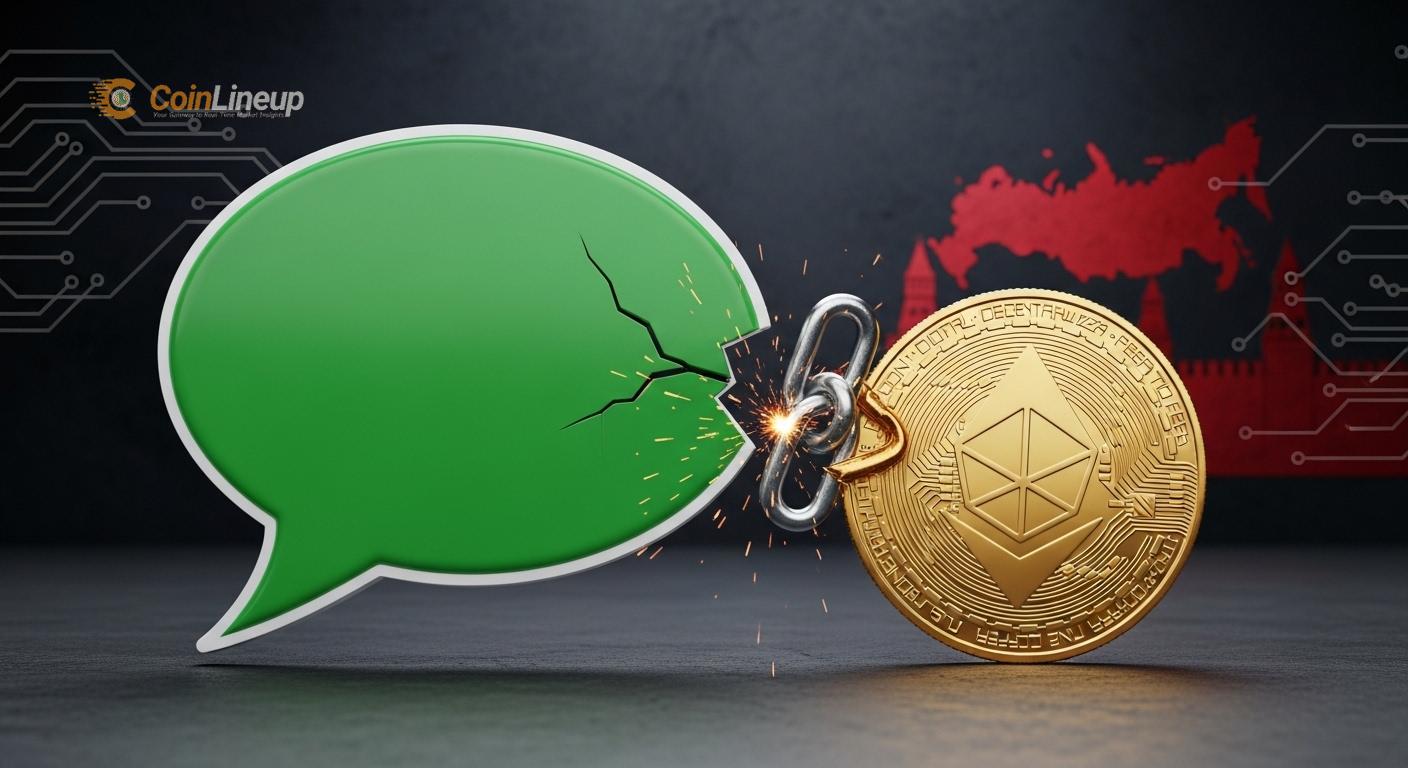
Russia’s confirmed blocking of WhatsApp is a real-world stress test of decentralized technology’s promises and limits. As reported by CryptoSlate, the episode exposes how even “decentralized” products still rely on centralized choke points such as domains, app stores, and mobile push services.
Authorities confirmed the decision to block WhatsApp over non-compliance with local requirements, according to MSN. The move formalizes a wider effort to push users toward state-preferred services under tighter regulatory control.
WhatsApp counts roughly 100 million users in Russia, yet early reactions inside the country have been muted, as reported by Bloomberg. That scale underscores the switching costs and network effects that make alternatives hard to adopt quickly, even in a crackdown.
The clampdown is broader than a single app. Roskomnadzor has decided to fully block Telegram from 1 April, Novaya Gazeta Europe reported, signaling consistent pressure on foreign-owned messengers. That decision narrows mainstream access to encrypted Western platforms even further.
The Bloomsbury Intelligence & Security Institute characterizes the ban as a structural turning point that removes the last broadly used encrypted Western messenger from Russia’s mainstream. Their analysis suggests unmonitored communication may shrink toward near-zero as the crackdown consolidates.
For crypto and Web3 builders, the lesson is uncomfortable but clear. Protocols may be decentralized, but the real-world deployment stack, DNS, routing, app stores, and push notifications, remains vulnerable to coercion, testing both resilience and user experience under pressure.
Experts frequently point to two network controls in such crackdowns: DNS interference and deep packet inspection. DNS tampering blocks or misdirects lookups, while DPI analyzes traffic patterns to throttle or drop targeted services without relying on domain names alone.
Human Rights Watch has documented how national DNS controls, certificate leverage, and ISP consolidation enable broad, coordinated blocking and throttling. The report notes these measures impose disproportionate burdens on people without the technical means or confidence to navigate workarounds.
In practice, states can also combine network tactics with app-store and registry levers, forcing removals or cutting off updates. These layers compound the impact of DNS and DPI by raising friction at every entry point to a service.
“Russia’s use of DNS manipulation and deep packet inspection to block major platforms is predictable,” said Sarkis Darbinyan, a tech lawyer and researcher. He also warned that authorities are targeting VPNs, reducing the effectiveness of common workarounds.
At the time of this writing, Meta Platforms’ shares traded near $639.77 with a one-day decline of about 1.55% and a 90-day gain of roughly 8.38%, based on data from Simply Wall St. Market moves do not resolve the structural risks described above, but they frame the corporate backdrop to the policy shift.
Disclaimer: CoinLineup.com provides cryptocurrency and financial market information for educational and informational purposes only. The content on this site does not constitute financial, investment, or trading advice. Cryptocurrency and stock markets involve significant risk, and past performance is not indicative of future results. Always conduct your own research and consult a qualified financial advisor before making any investment decisions.


About the author


$LIBRA Crashes 99% After Argentine Prosecutor Findings
$LIBRA token plummets 99% after Argentine prosecutors present evidence linking President Milei to the cryptocurrency scandal. TRM Labs forensic analysis cited.
$LIBRA Token Scandal Expands as Milei Probed
Argentine President Milei faces investigation over $LIBRA token scandal that caused $80-100M in investor losses. Judicial documents show $5M payment allegation.

Cornell Unveils Institutional Voice Policy Amid Academic Freedom Debate
Cornell University releases new institutional voice policy guidelines. The Presidential Task Force outlines framework for university speech on social and political issues.

Bitcoin Strategy Purchases Exceed 30,000 BTC Forecast
Strategy's Bitcoin purchases this week surpass analysts' 30,000 BTC forecast, marking a significant acceleration in the company's accumulation strategy.
Key Takeaways: What factors drive cryptocurrency market movements?How do regulatory announcements affect digital asset prices?What should investors consider before entering crypto markets?Are there risks specific to digital asset investments?How can investors stay informed about market developments? Coinlineup Editorial TeamThis article was prepared and reviewed by the Coinlineup editorial team using public market data, blockchain sources, and industry reports to ensure transparent coverage of cryptocurrency markets. Investment DisclaimerThe information on Coinlineup is provided for informational and educational purposes only and should not be considered financial or investment advice. Cryptocurrency markets are highly volatile and involve significant risk. Readers should conduct their own research (DYOR) and consult a qualified financial advisor before making investment decisions. Content Disclaimer · Terms · Privacy · Affiliate

Oil Surges as US-Iran Tensions Rise, IEA Taps Reserves
Oil prices jump as US-Iran conflict intensifies; IEA approves strategic reserve release to stabilize supply. Market impact analysis.
Related

UPDATE: Arthur Hayes Questions Whether Solana Native Multisig Could Have Prevented the Drift Hack
Arthur Hayes has raised a fresh question after the Drift hack: could native multisig on Solana have reduced the risk? Here is the news angle and why it matters.

Ledger CTO Ties $280M Drift Hack to North Korea Suspects
Ledger CTO suspects the $280 million Drift Protocol hack may be linked to North Korea threat actors. Here is what happened and what markets should watch.

Arizona Crypto Bills Clear House Rules Committee: 24-Hour Crypto News Roundup
Catch up on the last 24 hours in crypto news, led by Arizona's crypto bills clearing the House Rules Committee and what that could signal next.

SpaceX IPO Filing Report Could Value Company at $1.75T
A reported confidential SEC filing could value SpaceX at up to $1.75 trillion. Here is what the claim means, why the valuation matters, and what comes next.

EthCC 2026 Signals Ethereum’s Institutional Breakout | CoinLineup
EthCC 2026 marks a shift from Ethereum's hacker roots to institutional adoption, signaling a new phase for infrastructure, capital, and market narrative.

Reuters: UAE Crypto Firms Show Resilience in Conflict
Reuters reports that UAE crypto companies are showing resilience despite pressure from the US-Israel and Iran conflict backdrop, signaling a key regional test.