Ethereum’s staking ratio has reached a new high, which means a larger share of all ETH is now locked up to help run the network. For regular holders, that points to deeper long-term commitment to Ethereum’s security, even as the widely cited roughly $85 billion figure should be read as an approximate historical snapshot rather than a perfectly verified total.
Ethereum’s Staking Ratio Has Reached a New High
Ethereum’s staking model treats the staking ratio as the share of total ETH supply that has been deposited to help validate the network. In plain English, a higher ratio means more ETH is being used to back block production and transaction checks instead of sitting idle.
Validator Queue’s archived snapshot from Feb. 15, 2024 showed 29,982,960 ETH staked, equal to 24.95% of supply. The same dashboard now shows 38,228,541 ETH staked, or 31.44% of supply, which makes the record high clear even before price enters the discussion.
Ethereum.org currently lists 38,847,030 ETH staked and 920,730 total validators. The gap between that total and Validator Queue’s 38,228,541 ETH looks more like a live-snapshot difference than a disagreement about direction.
The official Ethereum explainer says each validator must deposit 32 ETH to activate. That makes the move from 24.95% to 31.44% more than a headline metric, because it shows a bigger slice of the supply is explicitly committed to network security.
The longer trend matters too. That same Feb. 15, 2024 archive also showed 943,122 validators and 260,928 ETH waiting in the entry queue, a sign that staking demand was already building well before the current record.
Why the Historical $85 Billion Estimate Needs Context
Cointelegraph reported on Feb. 15, 2024 that the Beacon Chain held 30,206,801 staked ETH worth about $85 billion and 943,974 active validators. That remains a single reported snapshot, though, and the safer reading is that the historical dollar value was approximate because Validator Queue’s same-day archive showed the slightly lower totals of 29,982,960 ETH and 943,122 validators.
The security logic is still straightforward. If every validator has to post 32 ETH, then a rise in the staked share from 24.95% to 31.44% raises the economic cost of trying to manipulate consensus.
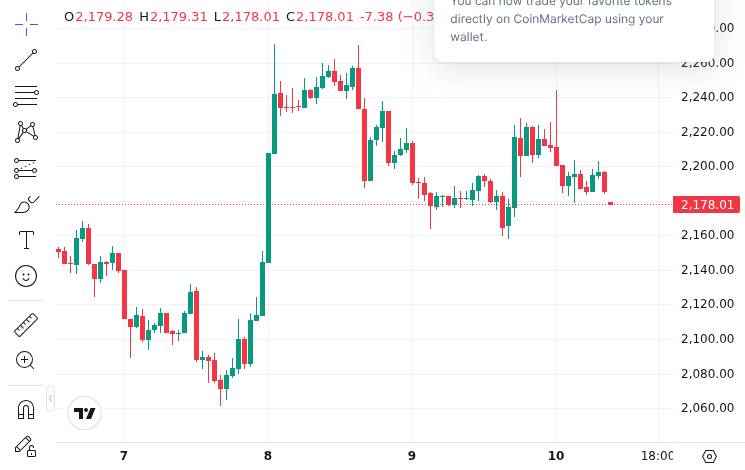
ETH traded near $2,179 at the market snapshot used for this story, giving it roughly a $262.9 billion market cap and about $17.4 billion in 24-hour volume. That price backdrop helps explain why even a modest change in staking participation can translate into very large dollar security figures for the chain.
What the Staking Milestone Could Signal for Ethereum Next
With 31.44% of supply now staked on Validator Queue, more ETH is tied up instead of sitting fully liquid on exchanges or in idle wallets. That is part of why coinlineup has recently tracked BlackRock’s Ethereum staking ETF launch, Lido’s community staking module with DVT clusters, the Ethereum Foundation’s 70,000 ETH treasury staking plan, and the debate after the foundation kept selling ETH after a staking signal.
DefiLlama’s Ethereum dashboard shows that the network remains the center of a large on-chain liquidity base, which helps explain why liquid staking keeps spilling into DeFi usage. Helix Labs wrote that Lido holds about $19.8 billion in TVL and that liquid staking tokens back nearly 40% of DeFi collateral.
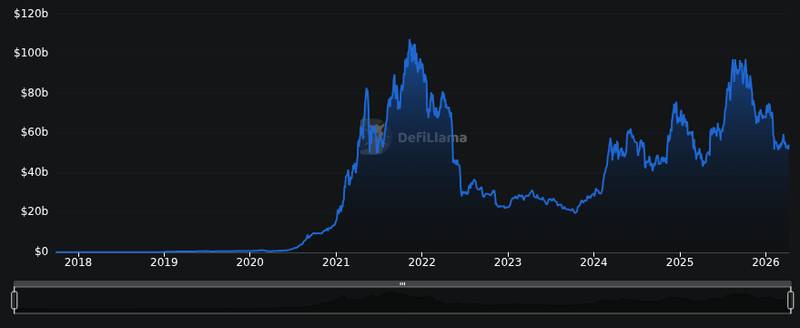
In the same post, Helix Labs said, “Liquid staking transformed Ethereum. Over 37M ETH staked, roughly 30% of supply.” That framing matches the broader direction shown by Validator Queue and Ethereum.org, even if each dashboard uses slightly different live counts.
Liquid staking transformed Ethereum. Lido holds ~$19.8B TVL on DefiLlama. LSTs back nearly 40% of all DeFi collateral. Over 37M ETH staked, roughly 30% of supply.
But zoom out.
Cardano: $5.5B staked. $135M in DeFi. 97.5% of capital sitting idle at 2-3% APY. ICP, BNB, HyperEVM,…
— Helix Labs (@zkhelixlabs) March 26, 2026
The practical takeaway is simple. The move from 24.95% staked in February 2024 to 31.44% today looks like a sign of long-term confidence in Ethereum’s validator model, but not a guarantee about ETH’s next price move. For holders, the main message is that more of the network’s supply is now committed to security and yield, which makes staking data worth watching alongside price charts.
Disclaimer: This article is for informational purposes only and does not constitute financial or investment advice. Cryptocurrency and digital asset markets carry significant risk. Always do your own research before making decisions.


