


- Main event, leadership changes, market impact, financial shifts, or expert insights.
- Trump administration outlines significant crypto policy shift.
- Bitcoin reserve and stablecoin regulations are emphasized.
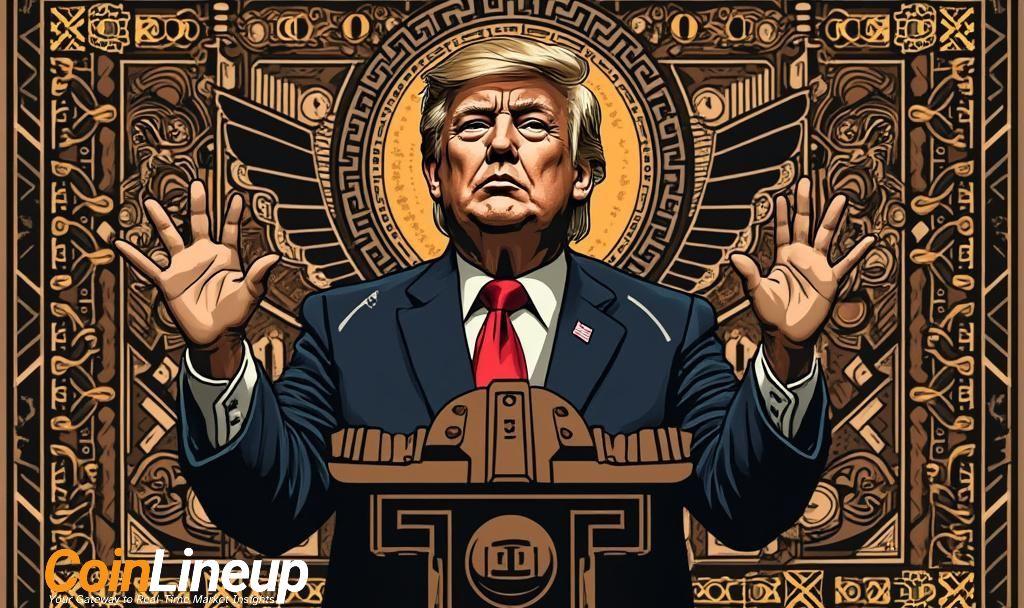
The Trump White House released a comprehensive crypto policy report on July 30, 2025, proposing sweeping regulatory changes. Key elements include a potential U.S. strategic Bitcoin reserve and regulatory frameworks for stablecoins, highlighting direct financial impacts on Bitcoin and stablecoins.

Donald Trump’s administration released a pivotal crypto policy report on July 30, 2025, from the White House. This document introduces extensive regulatory changes, including a potential strategic Bitcoin reserve and a revised stance on stablecoins and central bank digital currencies.
Strategic Bitcoin Reserve and Policy Reforms
“A rational regulatory framework for digital assets is the best way to catalyze American innovation, protect investors from fraud, and keep our capital markets the envy of the world,” said Paul Atkins, Chair of the SEC.The full impact of the report will be clearer as regulations develop. By outlining a strategic vision, the administration seeks to position the U.S. as a leading force in digital financial technology, fostering both innovation and compliance.


About the author


AI Key to Web3 Competitiveness, Says Gate CEO
Gate.io's CEO Dr. Han states AI will drive Web3's future, enhancing usability and integration.

Binance Initiates First Alpha Box Airdrop Event
Binance launches Alpha Box airdrop, starting at 18:00 UTC, requiring 242 points minimum.

Hong Kong SFC Introduces New Virtual Asset Regulations
Hong Kong's Securities and Futures Commission, led by CEO Julia Leung Fung-yee, announced new virtual asset regulations at Consensus 2026, introducing margin financing and perpetual contracts for select investors.

European Parliament Endorses Digital Euro With Dual Functionality
Pasquale Tridico and 48 EU lawmakers led the February 10, 2026 move in the European Parliament to endorse a digital euro proposal with online and offline capabilities.

Galaxy Digital CEO Predicts Decline in Cryptocurrency Speculation
Galaxy Digital's Mike Novogratz anticipates a shift from speculative to institutional investments in cryptocurrency.

Crypto.com CEO Acquires AI.com for $70 Million in Crypto
Crypto.com CEO Kris Marszalek acquired AI.com for $70 million in cryptocurrency. Unverified claims of a subsequent $500 million offer arise.
Related

Oil steadies as Germany outlines IEA release triggers
Energy prices and supply risks put Germany oil reserves release in focus; analysts cite IEA/G7 rules that could add barrels and temper prices in a G7 move.

Cardano tracks 2020–2021 pattern as descending wedge forms
Analysts cite a 2020–2021 analog and a descending wedge; RSI/MACD and volume frame key levels as flows, upgrades and regulation shape Cardano price prediction.

Stablecoins gain clout as GENIUS Act cements U.S. dollar
Analysts say GENIUS Act, U.S. dollar dominance, stablecoin regulation intersect: reserve mandates, legal status and CBDC ban steer issuance to Fed oversight.

Bitcoin sees court-ordered return to Bitfinex under MVRA
BTC was returned to Bitfinex as in-kind restitution under the Mandatory Victims Restitution Act, clarifying victim status and how it interacts with forfeiture.

BNB tests $656 resistance as volume thins
BNB price rallies into $650–$660 supply on declining volume, data show rejection risk at $656; confirmation is a close above $656–$660; supports at $620–$600.

Kraken xStocks explained as Kraken clarifies xPoints
Kraken xStocks, xPoints program, token issuance are clarified under EU rules, covering 1:1 backing, mint/redeem, custody, issuer roles, and Nasdaq plans.