


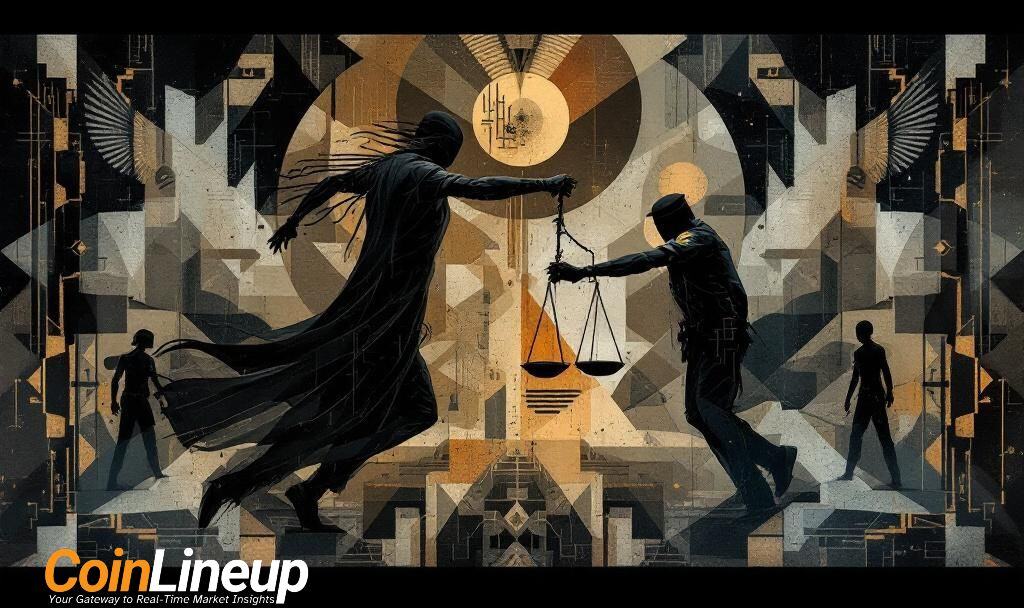
- Main event affects crypto stability, prompting regulatory scrutiny.
- DOJ seizes $15M USDT linked to North Korea.
- Regulatory focus shifts to stablecoins and laundering.
The U.S. Department of Justice charged individuals aiding North Korean cyber criminals, seizing $15 million in USDT from APT38 hacks. The seizures target North Korea’s use of cryptocurrency to bypass sanctions.
US authorities have seized $15 million in USDT as part of actions against North Korean cybercriminals involved in fraudulent crypto schemes, according to the Department of Justice.
The action emphasizes global efforts to counter crypto-related financial threats, specifically those involving North Korean state-sponsored groups like APT38.
DOJ’s Crackdown on Cryptocurrency Crimes
The Department of Justice has announced a significant seizure of $15 million (USDT) related to North Korean cybercriminal operations. This operation reveals ongoing efforts in tackling illicit financial networks exploiting cryptocurrency for sanctions evasion. Five U.S.-based individuals involved in facilitating these activities have pleaded guilty, showcasing the law enforcement’s commitment to mitigate these threats.
Federal authorities highlight a focused crackdown on crypto-enabled crimes involving both digital and fiat assets. By targeting these networks, the DOJ aims to disrupt elaborate setups used by group APT38 and others. The impact of this is yet to fully emerge but could prompt greater regulatory action on stablecoins and monitoring-related protocols. These developments show potential for stringent regulatory measures focusing on cryptocurrency exchanges and asset management platforms.
The North Korean government’s relentless campaign to evade U.S. sanctions and generate millions of dollars to fund its authoritarian regime and weapons programs continues to be exposed. — Roman Rozhavsky, Assistant Director, FBI Counterintelligence Division
The DOJ’s engagement aligns with efforts to enhance global cooperation on financial cybercrime and strengthen systemic defenses. Industry leaders are observing these actions closely, noting the complexities posed by increasing cyber threats linked to foreign governments.
While no immediate disruptions in the significant currency flows were observed, the seizure could lead to policy shifts in handling illicit crypto transactions. Greater cross-border regulatory collaboration could emerge as a strategic response, echoing concerns over nation-state use of digital currencies for geopolitical and fiscal leverage.


About the author


AI Key to Web3 Competitiveness, Says Gate CEO
Gate.io's CEO Dr. Han states AI will drive Web3's future, enhancing usability and integration.

Binance Initiates First Alpha Box Airdrop Event
Binance launches Alpha Box airdrop, starting at 18:00 UTC, requiring 242 points minimum.

Hong Kong SFC Introduces New Virtual Asset Regulations
Hong Kong's Securities and Futures Commission, led by CEO Julia Leung Fung-yee, announced new virtual asset regulations at Consensus 2026, introducing margin financing and perpetual contracts for select investors.

European Parliament Endorses Digital Euro With Dual Functionality
Pasquale Tridico and 48 EU lawmakers led the February 10, 2026 move in the European Parliament to endorse a digital euro proposal with online and offline capabilities.

Galaxy Digital CEO Predicts Decline in Cryptocurrency Speculation
Galaxy Digital's Mike Novogratz anticipates a shift from speculative to institutional investments in cryptocurrency.

Crypto.com CEO Acquires AI.com for $70 Million in Crypto
Crypto.com CEO Kris Marszalek acquired AI.com for $70 million in cryptocurrency. Unverified claims of a subsequent $500 million offer arise.
Related
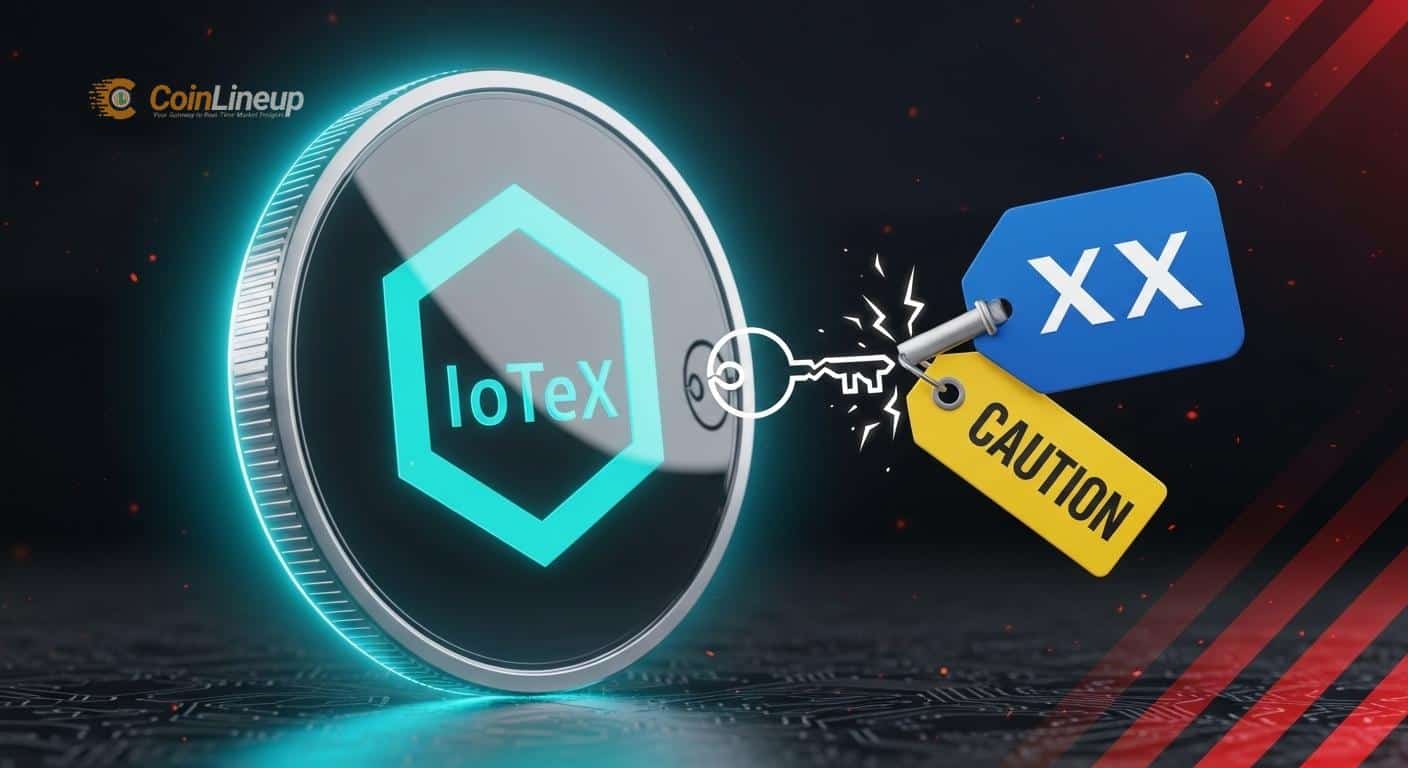
IoTeX (IOTX) faces Upbit caution tag after key exploit
Upbit flagged IoTeX after a key exploit; deposits paused pending DAXA review. Upbit caution list, IoTeX private key exploit, IOTX deposit suspension per notice.

US Dollar Index eases as tariff risks dent growth outlook
Tariff-policy uncertainty is pressuring the US Dollar Index (DXY) via growth, inflation, and risk sentiment, analysts cite, as markets weigh safe-haven flows.

Copper stocks rise in U.S. on tariffs, COMEX-LME spread
Tariffs and a U.S. reserve spurred prebuying, widened COMEX-LME spreads, and lifted stocks. Project Vault, COMEX-LME arbitrage, tariff-driven stockpiling

Solana edges past Tron in 24h fees on DeFi activity
Data shows Solana led 24h fees on DeFi/MEV; TRC-20 USDT drove Tron on 7d/30d per data. Solana vs Tron fees, DeFiLlama fee revenue, USDT stablecoin transfers

Bitcoin sees outflows from Bitdeer as firm reports zero BTC
Bitdeer data: all mined BTC sold; zero balance Feb 20. Wu cites liquidity, diversification. Bitdeer Bitcoin sell-off, Jihan Wu statement, BTC holdings update

Apple Macs face delays as OpenClaw drives memory squeeze
Analysts cite AI demand from OpenClaw tightening DRAM/HBM supply, extending Mac lead times: Apple Mac delivery delays, OpenClaw AI demand, memory chip shortage.