

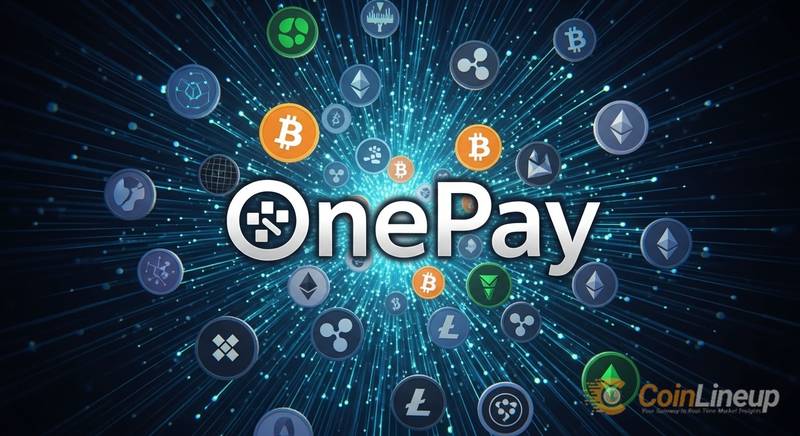
- OnePay announced 10 new crypto assets for its consumer app, expanding the service beyond bitcoin and ether.
- The move matters because OnePay is a mainstream finance app tied to Walmart’s retail footprint, not a crypto-native exchange.
- The expansion points to a broader competition between consumer fintech apps over who will onboard the next wave of retail crypto users.
OnePay says it has added 10 new assets to its crypto service, widening the lineup beyond bitcoin and ether and pushing deeper into the race to make crypto accessible through mainstream finance apps. That makes the update more important than a simple token-listing story.
OnePay is not targeting advanced traders first. Its pitch is convenience: letting users buy, sell, and hold digital assets inside an app already positioned around everyday financial services. Because Walmart has a large consumer footprint, even incremental product changes here can matter more for adoption than similar changes on a niche crypto platform.
What OnePay Announced
In a March 20, 2026 press release distributed by PR Newswire, OnePay said it was adding 10 new assets to its crypto platform, bringing the total supported lineup to 12. The announcement framed the expansion as a response to customer demand and described the crypto feature as part of a broader finance app used by millions of Americans.
That framing matters because it positions OnePay less as an exchange and more as a distribution channel. The company is competing with apps like PayPal, Venmo, and Cash App for casual users who want exposure to crypto without leaving a mainstream consumer finance environment.
Why the Expansion Matters Beyond One App
Mainstream distribution is often what separates a crypto feature from a crypto business. OnePay’s relationship with Walmart gives the product a customer acquisition advantage that many crypto-native firms do not have. If even a small percentage of those users try digital assets through the app, the adoption impact can be meaningful.
The move also fits a broader pattern in which crypto access is increasingly bundled into payment, shopping, and savings products rather than being offered only on trading venues. Readers watching how stablecoins and consumer finance are converging can compare this expansion with Polymarket’s collateral shift around USDC and with other market-structure stories where user experience matters as much as the underlying asset.
The main question now is whether OnePay keeps treating crypto as a limited feature set or turns it into a larger piece of its consumer finance strategy. Either way, the latest token expansion shows that large retail-linked apps still see room to grow in digital assets even when market sentiment remains uneven.


About the author


Spartans.com Inks Exclusive RAF Deal, While Stake Faces Legal Hurdles & Bet365 Grows in Michigan
Secure a 12-month exclusive RAF deal with Spartans.com before its August launch as Stake tackles US lawsuits & Bet365 enters Michigan as its 17th US state.

Spartans.com Inks Exclusive RAF Deal, While Stake Faces Legal Hurdles & Bet365 Grows in Michigan
Secure a 12-month exclusive RAF deal with Spartans.com before its August launch as Stake tackles US lawsuits & Bet365 enters Michigan as its 17th US state.

UK Gambling Tax Hits 40% – Paddy Power, Betfair, Sky Bet, & Ladbrokes Face the Squeeze As Spartans.com Rise
UK gambling tax hits 40%. Paddy Power slashes promos. Ladbrokes closes shops. Spartans pays 33% CashRake with zero tax baggage. The alternative is here.

UK Gambling Tax Hits 40% – Paddy Power, Betfair, Sky Bet, & Ladbrokes Face the Squeeze As Spartans.com Rise
UK gambling tax hits 40%. Paddy Power slashes promos. Ladbrokes closes shops. Spartans pays 33% CashRake with zero tax baggage. The alternative is here.
Spartans Crypto Casino Hits $1B Wagers in Beta While Ethereum & Chainlink Prepare for the Next Phase
Learn why Spartans crypto casino hit $1B in beta wagers as the Ethereum price forecast 2026 & Chainlink price trends suggest new market opportunities.
Spartans Crypto Casino Hits $1B Wagers in Beta While Ethereum & Chainlink Prepare for the Next Phase
Learn why Spartans crypto casino hit $1B in beta wagers as the Ethereum price forecast 2026 & Chainlink price trends suggest new market opportunities.
Related

Cardano Teams Seek $50M for Bitcoin DeFi, Vision 2030
Cardano teams are seeking nearly $50 million for Bitcoin DeFi projects and Vision 2030, marking a major funding request tied to the network's roadmap.
US Bankers Association Seeks 60-Day Delay for Stablecoin Rules
The US Bankers Association is urging a 60-day delay before stablecoin rules take effect. This outline focuses on the pause request, regulatory timing, and market implications.

Polymarket Paris Weather Glitch Sparks $37K Scrutiny
Polymarket faces scrutiny after traders reportedly made $37K from a Paris weather market glitch, raising fresh questions about trust and market rules.

New York Seeks $3.4B in Crypto Fines Over Prediction Apps
New York is seeking $3.4 billion in crypto fines tied to prediction apps. This outline tracks the claims, the products involved, and the broader fallout.
GSR Debuts Active Multi-Asset Crypto Staking ETF on Nasdaq
GSR has debuted an active multi-asset crypto staking ETF on Nasdaq. Here is what the launch means, how the fund is positioned, and what investors should watch next.

UK watchdog raids eight London sites over illegal P2P crypto trading
UK authorities raided eight London locations in a suspected illegal P2P crypto trading probe. Here is what happened and why it matters for compliance.