Google Research published a paper on March 31, 2026 showing that future quantum computers could break the elliptic-curve cryptography protecting Bitcoin and other systems with far fewer resources than previously estimated. The headline question, why Bitcoin and not banking or nuclear codes, says more about media framing than about where the actual risk sits.
KEY TAKEAWAYS
- Google’s quantum research targets elliptic-curve cryptography broadly, not Bitcoin specifically.
- Bitcoin is used as the public-facing example because its security model is open and globally recognized.
- Banking and military systems face the same underlying cryptographic threat but are too opaque to serve as clear public examples.
Why Bitcoin Becomes the Headline Example in Quantum Security Discussions
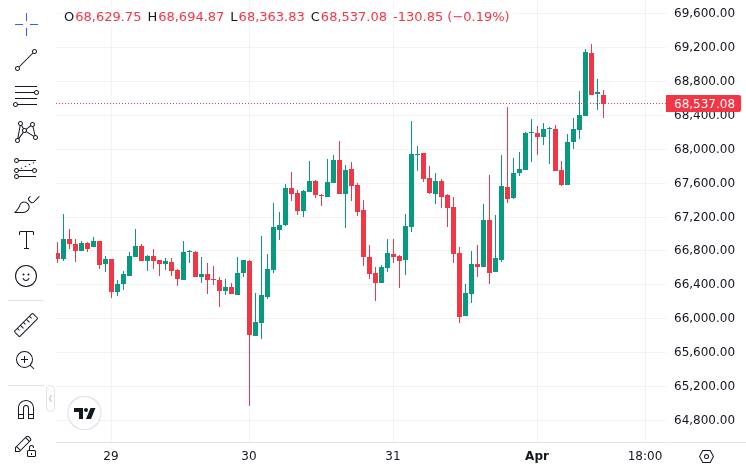
Bitcoin is the world’s most recognized cryptocurrency, trading at $68,522 with a market cap above $1.37 trillion. When researchers need a concrete, universally understood example of a system that depends on elliptic-curve cryptography, Bitcoin is the obvious choice.
Google’s whitepaper estimates two ECDLP-256 attack circuits: one using fewer than 1,200 logical qubits with 90 million Toffoli gates, and another using fewer than 1,450 logical qubits with 70 million Toffoli gates. Those circuits could run on fewer than 500,000 physical qubits in minutes, roughly a 20-fold reduction from earlier estimates.
The research explicitly states that the same elliptic-curve cryptography protects cryptocurrency and other systems. Bitcoin’s visibility does not mean it faces the highest real-world risk. It means it is the most legible public benchmark for a threat that spans far beyond any single blockchain.
Unlike closed financial networks or classified government infrastructure, Bitcoin’s entire security model is debated in public. Every line of its cryptographic design is open source, every transaction is on-chain, and every proposed upgrade is argued in open forums. That transparency makes it a natural reference point for researchers communicating with a general audience, similar to how regulatory debates around crypto oversight in the EU attract outsized attention because the policy process is public.
Why Banking Systems and Nuclear Codes Are Not the Best Public Comparison
The headline’s implied comparison, that Google should have focused on banking or nuclear command systems, misunderstands how public research communication works. Banking infrastructure relies on layered, permissioned security stacks that are difficult to summarize in a single clean example.
A bank does not depend on one cryptographic scheme the way a Bitcoin transaction depends on ECDSA. Financial institutions use hardware security modules, network segmentation, fraud monitoring, and regulatory mandates that create overlapping defenses. Explaining how quantum computing threatens that stack requires far more context than a public blog post can deliver.
Nuclear command-and-control systems are even less useful as public examples. Their cryptographic details are classified, their architectures are not publicly documented, and no researcher at Google or anywhere else could responsibly disclose vulnerabilities in those systems through an open blog post. The secrecy that protects those systems also makes them invisible as teaching examples.
None of this means banking or military systems are safe from quantum threats. NIST’s November 2024 draft transition report confirms that ECDSA and RSA at 112-bit security strength are deprecated after 2030 and disallowed after 2035. Those same algorithms underpin authentication across banking, government, and enterprise systems worldwide.
The difference is disclosure, not vulnerability. Bitcoin’s openness makes it the example that can be discussed publicly. Closed systems face the same math but cannot be used as illustrations without compromising operational security, much like how UAE crypto firms operate under public scrutiny while traditional financial institutions in the same region face similar pressures behind closed doors.
What Google’s Bitcoin Reference Actually Signals for Crypto Investors
Google’s mention of Bitcoin is a signal about relevance and public stakes, not an announcement that the network is broken today. The company’s separate March 25, 2026 post on post-quantum cryptography migration framed the threat as internet-wide, covering encryption, digital signatures, and authentication services broadly, with a 2029 internal migration target.
For crypto investors, the practical concern is preparedness and timeline. Google set a 2029 deadline for its own PQC migration. NIST’s deprecation window begins after 2030. Bitcoin’s governance process, which requires broad community consensus for protocol changes, moves slower than a corporate migration plan.
That governance gap is the real story for holders. The cryptographic threat is not unique to Bitcoin, but Bitcoin’s decentralized upgrade path means the network cannot simply push a patch the way Google can update its authentication services. The question is whether Bitcoin’s developer community and node operators can coordinate a post-quantum transition before the threat window opens, a challenge that parallels the coordination difficulties seen in ecosystem-wide initiatives like token airdrops that require broad participant alignment.
Google’s research is a calibration update, not a crisis announcement. The 20-fold reduction in estimated physical qubits is significant for long-term planning, but current quantum hardware remains far below the 500,000 physical qubit threshold. Investors tracking this space should watch for concrete Bitcoin Improvement Proposals addressing post-quantum signature schemes rather than reacting to headline framing that conflates research disclosure with imminent danger.
Disclaimer: This article is for informational purposes only and does not constitute financial or investment advice. Cryptocurrency and digital asset markets carry significant risk. Always do your own research before making decisions.


