



- Roman Storm charged with controlling Tornado Cash.
- IRS agent alleges Storm’s practical control.
- Trial outcomes might affect privacy tools.
Critical Trial in the Crypto Space
Roman Storm, co-founder of Tornado Cash, stands trial in Manhattan accused of controlling the cryptocurrency mixer and violating sanctions, a case drawing attention to decentralized finance’s legal liabilities.
Roman Storm’s Trial and Accusations
Roman Storm’s trial centers around his alleged “control” over Tornado Cash, a decentralized crypto mixer. Accusations include conspiracy to launder money and violation of sanctions, risking up to 45 years of imprisonment if convicted.
Roman Storm and other co-founders like Alexey Pertsev and Roman Semenov face scrutiny. Despite Storm’s accounting expertise, his legal team argues it doesn’t qualify him to testify about cryptocurrency tracing.
Stephan George, Special Agent, IRS Criminal Investigation, said in court, “Roman Storm had control over funds moving through Tornado Cash, based on chain analysis and Telegram conversations between founders”: source
Internal Tensions and Market Reactions
IRS Special Agent Stephan George claimed in court that Storm controlled Tornado Cash operations, basing findings on chain analysis and founder communications. Ethereum expert Taylor Monahan contests these assertions, questioning the tracing process’s accuracy.
There have been no substantial financial market movements tied to the trial, with exchanges and institutional entities remaining silent. However, Tornado Cash’s impact on Ethereum’s privacy protocols is under close watch by the crypto community.
Future of Privacy Protocols
The uncertainty surrounding Tornado Cash’s legal standing could deter developers from engaging with privacy-focused tools. Concerns about developer liability in open-source projects continue to grow despite a lack of formal declarations from major industry voices.
Historical parallels with cases like Samourai Wallet and ShapeShift highlight possible outcomes. These involve increased regulatory pressure and potential market exits for privacy-centric technologies, affecting tokens such as Zcash and Monero.


About the author


AI Key to Web3 Competitiveness, Says Gate CEO
Gate.io's CEO Dr. Han states AI will drive Web3's future, enhancing usability and integration.

Binance Initiates First Alpha Box Airdrop Event
Binance launches Alpha Box airdrop, starting at 18:00 UTC, requiring 242 points minimum.

Hong Kong SFC Introduces New Virtual Asset Regulations
Hong Kong's Securities and Futures Commission, led by CEO Julia Leung Fung-yee, announced new virtual asset regulations at Consensus 2026, introducing margin financing and perpetual contracts for select investors.

European Parliament Endorses Digital Euro With Dual Functionality
Pasquale Tridico and 48 EU lawmakers led the February 10, 2026 move in the European Parliament to endorse a digital euro proposal with online and offline capabilities.

Galaxy Digital CEO Predicts Decline in Cryptocurrency Speculation
Galaxy Digital's Mike Novogratz anticipates a shift from speculative to institutional investments in cryptocurrency.

Crypto.com CEO Acquires AI.com for $70 Million in Crypto
Crypto.com CEO Kris Marszalek acquired AI.com for $70 million in cryptocurrency. Unverified claims of a subsequent $500 million offer arise.
Related

Cardano Teams Seek $50M for Bitcoin DeFi, Vision 2030
Cardano teams are seeking nearly $50 million for Bitcoin DeFi projects and Vision 2030, marking a major funding request tied to the network's roadmap.

US Bankers Association Seeks 60-Day Delay for Stablecoin Rules
The US Bankers Association is urging a 60-day delay before stablecoin rules take effect. This outline focuses on the pause request, regulatory timing, and market implications.

Lido Says 9% of EarnETH Hit by Kelp Hack, Staking Safe
Lido says the Kelp hack affected 9% of EarnETH exposure, while core Ethereum staking operations remain safe and stable. Here's what that means.

Polymarket Paris Weather Glitch Sparks $37K Scrutiny
Polymarket faces scrutiny after traders reportedly made $37K from a Paris weather market glitch, raising fresh questions about trust and market rules.
PUSD Launches on ADI Chain in Middle East Expansion
PUSD launches on ADI Chain as part of a broader Middle East stablecoin expansion. This outline focuses on the launch, its regional context, and what readers should watch next.
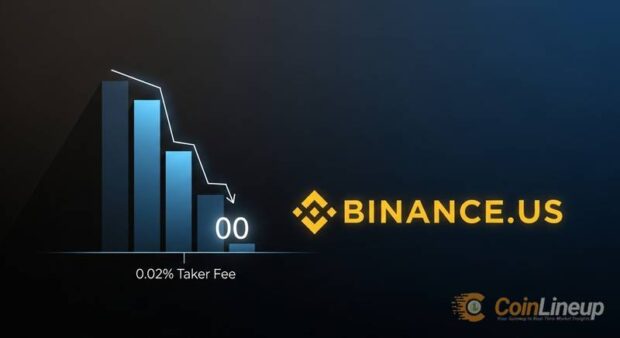
Binance.US Spot Trading Fees Fall to 0% for Makers, 0.02% for Takers
Binance.US has cut spot trading fees to 0% for makers and 0.02% for takers. Here’s what changed, who benefits, and why the move matters.