



Key Takeaways:
- Treasury acknowledges lawful use of crypto mixers for financial privacy.
- Proposed approach prioritizes transparency over outright prohibition of mixing services.
- Exchanges and wallets revisiting policies, enhancing screening, escalation, and reporting.
As reported by Cointelegraph (https://cointelegraph.com/news/us-treasury-legitimate-use-crypto-mixer), officials acknowledged that lawful users may leverage crypto mixers to maintain financial privacy on transparent blockchains. The acknowledgement frames privacy as a legitimate need alongside oversight.
According to Crypto Briefing (https://cryptobriefing.com/crypto-mixer-transparency-risks/), senior leadership characterized the current approach as a proposed transparency measure rather than an outright prohibition on mixers. The emphasis is on distinguishing users who seek privacy from those attempting to sidestep anti-money laundering (AML) and know-your-customer (KYC) safeguards.
In the near term, risk teams at exchanges, custodians, and wallet providers may revisit deposit and withdrawal policies involving mixing services, calibrating screening, escalation, and reporting workflows. Sensitivity is likely to be highest where interactions touch well-known protocols such as tornado cash or counterparties already flagged by sanctions and law-enforcement databases.
Regulators are attempting to separate privacy-enhancing activity from obfuscation used to conceal illicit flows. In practice, the boundary turns on user intent, the presence of AML controls, and whether a service facilitates evasion of KYC or reporting obligations.
Setting the tone for this distinction, Brian Nelson, Under Secretary for Terrorism and Financial Intelligence, U.S. Treasury, said: “This is not a ban on mixers … this is a proposed rule designed to drive transparency.” He has also differentiated between obfuscation and anonymity tools that support privacy on public chains when used lawfully.
Civil liberties concerns persist that equating privacy tools with wrongdoing would overreach. “There’s supposed to be a presumption of innocence … Technologies that allow you to do things on chain but also allow you to preserve privacy are really important,” said Hester M. Peirce, Commissioner, Securities and Exchange Commission.
Technical research adds nuance. A 2022 study on arXiv (https://arxiv.org/abs/2201.09035) found zero-knowledge mixers can materially improve privacy but often overstate anonymity sets, and proximity to illicit flows can degrade plausible deniability even for lawful users. These findings help explain why oversight may prioritize transparency requirements while acknowledging legitimate privacy use cases.
Disclaimer: CoinLineup.com provides cryptocurrency and financial market information for educational and informational purposes only. The content on this site does not constitute financial, investment, or trading advice. Cryptocurrency and stock markets involve significant risk, and past performance is not indicative of future results. Always conduct your own research and consult a qualified financial advisor before making any investment decisions.


About the author


$LIBRA Crashes 99% After Argentine Prosecutor Findings
$LIBRA token plummets 99% after Argentine prosecutors present evidence linking President Milei to the cryptocurrency scandal. TRM Labs forensic analysis cited.

$LIBRA Token Scandal Expands as Milei Probed
Argentine President Milei faces investigation over $LIBRA token scandal that caused $80-100M in investor losses. Judicial documents show $5M payment allegation.

Cornell Unveils Institutional Voice Policy Amid Academic Freedom Debate
Cornell University releases new institutional voice policy guidelines. The Presidential Task Force outlines framework for university speech on social and political issues.

Bitcoin Strategy Purchases Exceed 30,000 BTC Forecast
Strategy's Bitcoin purchases this week surpass analysts' 30,000 BTC forecast, marking a significant acceleration in the company's accumulation strategy.
Key Takeaways: What factors drive cryptocurrency market movements?How do regulatory announcements affect digital asset prices?What should investors consider before entering crypto markets?Are there risks specific to digital asset investments?How can investors stay informed about market developments? Coinlineup Editorial TeamThis article was prepared and reviewed by the Coinlineup editorial team using public market data, blockchain sources, and industry reports to ensure transparent coverage of cryptocurrency markets. Investment DisclaimerThe information on Coinlineup is provided for informational and educational purposes only and should not be considered financial or investment advice. Cryptocurrency markets are highly volatile and involve significant risk. Readers should conduct their own research (DYOR) and consult a qualified financial advisor before making investment decisions. Content Disclaimer · Terms · Privacy · Affiliate

Oil Surges as US-Iran Tensions Rise, IEA Taps Reserves
Oil prices jump as US-Iran conflict intensifies; IEA approves strategic reserve release to stabilize supply. Market impact analysis.
Related
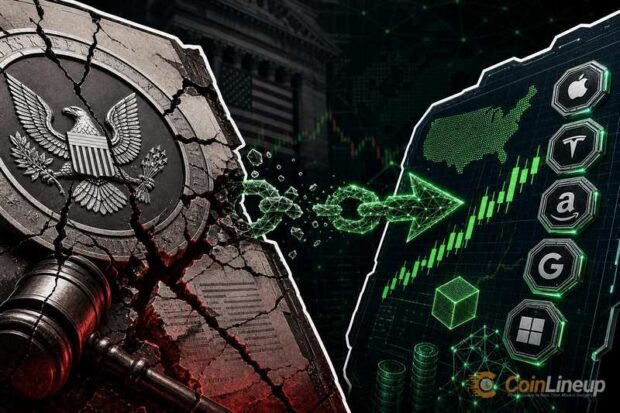
SEC Proposal to Scrap NMS Rules 611 and 610(e) Could Reshape Tokenized U.S. Stock Trading in DeFi
Analyze how a proposed SEC rollback of NMS Rules 611 and 610(e) could influence tokenized U.S. stock trading in DeFi, market structure, and crypto platform strategy.

Ripple and Bitso Bring MXNB Stablecoin to XRP Ledger
Ripple and Bitso are expanding their partnership to bring the MXNB stablecoin to the XRP Ledger. Here is what the move could mean for XRPL users.
Seized Alameda Funds Move to Coinbase Prime: What It Signals
Seized Alameda funds have moved to Coinbase Prime. This outline focuses on what moved, why the transfer matters, and what crypto market watchers should monitor next.
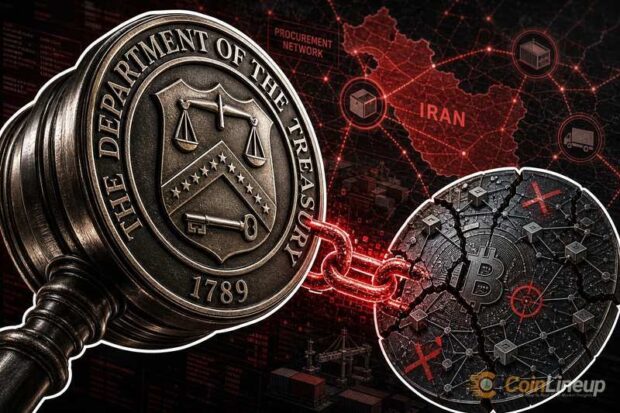
U.S. Treasury Expands Iran Crypto Sanctions to Procurement Networks
The U.S. Treasury has widened Iran-related crypto sanctions to cover procurement networks, raising fresh compliance and enforcement questions for digital asset platforms and market participants.

Coinbase launches Coinbase for Agents for AI trading
Coinbase has launched Coinbase for Agents, a new push into AI trading and portfolio management. Here is what the product does, why it matters, and what to watch next.
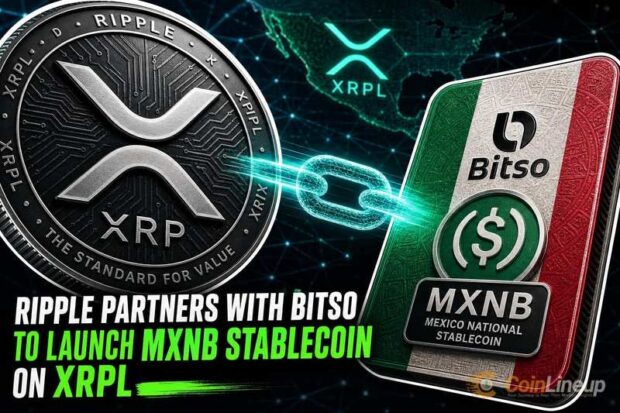
Ripple Partners With Bitso to Launch MXNB Stablecoin on XRPL
Ripple has partnered with Bitso to launch the MXNB stablecoin on the XRP Ledger, framing the peso-linked token around payments and blockchain settlement use.