


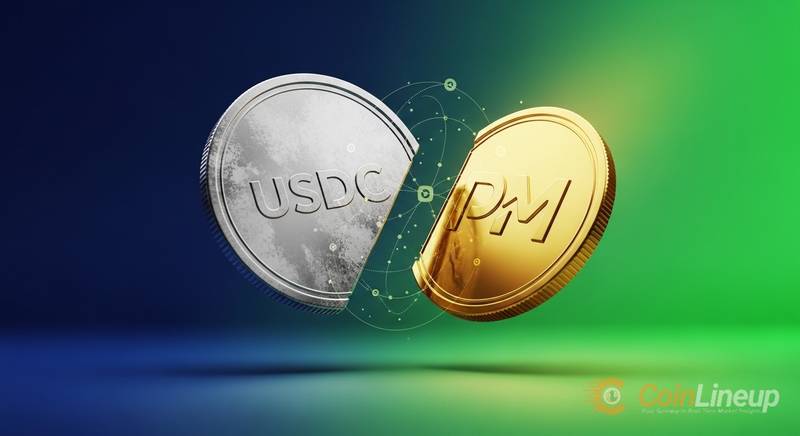
- Polymarket’s planned Polymarket USD token has been described as a 1:1 USDC-backed collateral token.
- If that structure holds, the change is more about platform plumbing than about fully replacing USDC reserves.
- The bigger question is strategic: whether large crypto apps will keep building branded wrappers on top of existing stablecoins.
Polymarket’s reported plan to roll out a token called Polymarket USD raised an obvious question for traders: does this reduce the role of USDC on the platform, or does it simply repackage USDC under a native collateral wrapper? Based on the public reporting so far, the second interpretation looks closer to reality.
That matters because stablecoin headlines often overstate what is actually changing. If Polymarket USD is backed 1:1 by USDC, then Circle’s token may remain the reserve asset even if users stop seeing USDC.e directly inside the trading interface.
What Is Confirmed About Polymarket’s Stablecoin Plan
Reporting on the exchange upgrade said Polymarket will move away from bridged USDC.e and introduce a new collateral token called Polymarket USD. Coverage from Payment Expert and Coin Insider described the token as backed 1:1 by USDC, while earlier reporting around the Circle partnership pointed to native USDC becoming more central to settlement on the platform.
That means the practical shift is away from bridged collateral and toward a platform-specific wrapper. It does not automatically mean Polymarket is abandoning USDC as the underlying reserve asset. Unless that reserve structure changes, Circle still sits inside the platform’s liquidity stack even if the user-facing label changes.
What the Launch Could Mean for USDC
In the short term, the direct effect on USDC demand looks limited. A USDC-backed wrapper may change operational risk, migration flows, and how traders interact with collateral, but it does not remove the need for USDC if each issued unit still represents a matching amount held in reserve.
The longer-term signal is more important. If more large trading apps build branded collateral layers on top of existing stablecoins, the market may move toward a split where reserve assets and user-facing settlement tokens are no longer the same thing. That would not necessarily weaken USDC immediately, but it could reduce the visibility of Circle’s brand at the application level.
For readers tracking stablecoin adoption beyond prediction markets, this story sits alongside other infrastructure shifts such as Wyoming’s state-backed stablecoin plans and consumer-facing distribution efforts like OnePay’s expanding crypto service. The real takeaway is that stablecoin competition is increasingly happening at the app layer, not only at the reserve layer.


About the author


Spartans.com Inks Exclusive RAF Deal, While Stake Faces Legal Hurdles & Bet365 Grows in Michigan
Secure a 12-month exclusive RAF deal with Spartans.com before its August launch as Stake tackles US lawsuits & Bet365 enters Michigan as its 17th US state.

Spartans.com Inks Exclusive RAF Deal, While Stake Faces Legal Hurdles & Bet365 Grows in Michigan
Secure a 12-month exclusive RAF deal with Spartans.com before its August launch as Stake tackles US lawsuits & Bet365 enters Michigan as its 17th US state.

UK Gambling Tax Hits 40% – Paddy Power, Betfair, Sky Bet, & Ladbrokes Face the Squeeze As Spartans.com Rise
UK gambling tax hits 40%. Paddy Power slashes promos. Ladbrokes closes shops. Spartans pays 33% CashRake with zero tax baggage. The alternative is here.

UK Gambling Tax Hits 40% – Paddy Power, Betfair, Sky Bet, & Ladbrokes Face the Squeeze As Spartans.com Rise
UK gambling tax hits 40%. Paddy Power slashes promos. Ladbrokes closes shops. Spartans pays 33% CashRake with zero tax baggage. The alternative is here.
Spartans Crypto Casino Hits $1B Wagers in Beta While Ethereum & Chainlink Prepare for the Next Phase
Learn why Spartans crypto casino hit $1B in beta wagers as the Ethereum price forecast 2026 & Chainlink price trends suggest new market opportunities.
Spartans Crypto Casino Hits $1B Wagers in Beta While Ethereum & Chainlink Prepare for the Next Phase
Learn why Spartans crypto casino hit $1B in beta wagers as the Ethereum price forecast 2026 & Chainlink price trends suggest new market opportunities.
Related

Report: Grayscale Stakes 102,400 ETH Worth About $237 Million
A report says Grayscale has staked 102,400 ETH valued at about $237 million. Here is what the figure means, why it matters, and what to watch next.

US Freezes $344M in Iran-Linked Crypto, Targets IRGC Flows
The US has frozen $344 million in crypto tied to Iran, with Treasury targeting IRGC-linked flows. Here's what happened and why it matters.

Chainlink Data Services Go Live on AWS Marketplace
Chainlink data services are now live on AWS Marketplace. This article breaks down what the launch confirms, why the listing matters, and what it could signal for blockchain infrastructure distribution.

Coinbase to List Fluent (BLEND) USD Spot Pair
Coinbase is set to list Fluent (BLEND) against USD in spot trading. Here’s what the announcement means and what traders should watch next.

Cardano Teams Seek $50M for Bitcoin DeFi, Vision 2030
Cardano teams are seeking nearly $50 million for Bitcoin DeFi projects and Vision 2030, marking a major funding request tied to the network's roadmap.

US Bankers Association Seeks 60-Day Delay for Stablecoin Rules
The US Bankers Association is urging a 60-day delay before stablecoin rules take effect. This outline focuses on the pause request, regulatory timing, and market implications.