


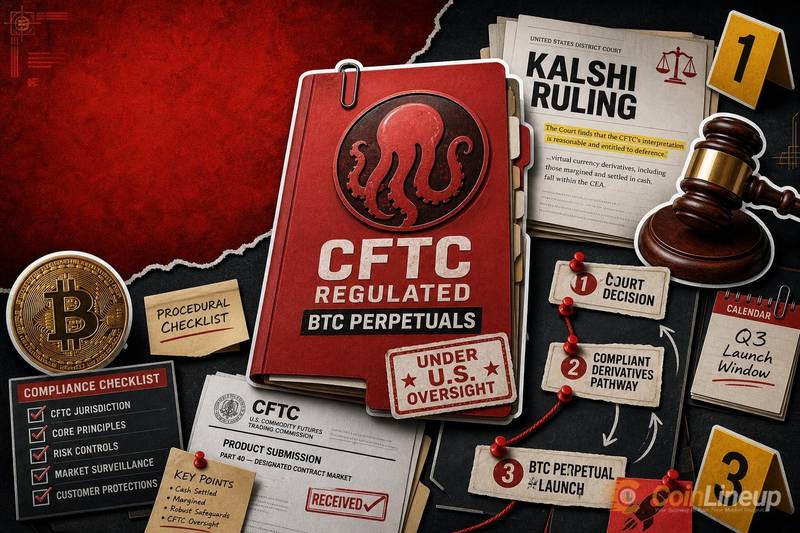
Kraken is moving to offer CFTC-regulated Bitcoin perpetual futures to U.S. traders, following a regulatory development in which the CFTC cleared Kalshi to operate a perpetual futures contract, opening a new pathway for regulated crypto derivatives on American soil.
What Kraken Is Planning With CFTC-Regulated Bitcoin Perpetuals
Kraken announced plans to bring what it describes as the first CFTC-regulated perpetual futures to U.S. traders. The product would allow American users to trade Bitcoin perpetuals within a federally regulated framework for the first time.
Perpetual contracts differ from standard futures in that they have no expiration date. Traders can hold positions indefinitely, with periodic funding rate payments keeping the contract price tethered to the underlying spot price. This structure has dominated offshore crypto trading for years but has remained unavailable through regulated U.S. venues.
The significance lies in the regulatory wrapper. Until now, U.S. traders seeking perpetual exposure had to use offshore platforms operating outside CFTC oversight, creating counterparty risk and legal uncertainty. A CFTC-regulated perpetual product would eliminate that trade-off.
Why the CFTC’s Kalshi Decision Matters for Kraken’s Timing
The CFTC’s decision to clear Kalshi’s perpetual futures contract established a regulatory precedent. Kalshi announced the launch of perpetual futures in America, marking the first time a CFTC-regulated entity received approval to list such a product.
This clearance does not constitute blanket approval for all perpetual products. Each exchange must independently satisfy CFTC requirements. However, the Kalshi decision signals that the CFTC views perpetual-style contracts as permissible within existing regulatory frameworks, rather than categorically prohibited.
For Kraken, the timing is strategic. With a regulatory path now demonstrated by Kalshi’s approval, Kraken can pursue its own CFTC-regulated perpetual offering with greater confidence that the product structure itself will not face an outright regulatory rejection. The broader regulatory environment for crypto derivatives in the U.S. has been shifting, even as the total crypto market has faced significant drawdowns in 2026.
CoinDesk reported that the CFTC opened the crypto perpetual door with its approval, framing the decision as a watershed moment for U.S. derivatives markets.
What CFTC-Regulated Bitcoin Perpetuals Could Mean for the U.S. Market
Regulated Bitcoin perpetuals in the U.S. would address a long-standing gap. American traders and institutions have watched offshore venues dominate perpetual futures volume while being locked out by jurisdictional restrictions.
A CFTC-regulated product carries different risk characteristics than offshore alternatives. Segregated customer funds, position reporting requirements, and exchange oversight reduce counterparty exposure. For institutional participants, this regulatory clarity could unlock participation that compliance departments previously blocked.
The competitive implications extend beyond Kraken. If perpetual futures become available through multiple regulated U.S. venues, offshore platforms could see volume migration from American traders who previously had no domestic option. This regulatory development arrives at a time when governments globally are tightening oversight of crypto networks, making regulated access increasingly valuable.
Network reliability is another factor regulated venues will need to address, as recent mainnet outages on other blockchain platforms have underscored the infrastructure risks that institutional traders weigh when choosing trading venues.
Whether Kraken’s specific product receives final CFTC approval remains to be confirmed. The exchange has stated its plans publicly, but the regulatory process between announcement and live trading involves additional steps. What has changed is the regulatory environment itself, with Kalshi’s clearance demonstrating that perpetual contracts can exist within the CFTC’s framework.
Disclaimer: This article is for informational purposes only and does not constitute financial or investment advice. Cryptocurrency and digital asset markets carry significant risk. Always do your own research before making decisions.

About the author

Kraken Eyes CFTC-Regulated Bitcoin Perpetuals After Kalshi Ruling
Kraken is preparing CFTC-regulated Bitcoin perpetuals after the CFTC cleared a Kalshi contract, signaling a potential shift for US crypto derivatives.

UK Applies Sanctioned-Bank Treatment to Crypto Network Over $90B Claim
The UK has moved to treat a crypto network like a sanctioned bank after allegations it processed $90 billion tied to Russia-linked activity. Here is the core SEO outline.

Bitcoin Perps Get US Green Light, but One Catch Could Decide What Happens Next
Bitcoin perpetual futures have a US green light, but one unresolved catch could shape trader access, liquidity, and the market response.

Coinbase Opens Regulated Deribit Options for U.S. Institutions
Coinbase has opened access to regulated Deribit options for U.S. institutions, expanding institutional crypto derivatives access and market reach.

Sui Mainnet Experiences Network Stall, Pausing Activity
Sui mainnet experienced a network stall that paused activity across the chain. This outline covers what happened, likely impact areas, and what users should watch next.

Satoshi Nakamoto Bitcoin Lawsuit Says BTC Is Lost Property
A new lawsuit argues Satoshi Nakamoto's bitcoin should be treated as lost property. Here's what the claim means and why it matters for Bitcoin.
Related

How Bitcoin Could Price Trump’s Hormuz Reopening Claim This Weekend
A focused SEO outline on how Bitcoin may react if Hormuz reopens this weekend, including risk-on/risk-off signals, liquidity dynamics, and key market levels to watch.
Bitcoin Perps Get US Green Light, but One Catch Could Decide What Happens Next
Bitcoin perpetual futures have a US green light, but one unresolved catch could shape trader access, liquidity, and the market response.

CFTC Approves First U.S. Bitcoin Perpetual Futures
The CFTC has approved the first Bitcoin perpetual futures on a regulated U.S. exchange. Here is what the launch means for traders, market structure, and U.S. crypto access.
Satoshi Nakamoto Bitcoin Lawsuit Says BTC Is Lost Property
A new lawsuit argues Satoshi Nakamoto's bitcoin should be treated as lost property. Here's what the claim means and why it matters for Bitcoin.

CME to Move Bitcoin Futures and Options to 24/7 Trading
CME plans to move Bitcoin futures and options to 24/7 trading. Here is what changes for traders, which contracts are affected, and why the shift matters for crypto markets.

Trump Media’s Bitcoin Treasury Is Underwater — What the Crypto.com Transfer Signals
Trump Media's Bitcoin holdings are trading at a loss after a transfer to Crypto.com sparked speculation about a potential sale. Here's what the on-chain data shows.