


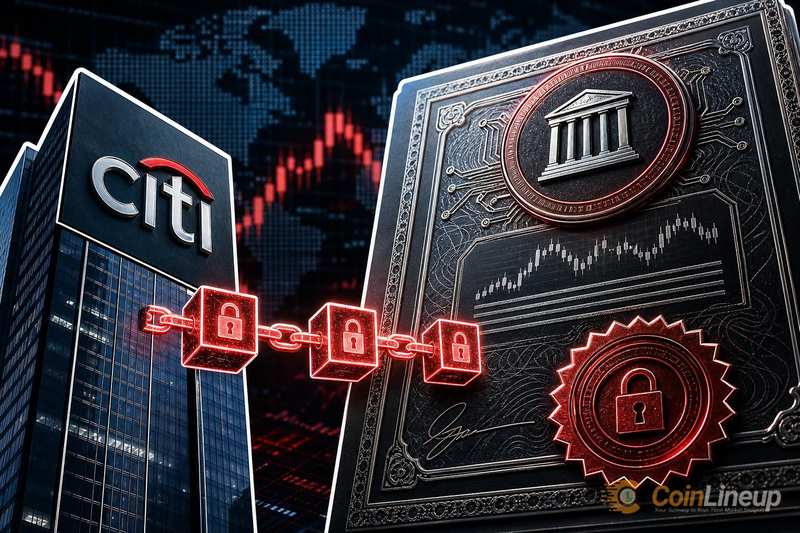
Citigroup is preparing to offer tokenized shares of private companies to wealthy and institutional clients, according to a Wall Street Journal report, marking one of the most significant moves yet by a major U.S. bank into blockchain-based private markets.
What Citigroup Is Reportedly Planning
The banking giant plans to let high-net-worth and institutional investors buy and sell tokenized versions of private company shares, The Block reported, citing the original WSJ story. Tokenized private shares are digital representations of equity in companies that have not gone public, recorded and transferred on blockchain infrastructure instead of through traditional paper-based or legacy custodial systems.
The product targets wealthy clients specifically because private company shares typically require large minimum investments and come with strict eligibility requirements. Unlike publicly traded stocks, these holdings cannot be freely bought or sold on open exchanges, making them accessible almost exclusively to accredited or institutional investors.
The move builds on Citi’s existing tokenization work. In early 2025, Citi announced a partnership with Switzerland’s SDX to unlock access to tokenized private market assets for global issuers and investors, signaling the bank had been laying groundwork for this type of offering for months.
Why Tokenized Private Shares Matter for Wealthy Investors
Private markets have long been defined by friction. Transferring ownership of private shares typically involves manual processes, legal paperwork, and settlement timelines that can stretch for days or weeks. Tokenization compresses those steps by using blockchain rails to record ownership and execute transfers more efficiently.
For affluent clients, the appeal goes beyond speed. Tokenized structures can potentially enable fractional ownership of high-value private stakes, lowering the minimum check size needed to access pre-IPO companies or late-stage startups. That said, regulatory constraints around accredited investor requirements and lock-up periods still apply regardless of the technology layer.
Wealthy clients are the natural first audience because they already participate in private markets and understand the liquidity trade-offs involved. A tokenized format does not eliminate the fundamental illiquidity of private equity, but it can make the mechanics of holding and transferring those positions less cumbersome, similar to how institutional players have been adjusting their digital asset strategies across multiple fronts.
What This Signals for Wall Street and Blockchain Adoption
When a bank of Citigroup’s scale commits to a tokenized product line, it sends a clear signal that blockchain infrastructure is moving past the experimental phase within traditional finance. Citi is not a crypto-native firm testing the waters; it is one of the largest financial institutions in the world building client-facing products on distributed ledger technology.
The broader trend of real-world asset tokenization has been accelerating across Wall Street. JPMorgan has been expanding its own blockchain-based payments and settlement infrastructure through its Kinexys platform, while other major banks have explored tokenized bonds and money market funds. Citigroup’s reported focus on private shares targets a segment where tokenization could solve real inefficiencies, as the regulatory landscape for digital assets continues to evolve across jurisdictions.
Institutional adoption of tokenization has consistently started with controlled, private-market use cases before expanding to broader applications. Citi’s approach fits that pattern, beginning with a sophisticated client base that can absorb the risks of an emerging product category. The move does not mean tokenized assets are about to go mainstream overnight, but it does add meaningful credibility to the sector at a time when blockchain-based financial products are competing for institutional attention.
No specific launch date or list of eligible private companies has been disclosed. Investors and market participants will be watching for details on which blockchain infrastructure Citi selects and how the bank structures custody and compliance around the offering.
Disclaimer: This article is for informational purposes only and does not constitute financial or investment advice. Cryptocurrency and digital asset markets carry significant risk. Always do your own research before making decisions.

About the author

Citigroup to Offer Tokenized Private Shares to Wealthy Clients: WSJ
Citigroup is reportedly preparing tokenized private share offerings for wealthy clients, signaling deeper Wall Street interest in blockchain-based private markets.
OpenAI Token Price Cuts Could Intensify Its Battle With Anthropic
OpenAI is reportedly weighing major token price cuts to win back users from Anthropic. Here is the SEO outline focused on pricing pressure, market impact, and what users should watch next.

Nigeria Senate Advances Crypto Regulation Bill to License Exchanges
Nigeria's Senate is advancing a crypto regulation bill focused on licensing exchanges. Here is the SEO outline covering the bill, scope, and industry impact.
Kalshi Launches XRP Perpetual Futures for U.S. Traders
Kalshi has launched XRP perpetual futures for U.S. traders, expanding regulated crypto derivatives access and giving the market a new XRP trading venue to watch.
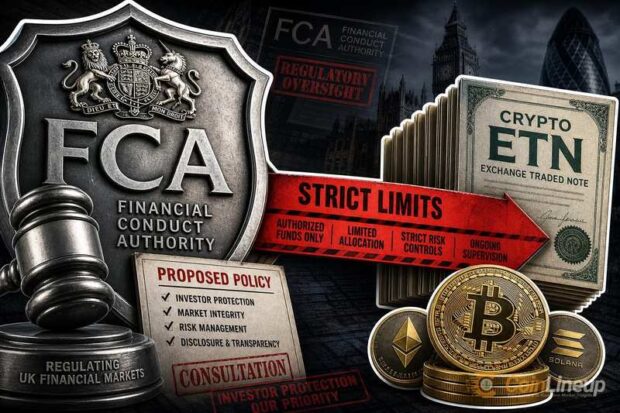
UK FCA Proposes Letting Authorized Funds Hold Crypto ETNs Under Strict Limits
The UK FCA has proposed allowing authorized funds to hold crypto ETNs under strict limits. Here’s what the proposal covers, who it affects, and why it matters.
Peter Schiff Pushes Back on Jamie Dimon’s Crypto Capital Rule Call
Peter Schiff challenged Jamie Dimon’s call to impose bank-level capital and compliance rules on crypto firms, sharpening the debate over regulation, risk, and market structure.
Related

Binance’s Philippines Return Faces BSP License Gap Warning
Binance's reported Philippines return faces scrutiny over a BSP license gap, with the core issue centered on regulatory compliance, market access, and local risk warnings.
BitMine Nears 5% ETH Target as Tom Lee Signals Slower Buying Pace
BitMine is approaching its 5% ETH accumulation target while Tom Lee signals a slower buying pace. Here is what the shift could mean for Ethereum and market watchers.
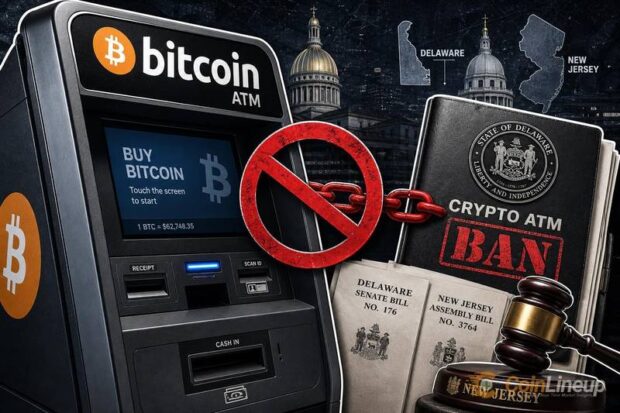
Delaware and New Jersey Advance Crypto ATM Ban Bills
Delaware and New Jersey are moving forward with crypto ATM ban bills, signaling tougher state scrutiny of kiosk operators, fraud risks, and compliance standards.
OpenAI Token Price Cuts Could Intensify Its Battle With Anthropic
OpenAI is reportedly weighing major token price cuts to win back users from Anthropic. Here is the SEO outline focused on pricing pressure, market impact, and what users should watch next.
Nigeria Senate Advances Crypto Regulation Bill to License Exchanges
Nigeria's Senate is advancing a crypto regulation bill focused on licensing exchanges. Here is the SEO outline covering the bill, scope, and industry impact.

Kalshi Adds Solana Perpetual Futures as DOGE, SHIB Await Approval
Kalshi launches Solana perpetual futures while DOGE and SHIB contracts await approval, signaling broader interest in crypto derivatives.