



CME Group has launched cash-settled Nasdaq crypto index futures covering Bitcoin, Ethereum, XRP and SOL, expanding its regulated derivatives lineup to four major digital assets in a single product rollout.
The new contracts, announced by CME Group on June 9, are tied to Nasdaq’s crypto index framework and settle in cash rather than requiring physical delivery of the underlying tokens.
What CME launched and which assets are included
The futures are listed on CME, the world’s largest derivatives exchange, and reference Nasdaq-branded crypto indexes for each of the four assets. Bitcoin, Ethereum, XRP and SOL each have their own contract tied to the corresponding index.
Cash settlement means traders never take custody of the underlying cryptocurrency. Instead, contracts pay out the difference between the entry price and the index value at expiry, denominated in U.S. dollars.
The four-asset scope is notable. CME has offered Bitcoin and Ethereum futures for years, but XRP and SOL contracts represent new territory for the exchange. As crypto.news reported, the inclusion of all four tokens in a single launch signals broader institutional product coverage.
How cash-settled crypto index futures work
In a cash-settled futures contract, no tokens change hands at expiration. The contract’s final value is determined by a reference index, in this case calculated by Nasdaq, rather than by a spot market transaction.
This structure removes the need for institutional participants to set up crypto custody infrastructure, wallet management or direct exchange accounts. Firms that already trade CME products can access crypto exposure through their existing brokerage relationships.
Index-linked settlement also reduces counterparty risk tied to individual spot exchanges. The Nasdaq index methodology aggregates pricing data to produce a single reference rate, which the futures contract tracks.
Why support for four assets matters
The lineup spans distinct segments of the crypto market. Bitcoin and Ethereum are the two largest assets by market capitalization. XRP serves cross-border payment networks, while SOL underpins the Solana blockchain ecosystem, which has seen growth in decentralized applications and meme token activity.
Packaging all four into regulated, cash-settled futures gives derivatives-focused firms a wider toolkit without requiring direct token exposure. For context, recent events like the Humanity Protocol’s H Token breach and the Balancer pool exploit have underscored why some institutional participants prefer regulated derivatives over direct on-chain holdings.
The launch also arrives as traditional finance firms continue expanding crypto product suites. Analysts at Bernstein have noted that steady institutional infrastructure buildout, rather than retail-driven hype cycles, may define the current market phase.
CME’s new contracts are available for trading immediately through the exchange’s standard clearing and settlement infrastructure.
Disclaimer: This article is for informational purposes only and does not constitute financial or investment advice. Cryptocurrency and digital asset markets carry significant risk. Always do your own research before making decisions.

About the author


CME Launches Nasdaq Crypto Index Futures for BTC, ETH, XRP, SOL
CME has launched cash-settled Nasdaq crypto index futures tied to Bitcoin, Ethereum, XRP and SOL. Here’s what the new contracts cover and why the rollout matters.

Humanity Protocol’s H Token Falls 83% After Reported $30M Private Key Breach
Humanity Protocol's H token plunged 83% after a reported $30 million private key breach. Here is the core incident, market reaction, and what it means next.

Yuga Labs Rescues $570,000 in NFTs After Floor Protocol Exploit
Yuga Labs stepped in after the Floor Protocol exploit to recover about $570,000 in NFTs. Here’s what happened, how the rescue worked, and why it matters.

Coinbase, Ripple and 200+ Crypto Firms Urge Senate on CLARITY Act
Coinbase, Ripple and more than 200 crypto firms are pressing the Senate to act on the CLARITY Act. Here is what the push means for U.S. crypto regulation.

DeFi’s Old Hack Vectors Are Fading, but New Risk Spans Six Chains
DeFi threats are shifting from older exploit patterns to a new cross-chain risk that can affect six chains at once. Here's the focused outline.

Bitmine Bought More Than 484,000 ETH in 2026
Bitmine bought more than 484,000 ETH in 2026. This outline focuses on the purchase size, why it matters for Ethereum watchers, and what readers should track next.
Related

Token of Power exploit drains $1.58M from Balancer pool
Token of Power suffered an exploit that drained $1.58 million from a Balancer pool. This outline focuses on what happened, the immediate impact, and what comes next.
Humanity Protocol’s H Token Falls 83% After Reported $30M Private Key Breach
Humanity Protocol's H token plunged 83% after a reported $30 million private key breach. Here is the core incident, market reaction, and what it means next.
Yuga Labs Rescues $570,000 in NFTs After Floor Protocol Exploit
Yuga Labs stepped in after the Floor Protocol exploit to recover about $570,000 in NFTs. Here’s what happened, how the rescue worked, and why it matters.
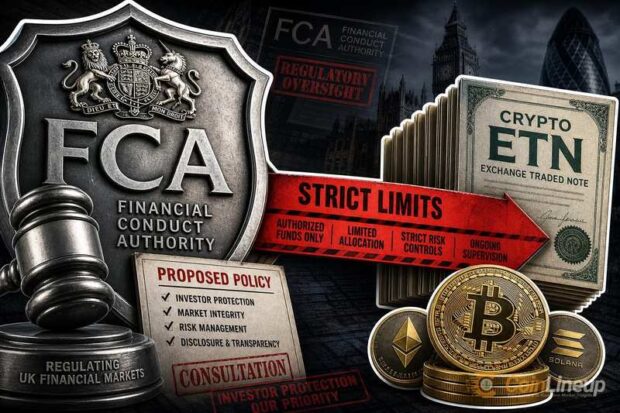
UK FCA Proposes Letting Authorized Funds Hold Crypto ETNs Under Strict Limits
The UK FCA has proposed allowing authorized funds to hold crypto ETNs under strict limits. Here’s what the proposal covers, who it affects, and why it matters.
Coinbase, Ripple and 200+ Crypto Firms Urge Senate on CLARITY Act
Coinbase, Ripple and more than 200 crypto firms are pressing the Senate to act on the CLARITY Act. Here is what the push means for U.S. crypto regulation.
Spot BTC, ETH, SOL ETFs See Outflows as XRP, HYPE Gain
Spot BTC, ETH and SOL ETFs posted weekly net outflows, while XRP and HYPE ETFs attracted inflows. Here is what the split says about current crypto market positioning.