



The Ethereum Foundation sold 10,000 ETH through an over-the-counter transaction at an average price of $2,292.15, with crypto mining firm Bitmine acting as the counterparty on the deal.
What the Ethereum Foundation OTC Sale Included
The foundation confirmed the sale of 10,000 ETH in a single OTC block trade, bypassing public exchange order books entirely. The transaction was executed at an average price of $2,292.15 per token, putting the total deal value at approximately $22.9 million.
Bitmine served as the buyer in the negotiated transaction. The deal structure, with a named counterparty and a fixed average price, indicates a pre-arranged block trade rather than a series of market orders.
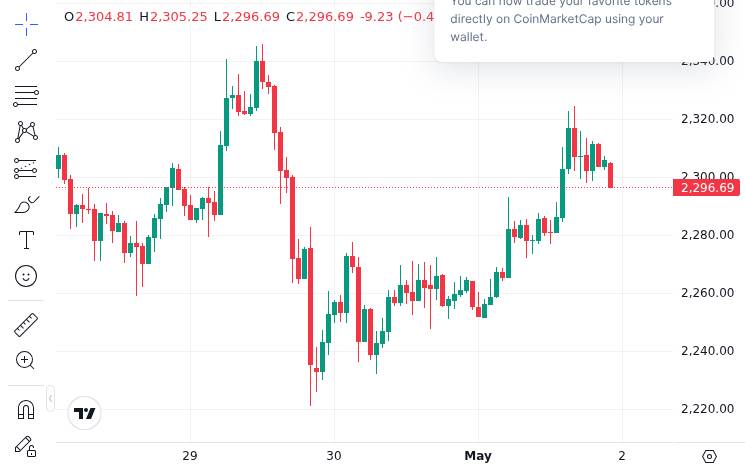
The Ethereum Foundation disclosed the sale publicly, consistent with the organization’s broader push toward treasury transparency.
Why an OTC Sale Matters More Than an Open-Market Dump
OTC, or over-the-counter, refers to trades negotiated directly between two parties rather than executed on a public exchange order book. When a large holder sells 10,000 ETH on an exchange, the sell pressure can move the spot price. An OTC deal avoids that direct order-book impact.
The existence of a named counterparty signals this was a negotiated block trade with agreed-upon pricing. Both sides committed to a specific average execution price rather than accepting whatever the market offered at the moment of sale.
For context on how large institutional crypto transactions are shaping markets, US spot Bitcoin ETFs recorded $1.97 billion in April inflows, the highest monthly figure of 2026. OTC desks have become the preferred venue for transactions of this size precisely because they minimize slippage and price disruption.
Why the Ethereum Foundation and Bitmine Details Will Draw Attention
The Ethereum Foundation is one of the most closely watched entities in the crypto ecosystem. Any treasury activity from the organization tends to attract scrutiny because its selling patterns are often interpreted as signals about project confidence or funding needs.
The foundation has previously outlined its approach to treasury operations through a published treasury policy, providing a framework for how and why it conducts periodic sales to fund development and grants.
Naming Bitmine as the counterparty adds a layer of transparency uncommon in large crypto OTC deals. In most block trades, the buyer remains anonymous. Identifying the buyer shifts the narrative from “foundation is selling” to a bilateral transaction between two known parties with disclosed terms.
The transaction also arrives during a period of broader institutional activity in digital assets. SBI recently launched a Visa crypto rewards card supporting BTC, ETH, and XRP, while regulatory developments such as Brazil’s central bank banning crypto in cross-border settlements continue to reshape how institutions interact with the space.
Whether Bitmine acquired the tokens for strategic holding, operational use, or other purposes has not been publicly stated.
Disclaimer: This article is for informational purposes only and does not constitute financial or investment advice. Cryptocurrency and digital asset markets carry significant risk. Always do your own research before making decisions.

About the author


Ethereum Foundation Sold 10,000 ETH OTC to Bitmine at $2,292.15
Ethereum Foundation sold 10,000 ETH in an OTC transaction with Bitmine at an average price of $2,292.15. Here are the key facts and market context.

SBI Visa crypto rewards card launches with BTC, ETH, XRP
SBI and Visa have unveiled a crypto rewards card tied to Bitcoin, Ethereum, and XRP, giving the launch a payments-focused angle for digital asset users.

Wasabi Protocol Reports $5M+ Lost in Multi-Chain Exploit
Wasabi Protocol says more than $5 million was lost in a multi-chain exploit. Here is what happened, why it matters, and what to watch next.

Crypto News Roundup: Block’s Miles Suter on Bitcoin Censorship Resistance
Catch up on the last 24 hours in crypto news, led by Block's Miles Suter arguing that Bitcoin stands apart on censorship resistance and why that claim matters.

Eric Trump Crypto Adoption Push: Why Usability Matters
Eric Trump says crypto must get easier to use before mass adoption arrives. Here's what his banking-focused comments mean for everyday users and newcomers.

Visa Adds Polygon to Global Stablecoin Settlement Program
Visa has added Polygon to its global stablecoin settlement program, expanding the scope of its digital payments strategy and sharpening focus on blockchain-based settlement.
Related

Brazil Central Bank Bans Crypto in Cross-Border Settlements
Brazil's central bank has barred crypto use in regulated cross-border payment settlements. Here's what the move means for institutions, users, and policy.
SBI Visa crypto rewards card launches with BTC, ETH, XRP
SBI and Visa have unveiled a crypto rewards card tied to Bitcoin, Ethereum, and XRP, giving the launch a payments-focused angle for digital asset users.

Brazil Bars Crypto Settlement in Cross-Border eFX Payments
Brazil blocks crypto settlement in regulated cross-border eFX payments, reshaping how licensed providers handle compliance, FX flows, and digital assets.

Ripple, OKX Expand RLUSD With 300+ Pairs, Futures, Margin
Ripple and OKX are expanding RLUSD on OKX with 300+ spot pairs plus futures and margin support, broadening how traders can access the stablecoin.

Polymarket Launches On-Chain Integrity Monitor With Chainalysis
Polymarket has introduced an on-chain integrity monitor with Chainalysis, aiming to improve market transparency, oversight, and user trust.

SYND Bridge Exploited for $380K, Syndicate Labs Vows Full Compensation
Syndicate Labs says the SYND Bridge exploit drained about $380K. The team says affected users will be fully compensated as it investigates the incident.