


An unknown entity dumped $1.289 billion worth of BlackRock’s iShares Bitcoin Trust (IBIT) in a single dark-pool block trade on May 27, 2026, accepting roughly $29.5 million in execution costs to exit the position before Bitcoin dropped 2.8% the same day.
A Whale Paid a Premium to Exit BlackRock’s Bitcoin ETF
At 10:30 AM ET on May 27, a seller offloaded 29.2 million IBIT shares at $43.16 per share through a privately negotiated block trade. The prevailing market price at that exact moment was approximately $44.17, meaning the seller voluntarily accepted a 2.3% discount to guarantee immediate execution.
IBIT Dark-Pool Block Trade
$1.289B
29.2 million IBIT shares sold off-exchange on May 27, 2026 — 22× larger than the next biggest sell order that day. Seller accepted a ~$29.5M execution discount (2.3%) to exit quickly.
The trade was more than 22 times larger than the second-biggest IBIT sell order that day, according to Bloomberg ETF analyst Eric Balchunas. Galaxy Digital’s Alex Thorn flagged it on X as the largest dark-pool IBIT trade he had ever seen, estimating the position was equivalent to roughly 16,400 BTC.
“Massive $1.289 billion IBIT block sale by unknown party through dark pool at 10:30am today, biggest such trade i’ve ever seen.”
— Alex Thorn, Galaxy Digital (@intangiblecoins on X)
The seller’s identity remains unknown. According to NYDIG research, the position exceeded every individual IBIT allocation disclosed in the most recent 13F regulatory filings, making identification through public records impossible.
Why Pay $30 Million to Exit? The Mechanics of Urgency
Dark-pool block trades allow large holders to sell without broadcasting their intent to the open market. The tradeoff is price: the seller must offer a discount to attract a counterparty willing to absorb the entire position at once. In this case, the ~$29.5 million concession was the cost of certainty.
NYDIG’s analysis ruled out a basis-trade unwind as the motivation. Only 91 CME Bitcoin futures contracts traded in the same minute as the block sale, versus the approximately 3,700 contracts the 29.2 million share position would imply. This confirmed the seller was a directional long exiting a bullish bet, not an arbitrage desk unwinding a hedged position.
Greg Cipolaro, NYDIG’s Head of Research, framed the open question directly:
“The key unanswered question is whether the seller was responding to idiosyncratic constraints or expressing a broader investment view.”
— Greg Cipolaro, NYDIG Head of Research (via HedgeCo)
According to unconfirmed analyst commentary, Paul Howard of Wincent noted sizeable purchases of long-dated call options around the same time as the block sale, suggesting the counterparty buying the IBIT shares may have been making a bullish directional bet rather than simply providing liquidity.
NYDIG also suggested, based on their analysis, that the buyer likely absorbed the block into inventory and has been systematically distributing shares into the secondary market rather than immediately redeeming with BlackRock. If accurate, this would explain why Bitcoin’s spot price did not crash on the day of the trade despite the enormous position change. Similar dynamics have played out in regulated crypto derivatives markets, where institutional-scale trades are increasingly executed off-exchange.
What This Signals for Institutional Bitcoin ETF Flows
The block trade occurred during an extended period of institutional outflows. IBIT recorded $192.44 million in net redemptions on May 27 alone, while combined spot Bitcoin ETF outflows reached $333.6 million that day.
The broader trend is starker: eight consecutive trading days of net Bitcoin ETF outflows totaling over $2 billion since May 14. Bitcoin itself has declined roughly 13% from its May 6 high above $82,000, trading at $71,346 as of June 1.
Crypto Fear & Greed Index
Market sentiment reflects eight consecutive days of net Bitcoin ETF outflows (over $2B since May 14) and BTC declining ~13% from its May 6 high above $82K.
On the day of the trade, Bitcoin fell from approximately $77,875 to a 24-hour low of $75,600, a decline of roughly 2.8%. The relatively contained price drop, given the size of the exit, suggests the dark-pool mechanism worked as intended: the selling pressure was absorbed off-exchange rather than hitting order books directly.
Jane Street and Goldman Sachs were separately reported to have reduced their Bitcoin ETF holdings in Q1 2026, with Jane Street cutting exposure by 70% and Goldman by 10%. Neither firm has been linked to this specific block trade, but the pattern of institutional trimming is consistent with the broader outflow trend. This institutional repositioning contrasts with activity in other corners of the market, where firms like Bitmine have been aggressively accumulating digital assets.
The key data points to watch: whether IBIT’s daily redemption pace normalizes after the outsized May 27 exit, and whether 13F filings for Q2 2026 reveal the seller’s identity. If the exit reflected a single entity’s portfolio constraints, the outflow streak may stabilize. If it reflected a broader institutional view on Bitcoin’s near-term direction, further large-scale ETF exits could follow, particularly as long-dormant crypto positions continue to resurface across the market.
Disclaimer: This article is for informational purposes only and does not constitute financial or investment advice. Cryptocurrency and digital asset markets carry significant risk. Always do your own research before making decisions.

About the author

Mystery Whale Pays $30M to Exit BlackRock Bitcoin ETF — What It Means
A mystery whale paid $30 million to exit BlackRock's Bitcoin ETF (IBIT). Here's what the on-chain data reveals and what it signals for institutional Bitcoin flows.
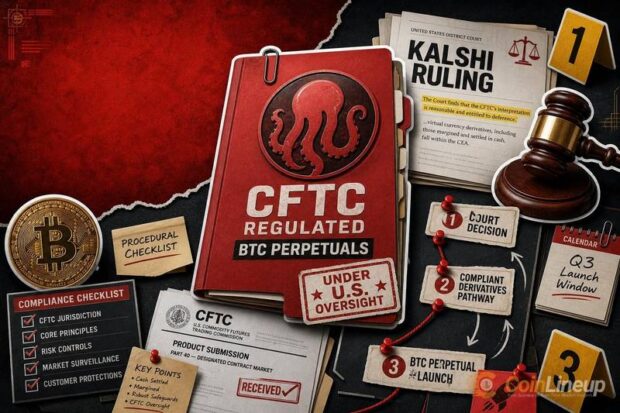
Kraken Eyes CFTC-Regulated Bitcoin Perpetuals After Kalshi Ruling
Kraken is preparing CFTC-regulated Bitcoin perpetuals after the CFTC cleared a Kalshi contract, signaling a potential shift for US crypto derivatives.

UK Applies Sanctioned-Bank Treatment to Crypto Network Over $90B Claim
The UK has moved to treat a crypto network like a sanctioned bank after allegations it processed $90 billion tied to Russia-linked activity. Here is the core SEO outline.

Bitcoin Perps Get US Green Light, but One Catch Could Decide What Happens Next
Bitcoin perpetual futures have a US green light, but one unresolved catch could shape trader access, liquidity, and the market response.

Coinbase Opens Regulated Deribit Options for U.S. Institutions
Coinbase has opened access to regulated Deribit options for U.S. institutions, expanding institutional crypto derivatives access and market reach.

Sui Mainnet Experiences Network Stall, Pausing Activity
Sui mainnet experienced a network stall that paused activity across the chain. This outline covers what happened, likely impact areas, and what users should watch next.
Related
Kraken Eyes CFTC-Regulated Bitcoin Perpetuals After Kalshi Ruling
Kraken is preparing CFTC-regulated Bitcoin perpetuals after the CFTC cleared a Kalshi contract, signaling a potential shift for US crypto derivatives.

How Bitcoin Could Price Trump’s Hormuz Reopening Claim This Weekend
A focused SEO outline on how Bitcoin may react if Hormuz reopens this weekend, including risk-on/risk-off signals, liquidity dynamics, and key market levels to watch.
Bitcoin Perps Get US Green Light, but One Catch Could Decide What Happens Next
Bitcoin perpetual futures have a US green light, but one unresolved catch could shape trader access, liquidity, and the market response.

CFTC Approves First U.S. Bitcoin Perpetual Futures
The CFTC has approved the first Bitcoin perpetual futures on a regulated U.S. exchange. Here is what the launch means for traders, market structure, and U.S. crypto access.

Satoshi Nakamoto Bitcoin Lawsuit Says BTC Is Lost Property
A new lawsuit argues Satoshi Nakamoto's bitcoin should be treated as lost property. Here's what the claim means and why it matters for Bitcoin.

CME to Move Bitcoin Futures and Options to 24/7 Trading
CME plans to move Bitcoin futures and options to 24/7 trading. Here is what changes for traders, which contracts are affected, and why the shift matters for crypto markets.