Ripple announced on April 1, 2026 that it has launched Digital Asset Accounts and Unified Treasury within Ripple Treasury, positioning the release as the first treasury management system with native digital asset capabilities aimed at corporate finance teams.
The platform lets CFOs and treasury teams view, hold, receive, and manage fiat and digital liquidity in a single system, according to the official announcement. Ripple said the product eliminates the need for separate platforms, reconciliation workflows, and manual consolidation that corporate treasury departments currently rely on.
The launch follows Ripple’s 2025 acquisition of GTreasury and extends treasury infrastructure that processed $13 trillion in payments volume in 2025. Multiple customers were already in beta before the general-availability rollout.
What Ripple Treasury Actually Does for Corporates
A crypto treasury platform is not a retail wallet or exchange account. It is back-office infrastructure that gives finance departments the controls, reporting, and oversight needed to hold digital assets on a corporate balance sheet alongside traditional cash and securities.
The distinction matters. Businesses evaluating crypto exposure typically require internal approval workflows, audit trails, and consolidated views across asset types before they can move forward. Ripple Treasury bundles these functions into a single interface, similar to how the iBoxx Treasury Index moved on-chain via Canton Network to bring traditional fixed-income tools into blockchain-native environments.
Ripple said its 2026 survey of more than 1,000 global finance leaders found that 72% believe they must offer a digital asset solution to remain competitive. That figure suggests corporate demand is no longer hypothetical, though it reflects Ripple’s own survey methodology rather than independent research.
Renaat Ver Eecke, a Ripple Treasury executive, framed the shift directly:
“Digital assets have arrived at the CFO’s desk, and the question has shifted from whether to engage to how to do so advantageously without disrupting existing operations.”
— Renaat Ver Eecke, via BusinessWire
Why Corporate Treasury Tools Matter More Than Consumer Products
Consumer-facing crypto products get the most attention, but enterprise infrastructure often drives broader adoption. When companies can custody, account for, and report on digital assets using the same systems they use for fiat, the barrier to holding crypto on a balance sheet drops significantly.
This is the same dynamic playing out across the institutional side of crypto. EthCC 2026 signaled Ethereum’s institutional breakout precisely because enterprise tooling and compliance frameworks are catching up to the technology itself.
Ripple’s approach differs from exchange-based custody solutions in that it integrates digital asset management directly into treasury workflows. Rather than forcing finance teams to toggle between a traditional TMS and a separate crypto platform, the unified system handles both in one place.
Regulatory Backdrop and Ripple’s Banking Ambitions
The product launch carries additional weight given Ripple’s regulatory positioning. The OCC announced on December 12, 2025 that it conditionally approved Ripple National Trust Bank as one of five national trust bank charter applications.
That conditional approval gives Ripple a clearer path to offering regulated custody and trust services in the United States. Combined with the treasury platform launch, it suggests a strategy that pairs enterprise software with a banking charter to serve corporate clients end-to-end.
Ripple noted that product and service availability varies by geography and regulatory considerations, reinforcing that the rollout is not uniform across all markets. Enterprise distribution will depend on jurisdiction-specific permissions.
XRP Market Context
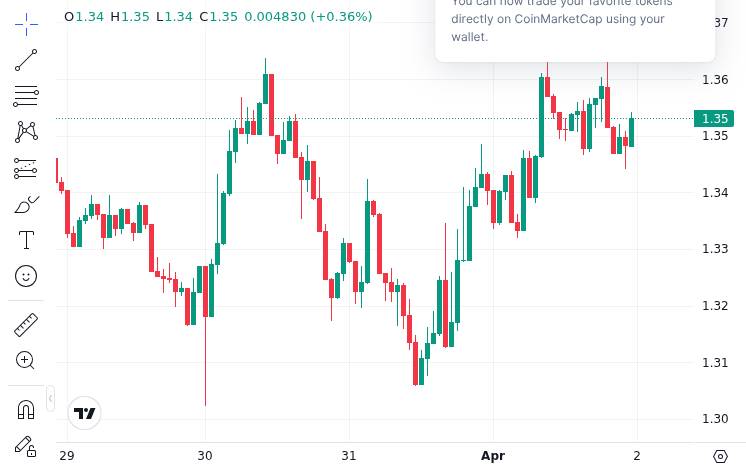
XRP was trading at $1.35 at the time of the announcement, up roughly 1% over the prior 24 hours. The token carries a market cap of approximately $83.14 billion.
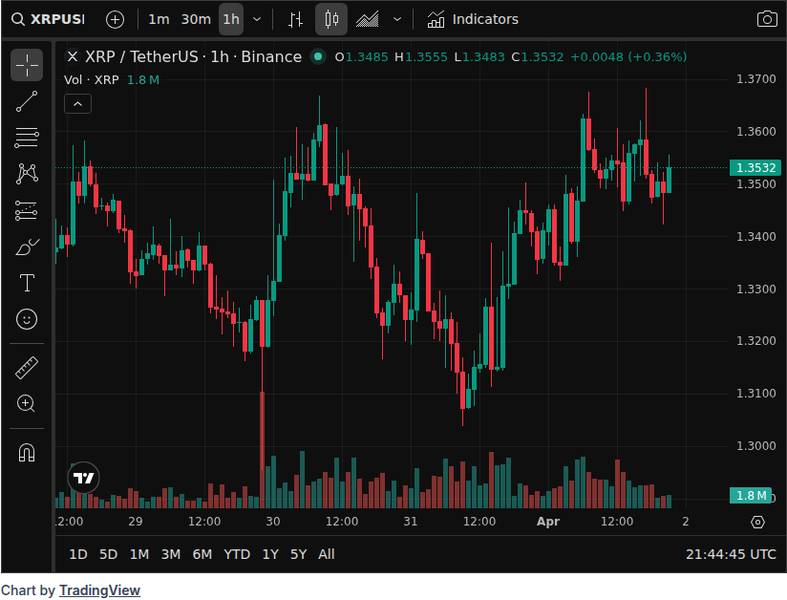
The treasury platform launch is an enterprise product event, not a token-specific catalyst. While Ripple’s corporate moves often draw attention to XRP, the direct connection between a B2B treasury tool and short-term token price action is limited.
The broader trend of institutional crypto infrastructure is accelerating across the industry. Binance currently leads crypto on-chain holdings with $136 billion, underscoring the scale of assets that enterprise-grade treasury and custody solutions need to manage.
Open Questions
Several details remain unaddressed. Ripple has not publicly specified which digital assets beyond XRP and RLUSD the platform supports, what the custody model looks like in detail, or how pricing works for enterprise clients.
The rollout scope is also unclear. Geographic availability depends on regulatory approvals that vary by jurisdiction, and Ripple has not disclosed how many beta customers transitioned to the general-availability release or what transaction volumes the new features have handled so far.
For corporate finance teams evaluating digital asset infrastructure, the launch represents a concrete product to assess rather than a roadmap promise. Whether it gains traction will depend on the specifics Ripple has yet to share publicly.
Disclaimer: This article is for informational purposes only and does not constitute financial or investment advice. Cryptocurrency and digital asset markets carry significant risk. Always do your own research before making decisions.


