

- FSB leads global regulation initiative, focusing on stablecoins.
- Stablecoin regulation may face cross-border challenges.
- Potential shifts in market stability and compliance.
G20 regulators stress the importance of monitoring private lending and stablecoins due to sector growth and fragmented regulations. The Financial Stability Board highlights risks like run risk in stablecoins and interconnectedness with traditional banking.
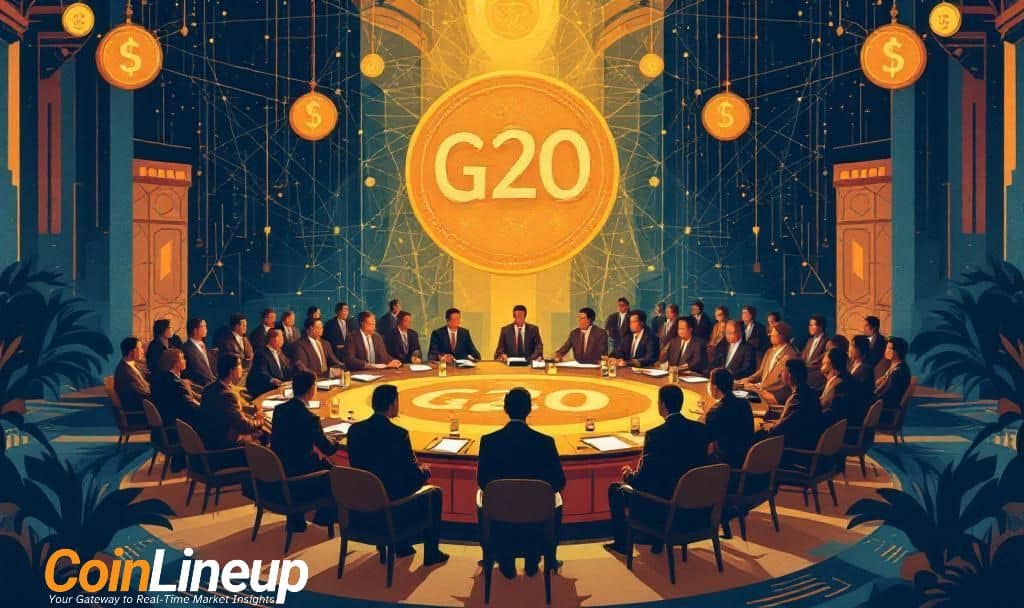
G20 financial regulators, led by the Financial Stability Board, have urged stronger regulation for private lending and stablecoins, emphasizing the risks associated with sector growth. This action follows the board’s plenary in Riyadh.
The call for enhanced regulation emphasizes the financial stability risks posed by stablecoins and private lending growth, affecting market structures internationally.
The Financial Stability Board’s latest plenary in Riyadh
The Financial Stability Board’s latest plenary in Riyadh brought attention to risks in private lending/credit and stablecoins. Led by Andrew Bailey, the board aims to modernize regulation without destabilizing markets. Historically, G20 actions follow major market events, like the Terra collapse. Regulators are focused on payment instrument tokens, including USDT and USDC, while also addressing protocols in private lending. At the plenary, Bailey highlighted regulatory complexities across jurisdictions. Key stakeholders discussed the benefits and risks stablecoins present, particularly regarding payment speed and vulnerabilities.
Immediate focus on oversight
Immediate focus centers on enhanced oversight to mitigate systemic risks in affected assets like USDT, USDC, and major DeFi protocols Aave and Compound. Interconnectedness with banking raises additional concerns. Politically, this marks a concerted effort to standardize international financial regulations. Business entities operating in these sectors must prepare for closer supervisory scrutiny, potentially leading to market shifts.
Potential regulatory outcomes might reshape liquidity and compliance norms. Perhaps mirroring past global standards implemented after significant pitfalls, including the Terra event. Regulators aim to maintain financial integrity while fostering stability. Andrew Bailey, Chair of the Financial Stability Board, stated, “We urge global efforts to modernize and strengthen financial regulation, without compromising financial stability.” Adapting to evolving policy frameworks remains crucial for industry players willing to align with global regulatory trends.


About the author


AI Key to Web3 Competitiveness, Says Gate CEO
Gate.io's CEO Dr. Han states AI will drive Web3's future, enhancing usability and integration.

Binance Initiates First Alpha Box Airdrop Event
Binance launches Alpha Box airdrop, starting at 18:00 UTC, requiring 242 points minimum.

Hong Kong SFC Introduces New Virtual Asset Regulations
Hong Kong's Securities and Futures Commission, led by CEO Julia Leung Fung-yee, announced new virtual asset regulations at Consensus 2026, introducing margin financing and perpetual contracts for select investors.

European Parliament Endorses Digital Euro With Dual Functionality
Pasquale Tridico and 48 EU lawmakers led the February 10, 2026 move in the European Parliament to endorse a digital euro proposal with online and offline capabilities.
Galaxy Digital CEO Predicts Decline in Cryptocurrency Speculation
Galaxy Digital's Mike Novogratz anticipates a shift from speculative to institutional investments in cryptocurrency.

Crypto.com CEO Acquires AI.com for $70 Million in Crypto
Crypto.com CEO Kris Marszalek acquired AI.com for $70 million in cryptocurrency. Unverified claims of a subsequent $500 million offer arise.
Related
SharpLink Gaming Joins Russell Indexes as Ethereum Treasury Strategy Gains Traction
SharpLink Gaming has been added to Russell indexes as its Ethereum treasury strategy expands, signaling growing institutional validation for ETH-focused corporate treasuries.
OKX X Layer Launches Exchange OS to Let Builders Deploy Custom Crypto Markets
OKX's X Layer has launched Exchange OS, a platform letting builders deploy their own specialized crypto trading markets. Here's what it does and why it matters.

Coinhouse Secures Full MiCA License in France
Coinhouse has secured a full MiCA license in France, marking a notable step for crypto regulation, market access, and compliance in the EU.

Tether and Georgia Plan GEL₮, a Lari-Backed Stablecoin
Tether and Georgia are planning GEL₮, a Georgian lari-backed stablecoin. Here’s what the proposal could mean for local payments, regulation, and regional crypto adoption.

CADD Stablecoin Taps Anchorage Digital for Custody
CADD Stablecoin has selected Anchorage Digital for custody, signaling a security-focused move that could strengthen trust, compliance positioning, and market credibility.

Canaan Q1 Revenue Drops as Bitcoin and Ether Treasury Nears $148M
Canaan reported a Q1 revenue decline while its Bitcoin and Ether treasury approached $148 million, highlighting how the miner is balancing operating pressure with crypto asset accumulation.