


The Ethereum Foundation has launched a $1 million security subsidy program to help blockchain teams pay for audits before they ship code. That matters because outside security reviews are expensive, and cheaper access to them can lower the chances of bugs reaching real users.
In an April 14, 2026 announcement, the Ethereum Foundation said the Ethereum Audit Subsidy is a joint initiative with audit providers for Ethereum builders. The foundation said the goal is to make audits more accessible and strengthen the wider ecosystem.
What the Ethereum Foundation’s security subsidy program offers
The Block and CoinMarketCap reported that selected projects can get funding for up to 30% of audit costs, with new cohorts chosen every month. That turns the launch into a practical cost-sharing program, not just a symbolic security pledge.
Areta Market CEO Findlay Boothroyd said the effort brings $1m in audit subsidies to Ethereum builders with the Ethereum Foundation, Nethermind, and Chainlink Labs as partners. His launch thread also pointed readers to program material saying the subsidy is open to Ethereum mainnet builders.
On the execution side, Areta says builders can receive competing audit quotes within 48 hours from more than 20 vetted auditors. That detail matters because the program is not only reducing the bill, it is also speeding up how quickly teams can reach a real audit firm.
Boothroyd summed up the partnership in his launch post:
1/ We've teamed up with @ethereumfndn Trillion Dollar Security Initative, @nethermind, and @chainlinklabs to bring $1m in audit subsidies to @ethereum builders!
The Ethereum Security Subsidy Program is a joint initiative with top-tier audit providers, anchored by an Expert… pic.twitter.com/zzn63wsrXg
— Findlay (@0xboo) April 14, 2026
Which blockchain teams could benefit from the audit subsidy
The most obvious beneficiaries are smart contract teams, protocol developers, and infrastructure projects building on Ethereum mainnet. Because the program can cover up to 30% of an audit bill and Areta promises quotes within 48 hours, it targets the two pressures that often slow smaller teams most: cost and waiting time.
The marketplace angle gives this story a useful real-world detail. Areta’s public providers list backs the claim that applicants are being routed to a live roster of security firms, which makes the subsidy look more like an operating pipeline than a one-off grant announcement.
For regular holders, the point is simple: if more teams can afford outside reviews, more code may get checked before launch. That is the same broad infrastructure logic readers see in stories like TRON’s push toward post-quantum signatures, where security work becomes part of the product rather than an afterthought.
Why the subsidy program matters for Ethereum’s broader security strategy
The subsidy also sits inside a bigger policy frame. In its March 13, 2026 mandate, the Ethereum Foundation elevated CROPS, short for censorship resistance, open source, privacy, and security, as core values that applicants are expected to match.
That policy link matters because it explains why the foundation is paying for audits instead of simply telling builders to be careful. When a published mandate names security as a core value and a separate program reimburses up to 30% of audit costs, the message is that safer launches are becoming part of Ethereum’s quality standard.
The move also fits a wider institutional trend across crypto. Recent coverage of Ripple’s reported Kyobo Life tokenized bond effort and Goldman Sachs filing for a Bitcoin Premium Income ETF shows large organizations putting more effort into market structure, compliance, and infrastructure around digital assets.
What matters next is adoption. If Ethereum builders actually use the monthly cohorts, the subsidy could raise the share of projects that seek third-party review before launch; if demand is weak, it will look more like a signaling exercise than a durable security rail.
Disclaimer: This article is for informational purposes only and does not constitute financial or investment advice. Cryptocurrency and digital asset markets carry significant risk. Always do your own research before making decisions.


About the author


Texas Man Charged in Alleged $12.3 Million AI Crypto Arbitrage Scam
A Texas man faces charges over an alleged $12.3 million AI crypto arbitrage scam. This outline covers the accusations, how the scheme allegedly worked, and why the case matters for crypto investors.
SharpLink Gaming Joins Russell Indexes as Ethereum Treasury Strategy Gains Traction
SharpLink Gaming has been added to Russell indexes as its Ethereum treasury strategy expands, signaling growing institutional validation for ETH-focused corporate treasuries.

Coinhouse Secures Full MiCA License in France
Coinhouse has secured a full MiCA license in France, marking a notable step for crypto regulation, market access, and compliance in the EU.
HYPE Price Path to $100: How Hyperliquid Is Becoming Crypto’s On-Chain Wall Street
HYPE token eyes a $100 price target as Hyperliquid builds out a full-stack on-chain financial platform. Here's what's driving the bullish thesis and what to watch.

CADD Stablecoin Taps Anchorage Digital for Custody
CADD Stablecoin has selected Anchorage Digital for custody, signaling a security-focused move that could strengthen trust, compliance positioning, and market credibility.

Verus Bridge Attacker Returns $8.5M in ETH, Keeps Bounty
The Verus bridge attacker returned $8.5 million in ETH and kept a bounty, marking a major twist in the exploit story and raising fresh DeFi security questions.
Related

Sui Mainnet Experiences Network Stall, Pausing Activity
Sui mainnet experienced a network stall that paused activity across the chain. This outline covers what happened, likely impact areas, and what users should watch next.
Optimism Tests Stake-Based Gas Priority on OP Mainnet
Optimism is piloting a stake-based gas priority mechanism on OP mainnet that lets stakers secure preferential transaction ordering — here's what it means for users and the network.

XRPL’s May 27 Upgrade Puts Focus on Validators, Markets and a Blockchain Split
XRPL's May 27 upgrade has shifted attention to validator coordination, exchange responses and market behavior if the network splits into competing chains.

Boerse Stuttgart’s Seturion Adds SocGen and SG-FORGE for EU Blockchain Settlement
Boerse Stuttgart's Seturion has added SocGen and SG-FORGE to support EU blockchain settlement. Here's what the move signals for tokenized finance in Europe.

BNB Chain Says Post-Quantum Signature Test Cut BSC TPS 40%
BNB Chain says a post-quantum signature test reduced BSC throughput by 40%. Here is what the test result suggests for blockchain performance and security.
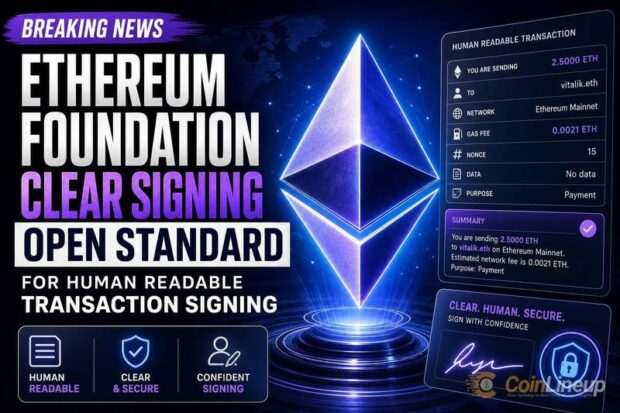
Ethereum Foundation Rolls Out Clear Signing Open Standard for Human-Readable Transaction Signing
Ethereum Foundation introduces Clear Signing, an open standard aimed at making crypto transactions human-readable and reducing signing-related risks.