

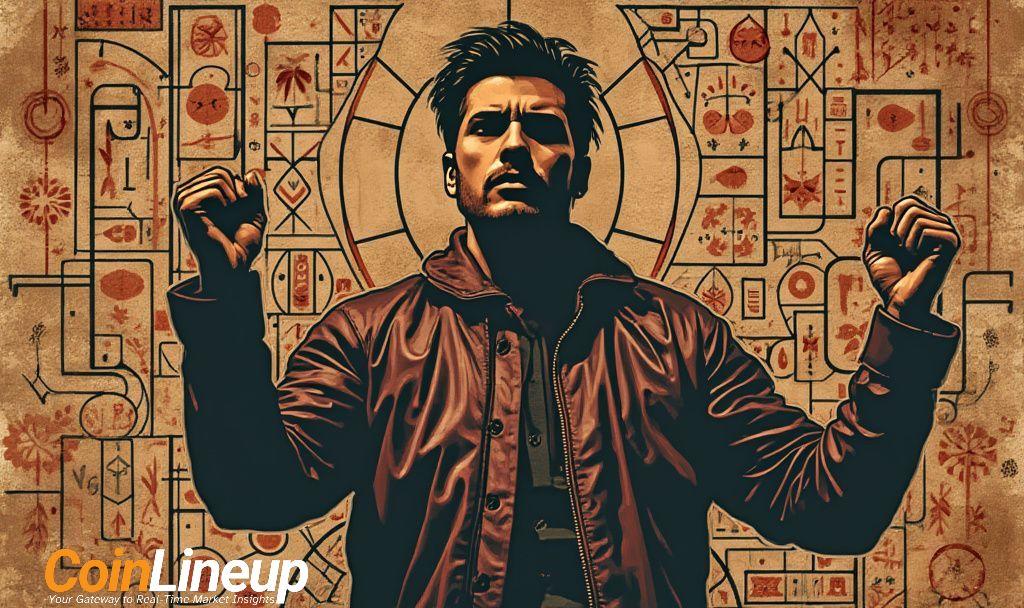
- Pavel Durov rejected EU pressure to limit election discourse.
- Durov reinforces commitment to free speech.
- No financial market shifts linked to Telegram’s stance.
Ongoing Tension
Pavel Durov’s action underscores the ongoing tension between digital platforms and government censorship efforts. His refusal highlights the broader struggle for free speech in the face of political pressures.
Commitment to Free Speech
Boldly upholding free speech, Durov announced on his Telegram channel that he had resisted a Western European government’s attempt to suppress conservative voices in Romania’s presidential elections. His commitment contrasts sharply with ongoing governmental pressures.
“A Western European government… approached Telegram, asking us to silence conservative voices in Romania ahead of today’s presidential elections. I flatly refused…Telegram will not restrict the freedoms of Romanian users or block their political channels. You can’t ‘defend democracy’ by destroying democracy. You can’t ‘fight election interference’ by interfering with elections. You either have freedom of speech and fair elections — or you don’t. And the Romanian people deserve both.” – Pavel Durov, CoinTelegraph
Long-Time Advocate
Regarded as a long-time advocate for privacy and free expression, Durov’s decision aligns with his history of defying state controls. Previously faced with arrest in France, his stance continues to rally community support for digital rights.
Reactions
The refusal to censor has prompted varied reactions. Community forums emphasize the importance of resisting governmental overreach, while financial markets have shown no direct changes in cryptocurrency prices or on-chain flows.
Impact on Future Policies
Durov’s stand against censorship could influence future regulatory approaches affecting digital platforms. While historical trends suggest market reactions to such controversies, no direct financial movements have yet been observed.
Though immediate financial or technological shifts remain unreported, Durov’s position could further impact discussions on internet freedoms and digital rights policies. His actions align with a broader resistance to centralized control over content.


About the author


AI Key to Web3 Competitiveness, Says Gate CEO
Gate.io's CEO Dr. Han states AI will drive Web3's future, enhancing usability and integration.

Binance Initiates First Alpha Box Airdrop Event
Binance launches Alpha Box airdrop, starting at 18:00 UTC, requiring 242 points minimum.
Hong Kong SFC Introduces New Virtual Asset Regulations
Hong Kong's Securities and Futures Commission, led by CEO Julia Leung Fung-yee, announced new virtual asset regulations at Consensus 2026, introducing margin financing and perpetual contracts for select investors.
European Parliament Endorses Digital Euro With Dual Functionality
Pasquale Tridico and 48 EU lawmakers led the February 10, 2026 move in the European Parliament to endorse a digital euro proposal with online and offline capabilities.

Galaxy Digital CEO Predicts Decline in Cryptocurrency Speculation
Galaxy Digital's Mike Novogratz anticipates a shift from speculative to institutional investments in cryptocurrency.
Crypto.com CEO Acquires AI.com for $70 Million in Crypto
Crypto.com CEO Kris Marszalek acquired AI.com for $70 million in cryptocurrency. Unverified claims of a subsequent $500 million offer arise.
Related
SharpLink Gaming Joins Russell Indexes as Ethereum Treasury Strategy Gains Traction
SharpLink Gaming has been added to Russell indexes as its Ethereum treasury strategy expands, signaling growing institutional validation for ETH-focused corporate treasuries.
OKX X Layer Launches Exchange OS to Let Builders Deploy Custom Crypto Markets
OKX's X Layer has launched Exchange OS, a platform letting builders deploy their own specialized crypto trading markets. Here's what it does and why it matters.

Coinhouse Secures Full MiCA License in France
Coinhouse has secured a full MiCA license in France, marking a notable step for crypto regulation, market access, and compliance in the EU.

Tether and Georgia Plan GEL₮, a Lari-Backed Stablecoin
Tether and Georgia are planning GEL₮, a Georgian lari-backed stablecoin. Here’s what the proposal could mean for local payments, regulation, and regional crypto adoption.

CADD Stablecoin Taps Anchorage Digital for Custody
CADD Stablecoin has selected Anchorage Digital for custody, signaling a security-focused move that could strengthen trust, compliance positioning, and market credibility.

Canaan Q1 Revenue Drops as Bitcoin and Ether Treasury Nears $148M
Canaan reported a Q1 revenue decline while its Bitcoin and Ether treasury approached $148 million, highlighting how the miner is balancing operating pressure with crypto asset accumulation.