




Law enforcement agencies from the United States, China, and the United Arab Emirates dismantled nine cryptocurrency scam centers in Dubai, arresting at least 276 people accused of running investment fraud schemes that cost victims millions of dollars.
What happened in the Dubai crypto scam raid
The U.S. Department of Justice said the operation resulted from unprecedented cooperation between the FBI, Dubai Police Department, and the Chinese Ministry of Public Security. Dubai Police spearheaded the crackdown under the UAE Ministry of Interior, carrying out 275 of the 276 arrests in Dubai. The Royal Thai Police made one additional arrest.
At least nine scam centers used for cryptocurrency investment fraud were dismantled during the operation. Prosecutors in the Southern District of California brought federal wire fraud and money laundering charges tied to the scam-center activity.
The raid targeted alleged managers and recruiters who ran the fraud networks, not cryptocurrency platforms or exchanges. This distinction matters for crypto holders watching enforcement headlines: the action was aimed at criminal operations exploiting crypto as a payment channel, not at digital assets themselves.
How investigators traced the scam network
The investigation began after numerous U.S. victims filed complaints with the FBI reporting losses of millions of dollars in cryptocurrency investment fraud schemes. Those complaints triggered a cross-border effort that grew to involve four countries.
Investigators used Meta platform information, financial records, and cryptocurrency transaction data to trace the fraud operations back to Dubai. The combination of social media evidence, traditional banking records, and blockchain trails gave authorities enough to identify the physical scam centers and the people running them.
The four-country coordination, spanning U.S., UAE, Chinese, and Thai law enforcement, reflects a growing pattern of international cooperation on crypto fraud cases. Similar multinational raids have targeted scam compounds in Southeast Asia, but the Dubai operation stands out for bringing together agencies that rarely work jointly on financial crime.
Why this raid matters for crypto users
The operation is a prosecution and policing story, not a policy change or new regulation. No new rules were proposed for crypto exchanges or wallet providers. The charges center on wire fraud and money laundering, crimes that predate cryptocurrency by decades.
For ordinary holders, the case highlights common warning signs of crypto investment scams: unsolicited contact through social media platforms, promises of guaranteed returns, and pressure to move funds quickly to unfamiliar wallets. The scam centers dismantled in Dubai relied on these tactics at scale, employing hundreds of people to run the schemes.
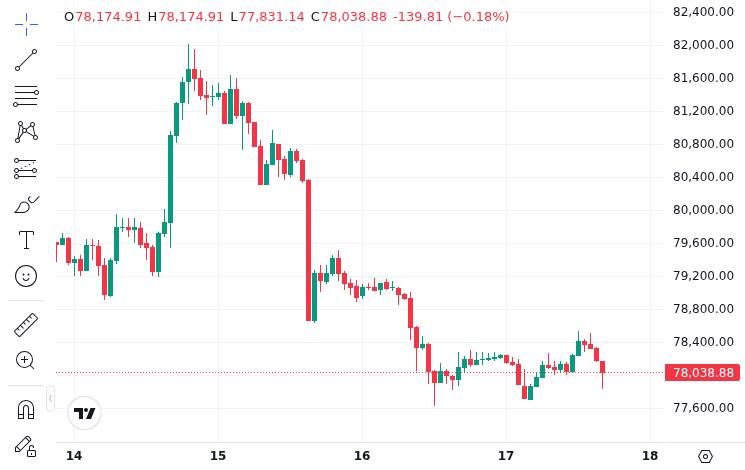
The raid landed against a cautious market backdrop. Bitcoin traded at $78,014 with the Fear & Greed Index sitting at 27, a reading labeled “Fear.” The enforcement action did not appear to act as a direct market catalyst in either direction.
Enforcement actions like this one tend to build investor confidence over time by signaling that fraud networks face real consequences, even when operating across borders. As regulators in the U.S. continue evaluating proposals like spot ETF filings for additional digital assets, a cleaner fraud landscape strengthens the case for mainstream adoption.
The Dubai operation also demonstrates that blockchain’s transparency can work against criminals. Cryptocurrency records helped investigators connect victim losses to specific scam centers, a tracing capability that cash-based fraud schemes rarely offer. For users concerned about security, the same transparency that aided this investigation underpins broader efforts to clean up the industry, from network infrastructure upgrades to on-chain monitoring of large positions.
Disclaimer: This article is for informational purposes only and does not constitute financial or investment advice. Cryptocurrency and digital asset markets carry significant risk. Always do your own research before making decisions.

About the author


Dubai crypto scam raid leads to 276 arrests
Dubai Police, the FBI, and Chinese authorities dismantled nine crypto scam centers in Dubai, with 276 arrests tied to investment fraud schemes worldwide.

USDC Circulating Supply Fell by $1B in 7 Days
USDC circulating supply shrank by roughly $1 billion over the past seven days. Here is what the move signals for stablecoin flows and crypto markets.

Ether ETFs See $255M+ in Weekly Net Outflows
Ether ETFs posted more than $255 million in weekly net outflows, highlighting investor caution, fund flow pressure, and near-term sentiment around ETH.

a16z Says CLARITY Act Senate Breakthrough Could Be a Watershed Moment for Crypto
a16z says the CLARITY Act's Senate breakthrough could mark a turning point for crypto. Here's why the moment matters and what it could signal next.

Trump Family Trust Discloses Coinbase, Crypto Stock Buys in Q1 Ethics Filing
A Q1 ethics filing disclosed Coinbase and other crypto-related stock purchases tied to the Trump family trust. Here is the filing-focused outline and key angles.

Dartmouth Crypto Exposure Hits $14M With Solana ETF
Dartmouth's endowment disclosed $14 million in crypto exposure, including a Solana ETF stake. Here is what the filing shows and why it matters.
Related

Firedancer Goes Live on Solana Mainnet, but Validators Must Wait
Firedancer has reached Solana mainnet, but validator access is still pending. Here is what launched, why the rollout is limited, and what comes next.

VanEck and Grayscale Update SEC Filings for BNB ETFs
VanEck and Grayscale have updated SEC filings tied to BNB ETFs. Here is what changed, why the filings matter, and what crypto investors should watch next.
Ether ETFs See $255M+ in Weekly Net Outflows
Ether ETFs posted more than $255 million in weekly net outflows, highlighting investor caution, fund flow pressure, and near-term sentiment around ETH.

Polymarket CFTC Talks Focus on Prediction Market Pricing
Polymarket's talks with the CFTC are reportedly focused on how public prediction market pricing works, why it matters, and what it could mean for crypto traders.

Australia CGT Proposal Could Raise Crypto Tax Bills in 2027
Australia's proposed CGT changes may increase crypto tax bills from 2027. Here's what the plan could mean for investors and what to watch next.

Circle Deepens Hyperliquid Tie-Up to Expand USDC Infrastructure
Circle is deepening its Hyperliquid partnership to expand USDC infrastructure. The outline centers on the announcement, user impact, and strategy.