



An Ohio man who ran a Bitcoin Ponzi scheme that raised over $10 million from investors has been sentenced to nine years in federal prison, the U.S. Department of Justice announced on May 18, 2026.
What Happened in the Ohio Bitcoin Ponzi Case
Key Takeaways
- Rathnakishore Giri, 31, of New Albany, Ohio, was sentenced to nine years in prison and three years of supervised release for running a cryptocurrency Ponzi scheme.
- The DOJ said the scheme raised over $10 million from investors, many located in or around Columbus, Ohio.
- Giri pleaded guilty to one count of wire fraud in October 2024 and continued soliciting investors while on pretrial release.
Rathnakishore Giri, 31, of New Albany, Ohio, received nine years in prison and three years of supervised release after pleading guilty to one count of wire fraud. The Justice Department said the fraud targeted investors in and around Columbus, Ohio.
Giri pleaded guilty on October 4, 2024. In an amended plea agreement, he admitted that he kept soliciting new investors even while on pretrial release, a detail that likely weighed on the final sentence. He was detained pending sentencing on November 3, 2025, and the hearing was ultimately held on May 18, 2026.
The case also drew civil enforcement. The Commodity Futures Trading Commission filed a separate action in August 2022 alleging that Giri and his companies fraudulently solicited over $12 million and at least 10 bitcoin from more than 150 customers. The higher CFTC figure reflects the broader scope of its civil investigation compared to the criminal case’s threshold.
How the Reported Bitcoin Ponzi Scheme Was Framed
The DOJ said Giri falsely promoted himself as an expert cryptocurrency trader specializing in Bitcoin derivatives. He used funds from new investors to repay earlier ones, the defining mechanic of a Ponzi scheme, where returns come not from legitimate profits but from incoming capital.
A Ponzi scheme collapses once new money stops flowing in, leaving later investors with losses. In this case, Bitcoin served as both the marketing hook and the supposed investment vehicle, a pattern that has surfaced across blockchain ecosystems where technical complexity can obscure fraud.
The “operator” label in the charging documents signals that Giri held the organizing role rather than acting as a peripheral promoter. His continued solicitation of investors after pleading guilty, as the DOJ noted, suggests a level of persistence that courts treat as an aggravating factor.
Why the 9-Year Sentence Matters for Bitcoin Readers
A nine-year federal sentence signals that courts are treating crypto-linked fraud with the same severity as traditional financial crimes. The dual-track approach, with the CFTC pursuing civil enforcement and the DOJ securing a criminal conviction, has become increasingly common as regulators coordinate on digital asset cases.
For readers tracking how enforcement shapes the broader crypto landscape, cases like this sit alongside developments such as state-level Bitcoin adoption efforts and institutional treasury moves that are redefining how Bitcoin intersects with traditional systems. Fraud prosecutions represent the other side of that maturation.
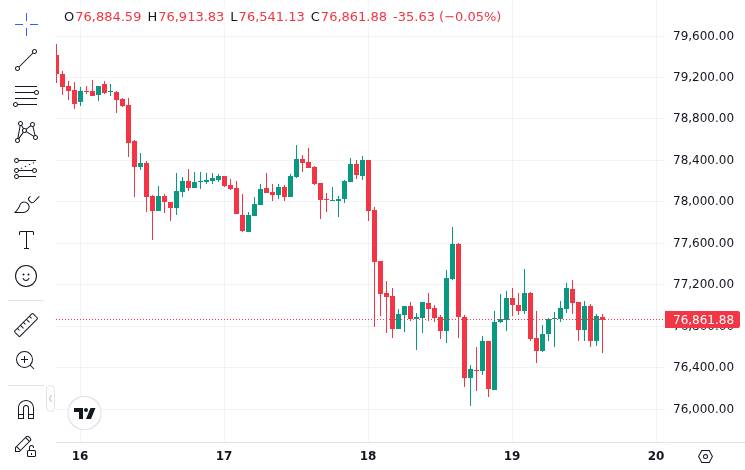
Bitcoin traded near $76,566 at press time, with the broader market sentiment sitting at 25 on the Fear and Greed Index, firmly in “Extreme Fear” territory.
Cases like Giri’s serve as a reminder to verify the track record and regulatory standing of anyone claiming expertise in crypto trading, particularly when promised returns seem unusually high.
Disclaimer: This article is for informational purposes only and does not constitute financial or investment advice. Cryptocurrency and digital asset markets carry significant risk. Always do your own research before making decisions.

About the author


Ohio Bitcoin Ponzi Operator Sentenced to 9 Years Over $10M
An Ohio Bitcoin Ponzi operator was sentenced to 9 years in prison over a $10 million scheme. Here’s what the case involved and what it means for crypto readers.

Iran Eyes Bitcoin Ship Insurance for Strait of Hormuz
Iran is reportedly considering a Bitcoin-based insurance model for ships passing through the Strait of Hormuz. Here is the core proposal, why it matters and what to watch.

Bitcoin Will Never Reach Exactly 21 Million BTC
Bitcoin's hard cap is slightly below 21,000,000 BTC because block rewards are paid in whole satoshis. Here's how the rounding works and why it matters.

HYPE ETFs Post 2026’s Strongest Altcoin Debut
HYPE ETFs opened with the strongest altcoin ETF debut of 2026. The next question is whether sustained inflows can confirm long-term market demand.

VanEck and Grayscale Update SEC Filings for BNB ETFs
VanEck and Grayscale have updated SEC filings tied to BNB ETFs. Here is what changed, why the filings matter, and what crypto investors should watch next.

THORChain Exploit Triggers Emergency Chain Halt
THORChain halted its chain after an exploit, raising urgent questions about validator response, user impact, and the protocol's next recovery steps.
Related
Iran Eyes Bitcoin Ship Insurance for Strait of Hormuz
Iran is reportedly considering a Bitcoin-based insurance model for ships passing through the Strait of Hormuz. Here is the core proposal, why it matters and what to watch.
Bitcoin Will Never Reach Exactly 21 Million BTC
Bitcoin's hard cap is slightly below 21,000,000 BTC because block rewards are paid in whole satoshis. Here's how the rounding works and why it matters.
US Bitcoin ETFs Lose $1B as Inflation Fears Trigger Outflows
US Bitcoin ETFs saw $1 billion in outflows as inflation fears flipped fund flows negative. This outline covers the reversal, its drivers, and what investors watch next.

Bitcoin Price Falls Below $82K as Treasury Yields Rise
Bitcoin price fell below $82,000 resistance as US Treasury yields hit fresh highs and liquidity tightened, putting new pressure on the broader crypto market.

Nearly All Top Bitcoin Traders on Hyperliquid Are Long Today
Nearly all top Bitcoin traders on Hyperliquid are holding long positions today. Here’s what that positioning signal could mean for BTC sentiment and market risk.

Bitcoin Briefly Tops $82,000 on Gate
Bitcoin briefly traded above $82,000 on Gate, drawing attention to a short-lived move. Here is what happened, what it may signal, and what to watch.