



Bitcoin’s total supply will never actually reach 21,000,000 BTC. The protocol’s block rewards are denominated in whole satoshis, and repeated halving of those integer values produces tiny rounding losses that add up over more than a century of issuance, leaving the true ceiling slightly below the famous round number.
The “21 million” figure is so deeply embedded in crypto culture that it functions as shorthand for Bitcoin’s entire scarcity thesis. But the number is an approximation, not a precise protocol output.
Why Bitcoin’s Supply Was Never Designed to Land on Exactly 21 Million
Bitcoin block rewards are paid in satoshis, the smallest indivisible unit of BTC (one hundred-millionth of a coin). The initial reward was set at 50 BTC per block, and the protocol cuts that reward in half every 210,000 blocks, roughly every four years.
The halving mechanism in Bitcoin Core’s GetBlockSubsidy function uses an integer right-shift operation (nSubsidy >>= halvings) to divide the subsidy. Because satoshis are whole numbers, each shift truncates any fractional remainder rather than rounding it.
In early halvings the loss is invisible because the numbers divide evenly. But as the subsidy shrinks into single-digit satoshis, truncation discards value that can never be recovered. The subsidy drops to zero entirely after 64 halvings, ending new issuance.
What Bitcoin’s Actual Maximum Supply Adds Up To
When you sum every block reward across all halving eras, the total converges to 20,999,999.9769 BTC, not 21,000,000. The shortfall is 0.0231 BTC, equivalent to 2,310,000 satoshis.
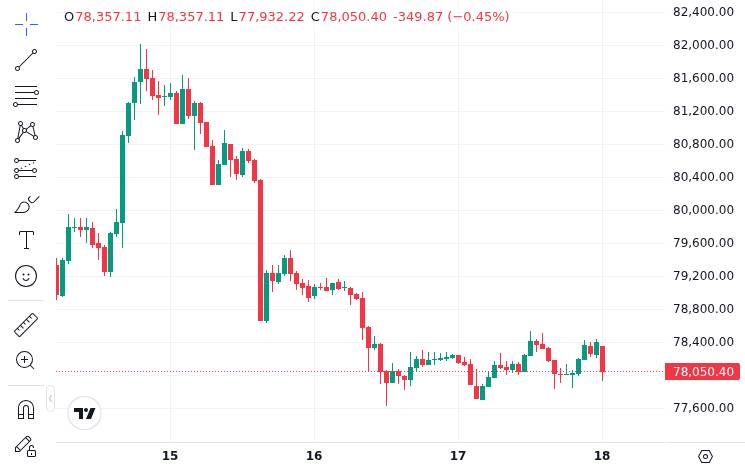
At Bitcoin’s current price of $78,012, that gap is worth roughly $1,802. In percentage terms it represents about 0.00000011% of total supply, a rounding error by any macroeconomic measure.
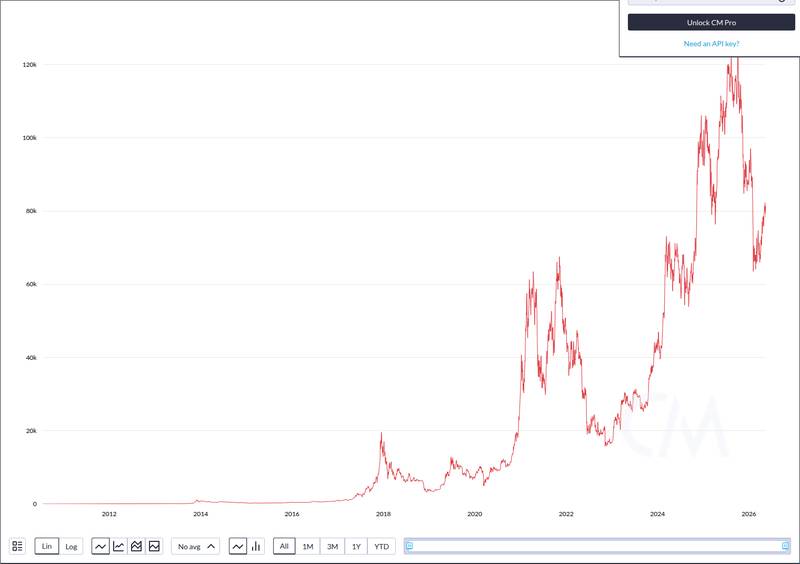
The final subsidy era will pay just 1 satoshi per block before issuance drops to zero. After that point, miners will rely entirely on transaction fees for revenue. Roughly 20,030,493 BTC of the theoretical maximum is already in circulation.
The effective spendable supply is even lower. Documented cases exist where miners claimed less than the full available subsidy, permanently reducing the coins that will ever be usable. Lost private keys further shrink the functional supply, though those coins still count in the protocol’s issuance math.
Why This Small Rounding Detail Matters for Bitcoin’s Scarcity Story
The shortfall is not a bug, a hack, or a retroactive policy change. It is an inherent consequence of how integer arithmetic works in the original Bitcoin codebase. Satoshi Nakamoto chose to denominate rewards in whole satoshis, and truncation during halving is the mathematically inevitable result.
Bitcoin’s fixed-supply model remains intact. The protocol still enforces a hard ceiling on issuance, and “21 million” remains a valid shorthand for that constraint. No governance vote, software update, or regulatory intervention can alter the supply schedule without a consensus-breaking fork.
Understanding the nuance matters for a different reason: it demonstrates that Bitcoin’s monetary policy is defined by code, not by slogans. The actual supply curve is computable down to the last satoshi, and anyone can verify it by reading the source. In a market where trust in centralized promises is routinely tested, that verifiability is the real scarcity guarantee.
The Fear & Greed Index currently sits at 27, reflecting a cautious market mood. Yet Bitcoin’s protocol-level fundamentals, including its precisely defined and independently auditable supply cap, remain unchanged regardless of short-term sentiment shifts.
Disclaimer: This article is for informational purposes only and does not constitute financial or investment advice. Cryptocurrency and digital asset markets carry significant risk. Always do your own research before making decisions.

About the author


Bitcoin Will Never Reach Exactly 21 Million BTC
Bitcoin's hard cap is slightly below 21,000,000 BTC because block rewards are paid in whole satoshis. Here's how the rounding works and why it matters.

HYPE ETFs Post 2026’s Strongest Altcoin Debut
HYPE ETFs opened with the strongest altcoin ETF debut of 2026. The next question is whether sustained inflows can confirm long-term market demand.

VanEck and Grayscale Update SEC Filings for BNB ETFs
VanEck and Grayscale have updated SEC filings tied to BNB ETFs. Here is what changed, why the filings matter, and what crypto investors should watch next.

THORChain Exploit Triggers Emergency Chain Halt
THORChain halted its chain after an exploit, raising urgent questions about validator response, user impact, and the protocol's next recovery steps.
US Bitcoin ETFs Lose $1B as Inflation Fears Trigger Outflows
US Bitcoin ETFs saw $1 billion in outflows as inflation fears flipped fund flows negative. This outline covers the reversal, its drivers, and what investors watch next.

Bitcoin Price Falls Below $82K as Treasury Yields Rise
Bitcoin price fell below $82,000 resistance as US Treasury yields hit fresh highs and liquidity tightened, putting new pressure on the broader crypto market.
Related
US Bitcoin ETFs Lose $1B as Inflation Fears Trigger Outflows
US Bitcoin ETFs saw $1 billion in outflows as inflation fears flipped fund flows negative. This outline covers the reversal, its drivers, and what investors watch next.
Bitcoin Price Falls Below $82K as Treasury Yields Rise
Bitcoin price fell below $82,000 resistance as US Treasury yields hit fresh highs and liquidity tightened, putting new pressure on the broader crypto market.

Nearly All Top Bitcoin Traders on Hyperliquid Are Long Today
Nearly all top Bitcoin traders on Hyperliquid are holding long positions today. Here’s what that positioning signal could mean for BTC sentiment and market risk.

Bitcoin Briefly Tops $82,000 on Gate
Bitcoin briefly traded above $82,000 on Gate, drawing attention to a short-lived move. Here is what happened, what it may signal, and what to watch.

Strategy Buys 535 BTC, Total Holdings Hit 818,869 BTC
Strategy bought 535 BTC for $43 million, lifting its total Bitcoin holdings to 818,869 BTC. Here’s what the latest treasury move means.
Morgan Stanley MSBT Sees Zero Outflows as Bitcoin ETF Inflows Hit 6 Weeks
Morgan Stanley's MSBT closed its first trading month with zero outflows while Bitcoin ETFs extended a six-week inflow streak, signaling steady demand.