


Bitcoin fell more than $2,000 after US-Iran peace talks in Islamabad ended without a deal, dragging altcoins lower and pushing the crypto market deeper into extreme fear territory.
The pullback followed 21 hours of negotiations in Pakistan that ended without an agreement. US Vice President JD Vance said the American team left after failing to reach a deal with Iran, Reuters reported via Business Recorder. The outcome puts the fate of a fragile two-week ceasefire and the reopening of the Strait of Hormuz in question.
Iran’s government said the talks had concluded and that technical experts from both sides would exchange documents, while negotiations would continue despite remaining differences. The unresolved terms center on nuclear development, asset releases, reparations, and concessions around the Strait of Hormuz.
Bitcoin Drops More Than $2,000 After Failed Talks
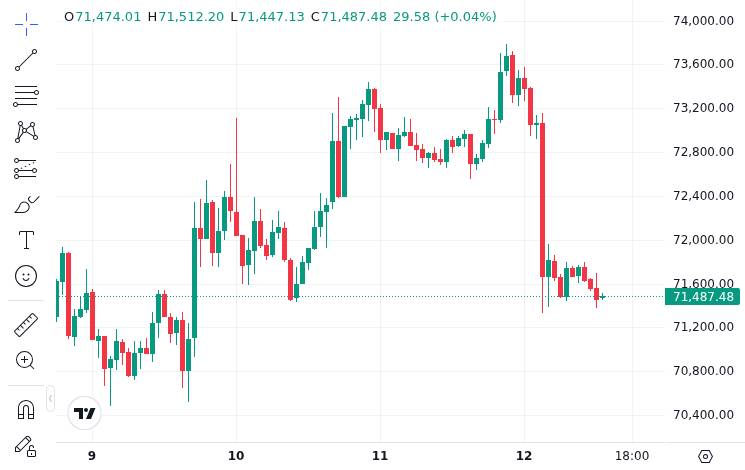
Bitcoin rose near $74,000 during optimism around the Islamabad talks and then fell back below $73,000 after the first round ended without a deal. At press time, BTC traded at $71,486, down 1.94% over 24 hours.
Market cap sat at roughly $1.43 trillion with 24-hour trading volume near $28.7 billion, reflecting broad participation in the sell-off.
The geopolitical trigger matters because unresolved tensions around the Strait of Hormuz carry energy-shock risk and shipping disruption potential, both of which weigh on broader risk appetite. Previous geopolitical flashpoints, including concerns that paying Iran in crypto may trigger shipping sanctions, have shown how quickly macro headlines can pressure crypto positioning.
Altcoins Sink as Risk Appetite Fades
The weakness was not confined to Bitcoin. Ethereum dropped 1.83% over 24 hours, Solana fell 2.40%, and XRP slipped 1.24%, confirming the “altcoins sink” framing as a broad risk-off move rather than a BTC-only event.
Total crypto market cap dropped to roughly $2.51 trillion, while BTC dominance held at 57.09%. That dominance level suggests altcoins sold off at a slightly faster pace than Bitcoin itself, a typical pattern during macro-driven drawdowns.
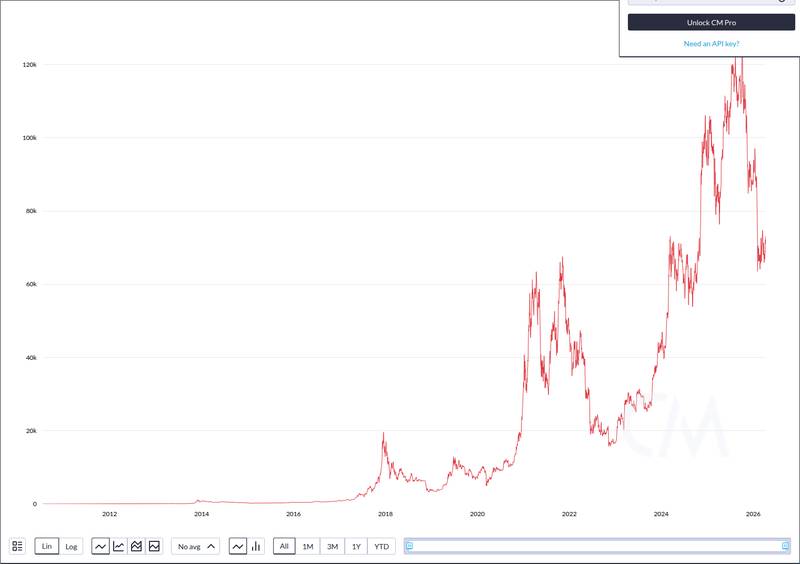
The sell-off adds to a difficult stretch for crypto markets. High-profile collapses in speculative tokens, including Trump-linked crypto tokens that have dropped as much as 91%, have already eroded confidence among retail participants.
What This Crypto Market Update Signals for Near-Term Sentiment
The Fear & Greed Index sat at 16, firmly in “Extreme Fear” territory. That reading captures the mood across the market: traders are pulling back from risk after the Islamabad setback.
The combination of falling prices, rising BTC dominance, and extreme fear suggests near-term caution. Geopolitical catalysts tend to produce sharp initial moves followed by choppy consolidation as markets wait for the next headline.
With technical experts from both the US and Iran set to exchange documents and negotiations expected to continue, the next round of talks could serve as the next directional trigger. Meanwhile, institutional holders like SpaceX, which still holds $594M in BTC despite significant losses, face further unrealized drawdowns if the sell-off deepens.
For now, the failed talks have reset expectations. The crypto market entered the weekend in risk-off mode, with no clear catalyst for a near-term reversal on the horizon.
Disclaimer: This article is for informational purposes only and does not constitute financial or investment advice. Cryptocurrency and digital asset markets carry significant risk. Always do your own research before making decisions.


About the author


CME to Move Bitcoin Futures and Options to 24/7 Trading
CME plans to move Bitcoin futures and options to 24/7 trading. Here is what changes for traders, which contracts are affected, and why the shift matters for crypto markets.
Optimism Tests Stake-Based Gas Priority on OP Mainnet
Optimism is piloting a stake-based gas priority mechanism on OP mainnet that lets stakers secure preferential transaction ordering — here's what it means for users and the network.
OKX X Layer Launches Exchange OS to Let Builders Deploy Custom Crypto Markets
OKX's X Layer has launched Exchange OS, a platform letting builders deploy their own specialized crypto trading markets. Here's what it does and why it matters.

Tether and Georgia Plan GEL₮, a Lari-Backed Stablecoin
Tether and Georgia are planning GEL₮, a Georgian lari-backed stablecoin. Here’s what the proposal could mean for local payments, regulation, and regional crypto adoption.
XRPL’s May 27 Upgrade Puts Focus on Validators, Markets and a Blockchain Split
XRPL's May 27 upgrade has shifted attention to validator coordination, exchange responses and market behavior if the network splits into competing chains.

MoonPay Launches MoonPay Trade: What the New Offering Signals
MoonPay has launched MoonPay Trade. Explore what the announcement suggests, why it matters for crypto users, and what details to watch next.
Related
HYPE Price Path to $100: How Hyperliquid Is Becoming Crypto’s On-Chain Wall Street
HYPE token eyes a $100 price target as Hyperliquid builds out a full-stack on-chain financial platform. Here's what's driving the bullish thesis and what to watch.
Over $526M Liquidated From Crypto Market in 1 Hour as Longs Lead Losses
More than $526 million was liquidated from the crypto market in the past hour. See why long positions absorbed most of the losses and what traders should watch next.

Whale Opens 25x ETH Long After $32M Loss: Market Impact
A crypto whale, down $32M, has opened a 25x ETH long worth $2.7M. Here’s what the trade means for Ethereum sentiment, risk, and market focus.

USDC Circulating Supply Fell by $1B in 7 Days
USDC circulating supply shrank by roughly $1 billion over the past seven days. Here is what the move signals for stablecoin flows and crypto markets.

Altcoin Momentum Builds as Volume Tops Yearly Baseline
A reported volume shift suggests altcoin momentum may be improving. Here is what the yearly-baseline signal means, what it does not prove, and what to watch next.

Stablecoin Market Cap Doubled in 2 Years | Markets News
The stablecoin market cap has doubled over the past two years. Explore what drove the surge, which trends matter now, and why markets are paying attention.