


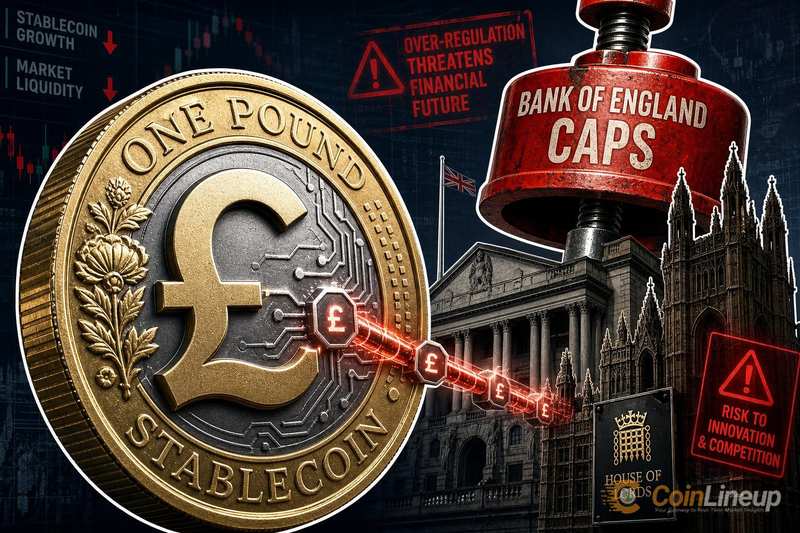
Members of the UK House of Lords have warned that proposed Bank of England caps on stablecoin holdings could undermine the development of pound-backed stablecoins in Britain, raising concerns about the country’s competitiveness in digital finance.
Why UK Lords Are Challenging Stablecoin Caps
The House of Lords Financial Services Regulation Committee has been examining the growth and proposed regulation of stablecoins in the UK. The inquiry has focused on whether the regulatory framework being developed by the Bank of England and Treasury could inadvertently hold back domestic stablecoin adoption.
At the center of the debate are potential limits on how much value individuals or institutions could hold in regulated stablecoins. The Lords committee has raised concerns that such caps, if set too low, would reduce the practical usefulness of pound-denominated tokens for payments and settlement.
The committee’s published findings signal a tension between the Bank of England’s financial stability mandate and Parliament’s interest in fostering innovation. Lawmakers worry that overly cautious limits would make sterling stablecoins less attractive than dollar-backed alternatives that face no equivalent restrictions in other jurisdictions.
How Bank of England Limits Could Affect Pound-Backed Tokens
Holding caps would directly constrain the scale at which pound stablecoins could operate. For issuers, limited adoption potential reduces the business case for building and maintaining sterling-denominated products when dollar stablecoins already dominate global trading volumes.
For users, caps would restrict the amount of value that could be stored or transferred in pound stablecoins, limiting their usefulness for large payments, treasury management, and cross-border settlement. This matters particularly for fintech firms and payment processors evaluating whether to integrate pound tokens into their services.
The Bank of England has been weighing these tradeoffs publicly. Deputy Governor Sarah Breeden addressed the future of digital money at City Week in May 2026, outlining how the central bank views its role in shaping stablecoin regulation while maintaining monetary and financial stability.
The concern from the Lords is that if the Bank prioritizes stability through restrictive caps, it could effectively prevent pound stablecoins from reaching the scale needed to compete. A token with a low holding ceiling offers limited utility compared to uncapped alternatives available on global exchanges.
What the Debate Means for Britain’s Crypto Strategy
The stablecoin cap dispute sits within a broader question about whether the UK can position itself as a credible hub for digital assets. Britain has signaled ambitions in this space, but regulatory uncertainty has slowed progress. The push from firms like Ripple to deepen policy ties in Washington illustrates how competing jurisdictions are actively courting crypto companies.
If pound stablecoins are capped at levels that limit commercial viability, issuers are likely to focus on dollar-denominated products and base operations in friendlier regulatory environments. This would leave the UK with a regulated framework but few domestic products to show for it.
The Lords committee’s published work on stablecoin regulation suggests Parliament wants a more permissive approach than the Bank of England may be comfortable with. The outcome of this debate will likely shape whether sterling stablecoins become a meaningful part of the UK’s financial infrastructure or remain a niche product overshadowed by dollar alternatives.
For the broader crypto market, which has recently navigated volatility including sharp moves in Bitcoin and new product launches like Grayscale’s staking ETFs, UK stablecoin policy represents another front in the global regulatory landscape that will influence where capital and innovation flow next.
Disclaimer: This article is for informational purposes only and does not constitute financial or investment advice. Cryptocurrency and digital asset markets carry significant risk. Always do your own research before making decisions.

About the author

UK Lords Warn Bank of England Caps Could Stifle Pound Stablecoins
UK lawmakers are warning that Bank of England limits on stablecoin holdings could weaken the case for pound-backed tokens and slow Britain’s digital asset ambitions.
CLARITY Act Reaches Senate Calendar After Committee Approval
The CLARITY Act has advanced to the Senate Calendar following committee approval, marking a key procedural step for U.S. crypto legislation and setting up the next phase to watch.

Failed 2016 Ethereum ICO Unlocks 1,003 ETH Through Self-Exploit
A failed 2016 Ethereum ICO has recovered 1,003 ETH through a self-exploit. Here’s what happened, how the unlock worked, and why it matters.

Bitmine Bought 26,497 ETH Last Week, Raising Holdings to 5.42M ETH
Bitmine added 26,497 ETH last week, lifting total holdings to 5.42M ETH. Here is what the latest accumulation means for Ethereum exposure and market attention.

Sui Releases Incident Review on Three May 28-29 Mainnet Outages
Sui has released an incident review covering three mainnet outages on May 28-29. Here is the timeline, what was disclosed, and what matters next.
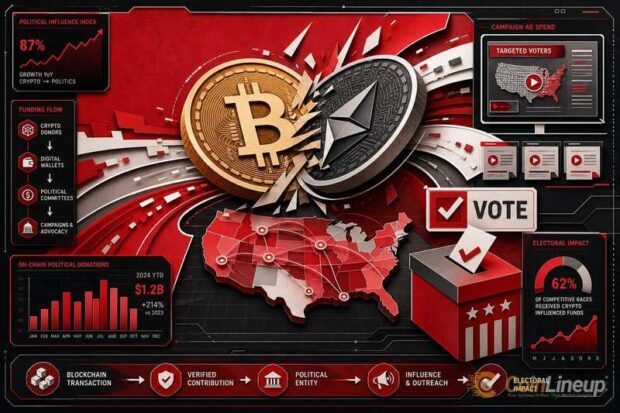
How Crypto Started Reshaping American Elections
Explore the turning point when crypto began reshaping American elections, why it mattered politically, and what it signals for digital asset influence in U.S. campaigns.
Related

Grayscale’s Hyperliquid Staking ETF to Begin Trading: What It Means
Grayscale's Hyperliquid Staking ETF is set to begin trading. Here is what the launch means, what to watch in the product structure, and why the market is paying attention.
Ripple Expands Washington, D.C., Office to Deepen U.S. Policy Ties
Ripple is expanding its Washington, D.C., office as it steps up engagement with U.S. policymakers and regulators amid evolving crypto oversight.

U.S. Treasury Sanctions Iranian Crypto Exchanges Nobitex, Bitpin, Ramzinex, and Wallex
The U.S. Treasury has sanctioned Nobitex, Bitpin, Ramzinex, and Wallex. Here is what the move means, why it matters, and what readers should watch next.
CLARITY Act Reaches Senate Calendar After Committee Approval
The CLARITY Act has advanced to the Senate Calendar following committee approval, marking a key procedural step for U.S. crypto legislation and setting up the next phase to watch.

Strive Adds 2,500 BTC, Increasing Holdings to 19,000 BTC
Strive added 2,500 BTC, lifting its total Bitcoin holdings to 19,000 BTC. Here is the key context, scale of the increase, and why it matters.

Kalshi Reportedly Filed to Certify XRP, Solana and Dogecoin Perpetual Futures After Bitcoin Approval
Kalshi reportedly moved to certify XRP, Solana and Dogecoin perpetual futures after its Bitcoin-related approval. Here is what the filing could signal for crypto traders and prediction-style markets.