


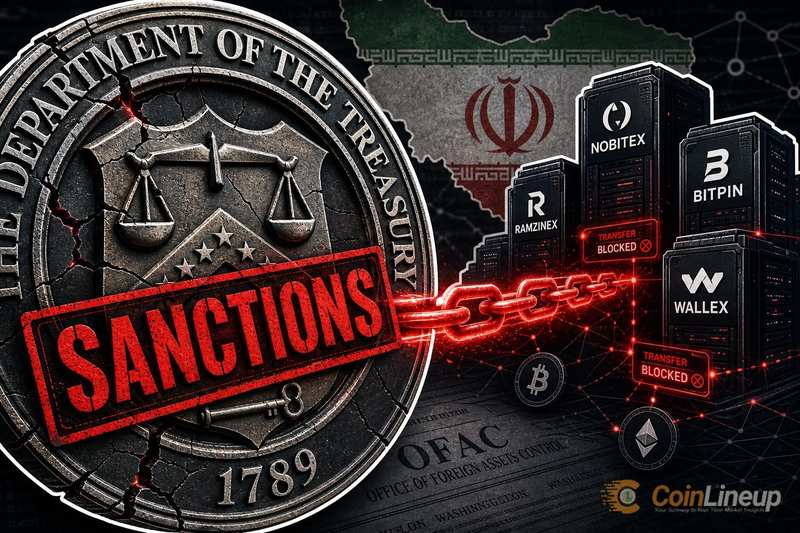
The U.S. Treasury Department on June 2 sanctioned four Iranian cryptocurrency exchanges, Nobitex, Bitpin, Ramzinex, and Wallex, accusing them of facilitating sanctions evasion and supporting the Iranian regime’s financial infrastructure.
What the Treasury action covers
The Office of Foreign Assets Control (OFAC) designated all four exchanges alongside four Iranian nationals, including Nobitex co-founder and CEO Amir Hossein Rad and two Kharrazi-family brothers tied to the exchange.
Treasury singled out Nobitex as Iran’s largest digital asset platform, stating it processed over 50% of all Iranian digital asset income in 2025 and provided significant support to the regime’s sanctions-evasion network.
The department also accused Nobitex of helping move and protect regime wealth after U.S. combat operations in Iran, even during internet blackouts, according to Reuters reporting.
Which exchanges are affected and how they rank
Beyond Nobitex’s dominant position, Treasury broke down market share for the three smaller platforms. Wallex received 12% and Bitpin 10% of all Iranian digital asset inflows in 2025, giving the four sanctioned exchanges collective control over more than 72% of Iran’s crypto volume.
Ramzinex, the fourth exchange, has processed over $2.45 billion in crypto transactions since 2018, according to Treasury’s designation.
Blockchain analytics firm Elliptic reported earlier that the Central Bank of Iran had acquired at least $507 million in crypto via Tron by the end of June 2025, with at least $387 million in USDT passing through Nobitex specifically.
The OFAC designation means any U.S. person or entity transacting with these exchanges, their listed operators, or associated wallet addresses faces potential sanctions violations. Global counterparties with U.S. exposure will likely sever connections to the four platforms.
Why the sanctions matter for crypto markets
The action is the most sweeping U.S. sanctions move targeting crypto infrastructure in Iran to date. By naming four exchanges that collectively handled the majority of Iran’s digital asset flows, Treasury is signaling that crypto-based sanctions evasion is a top enforcement priority.
John Reed Stark, a former SEC official, framed the stakes bluntly in comments reported by Reuters via Investing.com:
“The entities doing crypto financing through these platforms are the very ones that the president is trying to defeat in the war.”
— John Reed Stark
The move comes as U.S. lawmakers advance new crypto compliance frameworks. The CLARITY Act recently reached the Senate calendar after committee approval, and regulators are increasingly looking at how exchanges handle jurisdictional risk, an area where derivatives platforms filing for new product approvals will also face scrutiny.
For the broader market, the sanctions add to a risk-off atmosphere. Bitcoin traded at roughly $67,621 at the time of the announcement, down 4.7% over 24 hours, while the Fear & Greed Index sat at 23, deep in “Extreme Fear” territory. Institutional players like Strive, which recently added 2,500 BTC to its treasury, continue accumulating despite the macro headwinds.
Industry observers will be watching whether OFAC follows up with secondary sanctions on non-U.S. entities that continued routing volume through the four exchanges. Any wallet addresses tied to Nobitex, Wallex, Bitpin, or Ramzinex are now potential compliance tripwires for every exchange and OTC desk with U.S. touchpoints.
Disclaimer: This article is for informational purposes only and does not constitute financial or investment advice. Cryptocurrency and digital asset markets carry significant risk. Always do your own research before making decisions.

About the author

U.S. Treasury Sanctions Iranian Crypto Exchanges Nobitex, Bitpin, Ramzinex, and Wallex
The U.S. Treasury has sanctioned Nobitex, Bitpin, Ramzinex, and Wallex. Here is what the move means, why it matters, and what readers should watch next.

PAIN: 2026 Has Wiped Out $500B From the Total Crypto Market
The total crypto market has shed $500 billion in 2026. This outline frames the selloff, the major drivers behind it, and what traders are watching next.
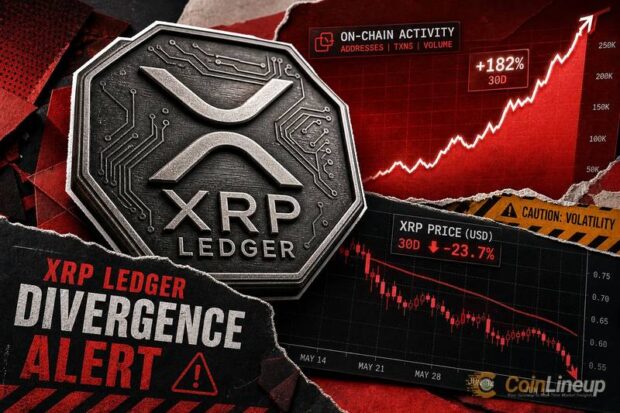
Messari: XRP Ledger Activity Rose 35% Despite XRP Price Slump
A Messari report says XRP Ledger activity climbed 35% even as XRP price weakened. Here’s what the data suggests about XRPL usage, network traction, and market sentiment.

Dash Says Crypto Forgot Its Original Killer App: Digital Cash
Dash argues crypto has drifted from its original purpose and says digital cash still matters most for real-world payments and adoption.
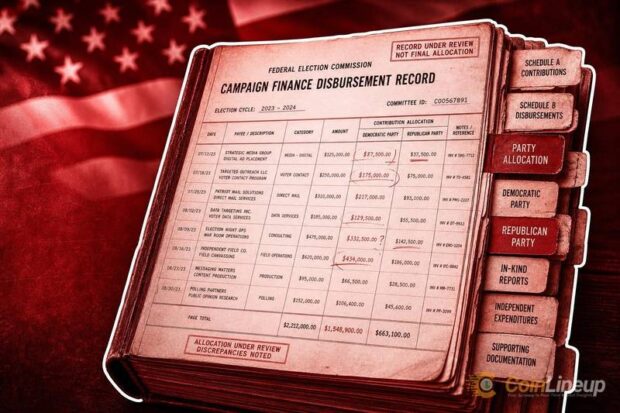
Crypto Lobbying Groups Spent 11X More on Republicans Than Democrats
A focused news outline on the claim that crypto lobbying groups spent 11 times more on Republicans than Democrats, covering the spending gap, political meaning, and market relevance.
SEC Alleges Texas Man Spent $6.2M in Investor Funds on Personal Expenses
The SEC says a Texas man raised millions for a fake AI crypto operation and diverted about $6.2 million in investor funds to personal spending. Here’s what was alleged and why it matters.
Related
CLARITY Act Reaches Senate Calendar After Committee Approval
The CLARITY Act has advanced to the Senate Calendar following committee approval, marking a key procedural step for U.S. crypto legislation and setting up the next phase to watch.

Strive Adds 2,500 BTC, Increasing Holdings to 19,000 BTC
Strive added 2,500 BTC, lifting its total Bitcoin holdings to 19,000 BTC. Here is the key context, scale of the increase, and why it matters.

Kalshi Reportedly Filed to Certify XRP, Solana and Dogecoin Perpetual Futures After Bitcoin Approval
Kalshi reportedly moved to certify XRP, Solana and Dogecoin perpetual futures after its Bitcoin-related approval. Here is what the filing could signal for crypto traders and prediction-style markets.
Failed 2016 Ethereum ICO Unlocks 1,003 ETH Through Self-Exploit
A failed 2016 Ethereum ICO has recovered 1,003 ETH through a self-exploit. Here’s what happened, how the unlock worked, and why it matters.

Bitmine Bought 26,497 ETH Last Week, Raising Holdings to 5.42M ETH
Bitmine added 26,497 ETH last week, lifting total holdings to 5.42M ETH. Here is what the latest accumulation means for Ethereum exposure and market attention.

UK Applies Sanctioned-Bank Treatment to Crypto Network Over $90B Claim
The UK has moved to treat a crypto network like a sanctioned bank after allegations it processed $90 billion tied to Russia-linked activity. Here is the core SEO outline.