The best stablecoin for enterprise payments is the one that the business can send, the recipient can receive, and the finance team can reconcile and exit. USDC is the clearest regulated settlement candidate, USDT supplies global corridor liquidity, EURC handles euro invoices, while DAI, USDS, GHO, and USDe belong in specialized flows rather than the default payment rail.
This is not a general “best stablecoins” list. It is an enterprise payment shortlist for teams deciding which token to use for invoices, supplier payouts, payroll, merchant settlement, and cross-border transfers, with a clear distinction between payment money and yield or DeFi positions.
Seven-token enterprise payment map at a glance
| Stablecoin | Payment role | Settlement advantage | Required control | Enterprise fit |
|---|---|---|---|---|
| USDC | B2B settlement, payroll, and merchant payouts | Broad institutional distribution and payment support | Issuer, wallet, compliance, redemption, and chain allowlist | Primary enterprise rail |
| USDT | Cross-border suppliers and exchange-linked payouts | Deep pairs and strong recipient familiarity | Venue, chain, sanctions, and counterparty limits | Global corridors |
| DAI | DAO grants, protocol invoices, and on-chain vendor settlement | Native settlement inside DeFi applications | Collateral, liquidation, oracle, and governance limits | Crypto-native businesses |
| USDS | Sky ecosystem payouts and programmable treasury disbursement | Direct connection to Sky payment and savings workflows | Conversion, sUSDS terms, governance, and RWA review | Sky-linked businesses |
| EURC | Euro invoices and European settlement | Avoids unnecessary EUR-USD conversion | EUR redemption, local access, and contract verification | Euro payment rail |
| GHO | Aave contributor, liquidity, and service settlement | Native use inside Aave positions | Debt ceiling, collateral market, and exit pool | Aave-linked businesses |
| USDe | Crypto-native contractor or trading-counterparty settlement | Derivatives-based carry exposure | Funding, custody, venue, and position-size limits | Specialist crypto firms |
Top 7 Stablecoins for Enterprise Payments in 2026
1. USDC (Circle): the primary enterprise settlement candidate
The July 1 reference snapshot placed USDC at approximately $73.2B. Circle’s USDC product is the strongest starting point when a reader needs a dollar balance that can move between regulated exchanges, payment systems, wallets, and major Layer-2 networks.
Circle describes a reserve built around cash and short-duration US Treasury assets, while recurring attestations give users a clearer reporting rhythm than a token that only asks them to trust a headline claim.
The important distinction is between reserve clarity and access control. USDC’s regulated distribution and availability across networks such as Ethereum, Base, Arbitrum, and Solana make it operationally convenient, but Circle and service providers can restrict addresses or accounts. The 2023 banking stress also showed that reserve custody connects a digital dollar to the traditional banking system.
For B2B invoices, payroll, merchant settlement, and mainstream custody, that compromise is usually easier to manage than protocol liquidation risk. The custody question also appears in CoinLineup’s report on native stablecoin support in Samsung Wallet.
Before using it, check reserve-bank exposure, issuer controls, redemption eligibility, and jurisdictional access. USDC is a poor fit when the user needs a bearer asset that cannot be frozen by an issuer or intermediary.
2. USDT (Tether): the global corridor rail
At roughly $184.5B in the July 1 snapshot, USDT wins when the reader’s first constraint is execution. Tether Limited remains the issuer behind a large share of centralized spot and derivatives trading.
Its presence on Tron also makes it familiar for peer-to-peer transfers and remittance corridors. That scale changes the meaning of “best”: USDT may offer the deepest book and the easiest recipient match even when USDC offers a more comfortable disclosure profile.
Tether reports Treasury bills and cash equivalents and publishes attestations, but the reporting scope and issuer concentration deserve separate scrutiny instead of being inferred from market cap. Deep trading volume reduces execution friction; it does not answer the reserve-disclosure question.
Use USDT for supplier payouts, contractor payments, remittances, and exchange-linked settlement where the recipient already specifies USDT and the exact network. The regional liquidity and compliance trade-off is visible in CoinLineup’s report on OKX’s USDT-to-USDC route in Europe.
Before moving a large balance, verify the chain, withdrawal route, venue depth, and current access conditions. A liquid token on the wrong network is still an operational failure.
3. DAI (Sky Protocol): a specialist DeFi payment balance
DAI was about $5.36B in the July 1 snapshot. It is relevant to enterprise payments when the payer and recipient already operate inside the same DeFi or DAO economy.
Sky Protocol, formerly MakerDAO, still makes DAI relevant when the asset must plug into lending markets, vaults, AMMs, and collateralized positions.
Its design shifts the trust question away from one bank reserve and toward overcollateralization, governance, oracles, liquidation engines, and real-world-asset exposure. That gives DeFi users more visible protocol mechanics, but it also means a stable price does not remove the need to understand collateral ratios and emergency decisions.
DAI is therefore a strong tool for lending, borrowing, liquidity pools, and protocol treasuries. It is a poor “set and forget” payment balance for someone who cannot monitor liquidation conditions or explain what happens when collateral quality deteriorates. CoinLineup’s direct DeFi stablecoin comparison goes deeper into the protocol-specific trade-offs.
4. USDS (Sky): protocol-linked settlement with a savings layer
Sky’s USDS was approximately $10.0B in the July 28 snapshot. For enterprise payments, its strongest case is a business already operating inside Sky that wants to pay contributors, service providers, or treasury-linked counterparties in the same ecosystem.
Sky Protocol connects the token to the current savings and vault experience that many readers still know through DAI and MakerDAO.
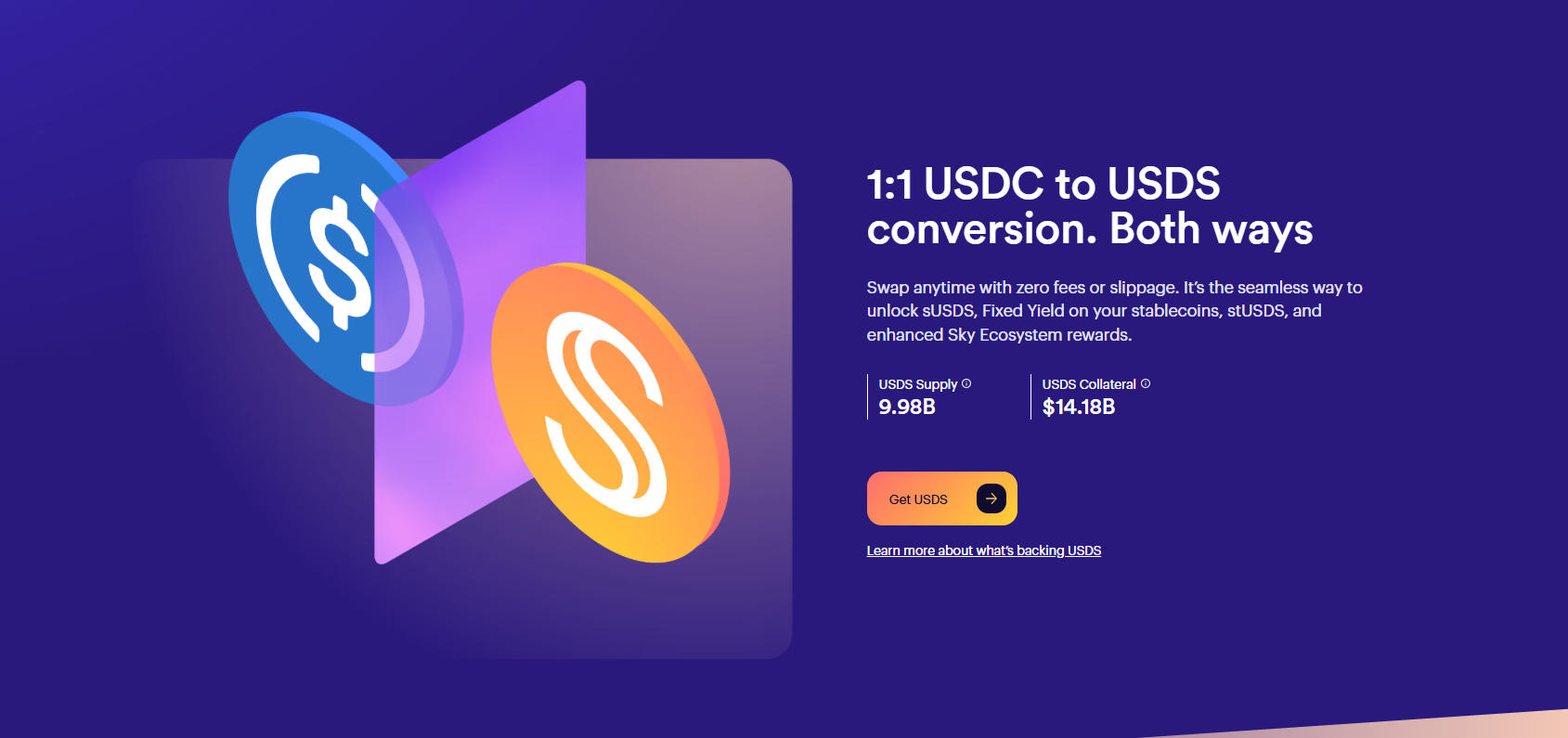
The decision is operational: does the user’s lending market, wallet, exchange, and collateral route support USDS natively? A protocol may accept DAI but assign different liquidity, incentives, or collateral treatment to USDS. A successful conversion does not prove that the destination asset has the same exit or collateral properties.
USDS can support programmable Sky-linked disbursements, but the payment policy must separate the transfer asset from any sUSDS savings position. Conversion terms, governance, smart-contract implementation, and real-world-asset exposure can change the recipient’s actual exit value, so USDS is best for counterparties that understand the Sky workflow rather than ordinary payroll recipients.
5. EURC (Circle): the euro invoice and payout rail
EURC was approximately $433M in CoinGecko’s July 26 historical data. Its smaller footprint is not automatically a flaw when the liability is in euros, but it does make exit liquidity and recipient support more important than a generic market-cap comparison.
Circle’s EURC can settle a euro liability without forcing the user through an unnecessary USD conversion.
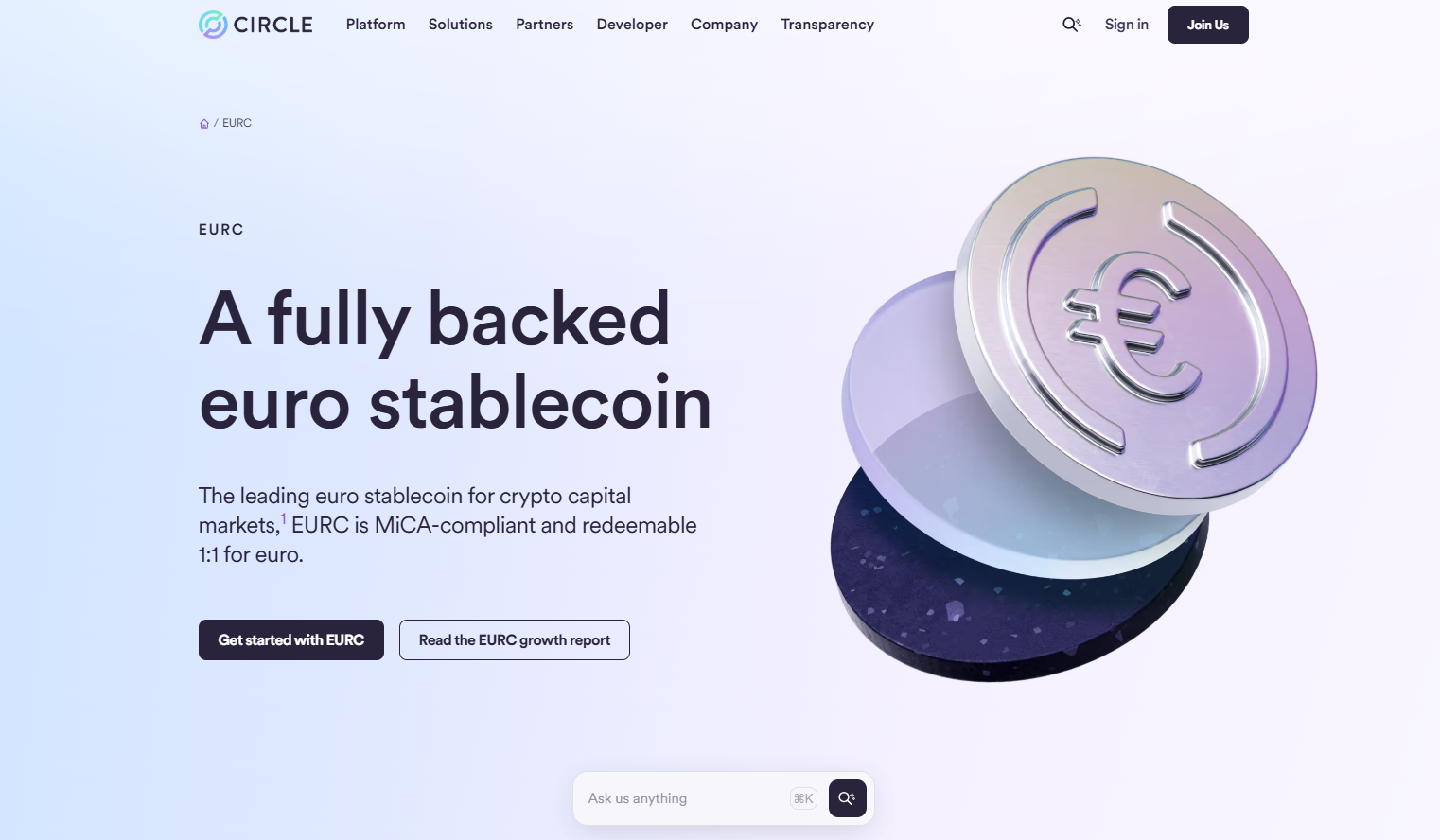
For a European invoice, treasury balance, or EUR-denominated settlement, denomination is the first filter and trading size is the second. The failure mode is a mismatch between the euro liability and the actual contract, chain, local on-ramp, SEPA exit, or redemption jurisdiction.
The practical check is whether the recipient accepts the same contract and chain, whether the local on-ramp or SEPA exit works, and whether the holder can access Circle’s redemption route in the relevant jurisdiction. For the European compliance context, see CoinLineup’s report on crypto firms entering the ESMA MiCA register.
6. GHO (Aave): useful only inside an Aave payment workflow
GHO was approximately $648M in DefiLlama’s late-July reading, so its enterprise payment role is based on Aave-native utility rather than global market-cap scale. It can make sense for Aave contributors, liquidity providers, and service vendors that already hold or settle positions inside Aave.
Aave’s GHO is designed for borrowing, supplying, and managing liquidity inside the Aave environment.
Its value is the protocol connection, not broad exchange ubiquity. That makes GHO’s key risk the Aave parameter set: debt ceilings, collateral support, liquidation thresholds, savings or staking routes, and the liquidity of the pool used to exit.
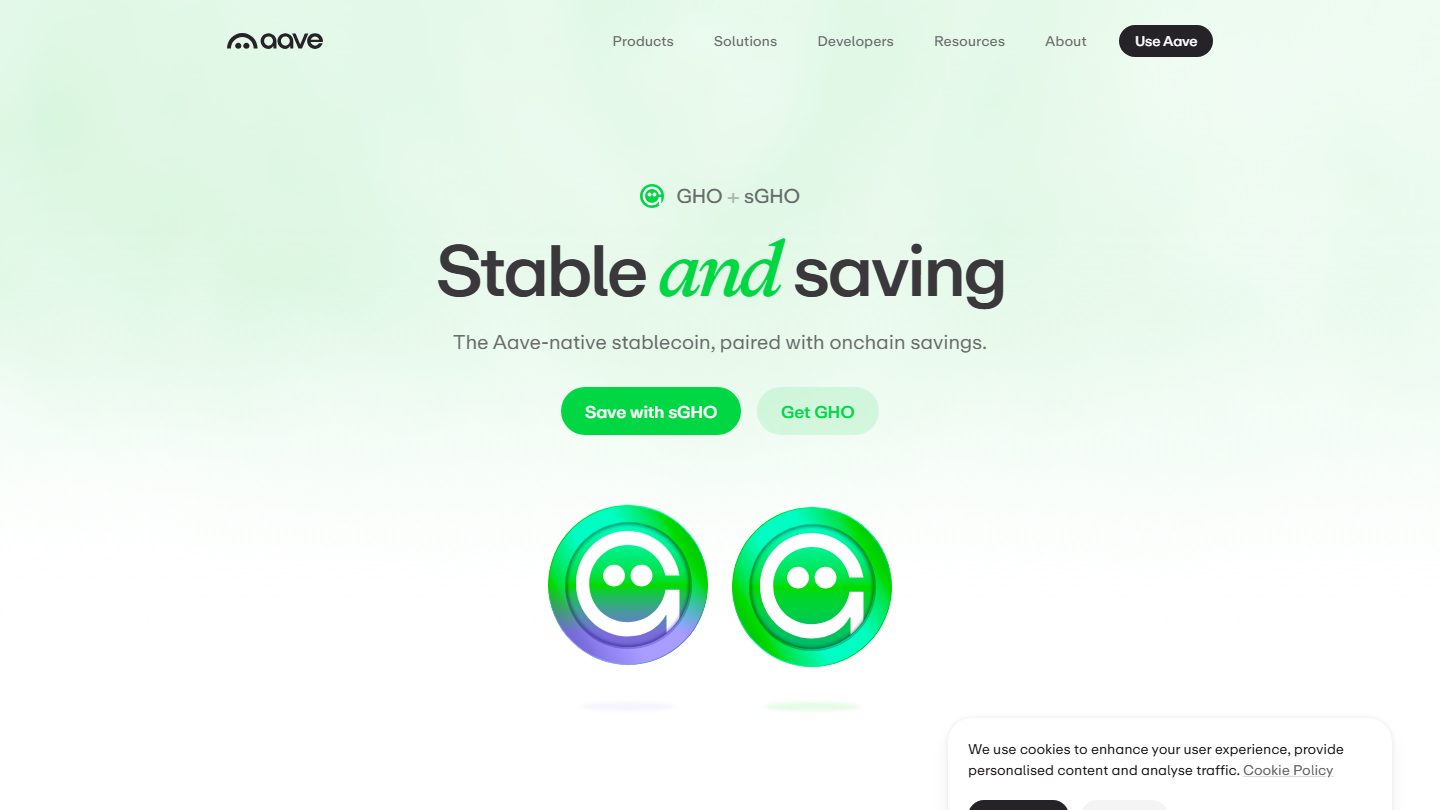
Before approving GHO for a payment flow, review the applicable debt ceiling, collateral support, liquidation threshold, savings or staking route, and the depth of the pool used to exit. If the recipient does not already use Aave, USDC, USDT, or EURC will usually create a simpler invoice, payroll, or payout workflow.
GHO is most useful when the payment itself settles an Aave-native obligation. It is a poor default for general vendors because protocol-native issuance does not guarantee the recipient an easy fiat or exchange exit.
7. USDe (Ethena): not a default payment balance
USDe stood near $4.44B in the July 1 snapshot. Its only credible enterprise payment use case is a crypto-native firm settling with a contractor, trading counterparty, or service provider that explicitly accepts a synthetic dollar.
Ethena’s product uses spot crypto exposure alongside short perpetual-futures positions to target a delta-neutral profile.

Funding income and staking rewards support the sUSDe yield thesis, but the mechanism is the reason to consider USDe and the reason not to treat it like cash. Its stability depends on a hedge that must remain executable across exchanges, custodians, and derivatives markets.
The result depends on derivatives liquidity, funding rates, exchange counterparties, custodians, and the system’s ability to rebalance during a sharp market move. A quoted yield cannot be separated from those dependencies.
USDe can work for a specialist crypto firm that has approved the derivative exposure and can reconcile the hedge, funding, custody, and settlement route. It should not be used for ordinary payroll, supplier invoices, or customer refunds where the recipient needs a predictable cash-equivalent redemption path.
Enterprise payment control matrix
The enterprise payment decision is not just which token is cheapest to transfer. The finance team must match the asset to the payment route: core settlement, regional liquidity, DeFi working capital, euro invoices, or a separately approved yield-linked flow. Each route needs a different owner, limit, reconciliation method, and exit procedure.
| Token | Enterprise payment role | Yield or carry profile | Main control owner | Approval question |
|---|---|---|---|---|
| USDC | Core B2B settlement and payouts | No default holder yield | Payments, treasury, and compliance | Can the issuer, chain, and redemption route be approved? |
| USDT | Cross-border supplier and exchange payouts | No default holder yield | Payments and regional operations | Is the corridor liquid and the chain explicitly controlled? |
| USDS | Sky-linked settlement or savings flow | Sky Savings Rate via sUSDS | Payments risk and protocol owner | Is the savings component allowed in this flow? |
| DAI | DeFi-native invoice or working-capital flow | Protocol-specific savings or lending | DeFi operations and risk | Are collateral and liquidation limits documented? |
| EURC | Euro invoices and European payouts | No default holder yield | Regional finance and compliance | Can the business redeem or exit in euros? |
| GHO | Aave-native settlement or borrowing | Savings or staking terms can change | DeFi payments operations | Is the Aave position necessary for the payment? |
| USDe | Yield-linked transfer or treasury allocation | Funding and staking yield through sUSDe | Investment committee and treasury risk | Is derivatives exposure separately approved? |
The table separates payment money from yield and protocol exposure. USDC, USDT, and EURC can serve enterprise settlement roles when the issuer, chain, jurisdiction, recipient support, and redemption path are approved. DAI, USDS, and GHO need a DeFi-specific payment policy, while USDe belongs behind an investment limit because its return depends on derivatives funding and hedge execution.
Yield should be governed separately from enterprise settlement. USDe depends on derivatives funding, exchange access, custody, and hedge execution, while sUSDS depends on Sky’s governance and collateral system. A finance team can approve either for a defined strategy, but should not let a quoted return silently turn payment money into an investment position. CoinLineup’s report on staking yield in crypto products provides a useful adjacent example of why return source matters.
Conclusion
For enterprise payments, USDC is the clearest core settlement candidate, USDT is strongest where counterparties already use it, and EURC is the natural fit for euro invoices and payouts. DAI, USDS, and GHO need a documented DeFi payment purpose, while USDe should be treated as a separately governed yield allocation rather than payment money.
Use this as an enterprise payment framework, not a permanent league table. Recheck contracts, chains, recipient support, liquidity, custody, accounting treatment, issuer terms, and redemption conditions before adding a token to a payment wallet or changing its approved route.
Frequently asked questions
Which stablecoin is the strongest core payment candidate?
USDC is usually the clearest starting point for regulated B2B settlement and enterprise payouts, provided the company approves Circle’s issuer controls, custody model, supported chains, recipient workflow, and redemption route.
Should an enterprise payment team support USDT and USDC together?
Often, yes, when the business serves corridors where USDT has deeper liquidity but also needs USDC for regulated venues or institutional counterparties. The payment policy should define which token is used for which corridor instead of treating them as interchangeable inventory.
Should yield-bearing stablecoins be used for enterprise payments?
Usually no. USDS and USDe add savings, governance, funding, derivatives, custody, or smart-contract dependencies and should sit outside the default payment rail unless a specific flow has been approved.