Ethereum is the second-largest blockchain by market cap and the largest smart contract platform. If Bitcoin is digital money, Ethereum is a global programmable computer — a network where developers can deploy applications that run exactly as written without any central authority controlling them.
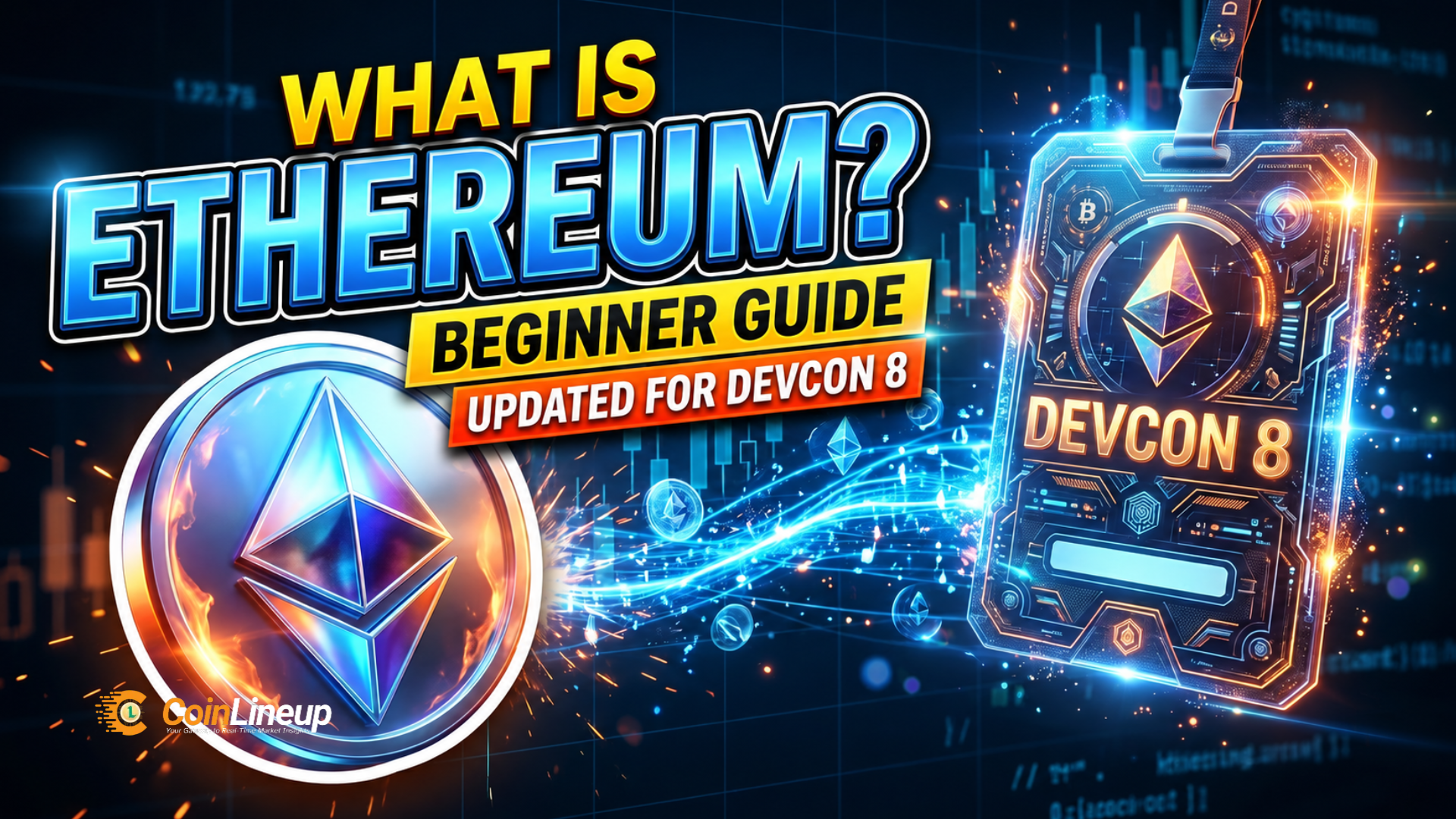
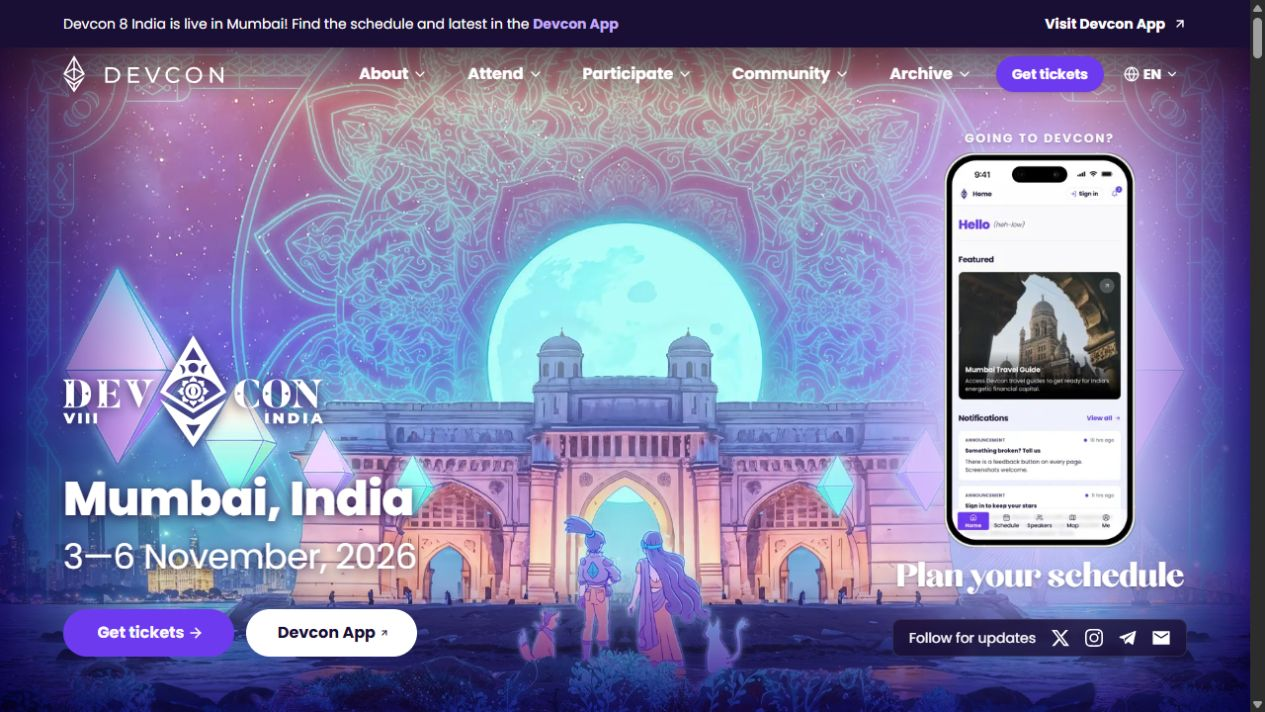
Devcon 8, Ethereum’s annual developer conference, runs November 3–6, 2026 in Mumbai. Every year it refreshes the Ethereum conversation and attracts new users to the ecosystem. This guide explains what Ethereum is for someone new to it in 2026.
What is Ethereum in plain English?
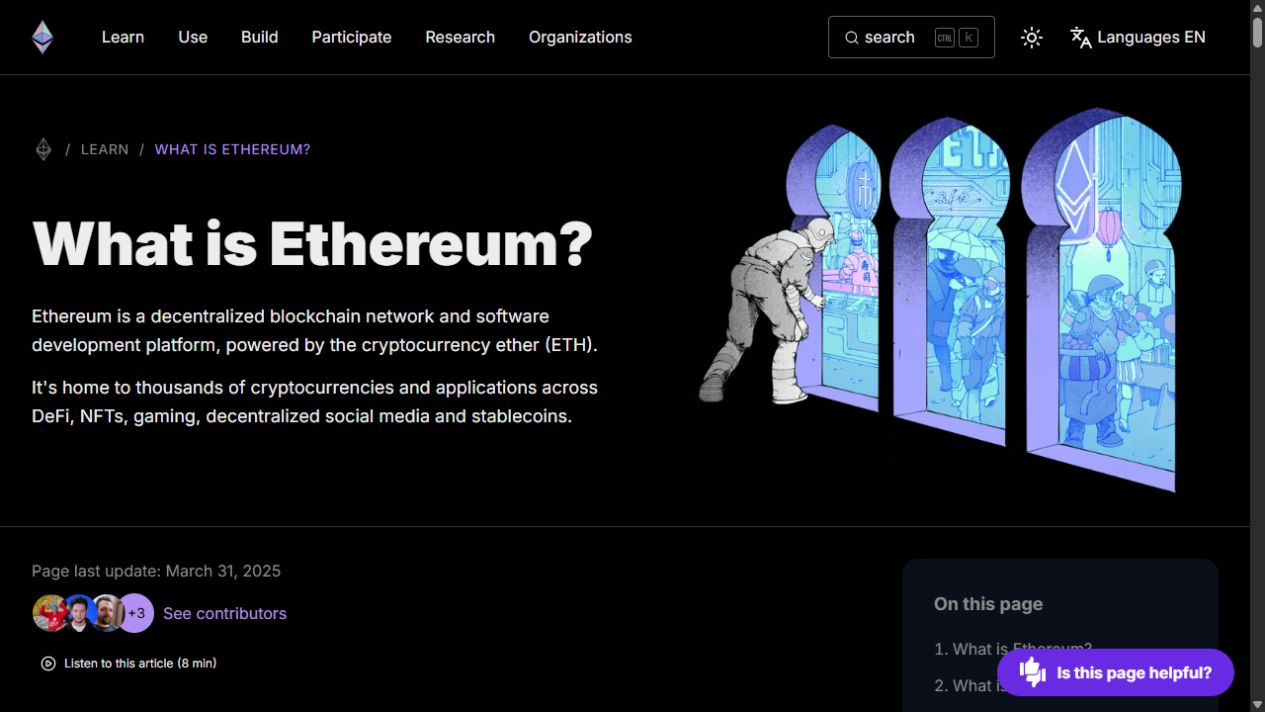
Ethereum is a decentralized blockchain network with its own currency (ETH) and a platform for running programs called smart contracts. Unlike Bitcoin, which is primarily a store of value and payment network, Ethereum was designed from the start to be programmable.
Smart contracts are programs stored on the Ethereum blockchain. When you use a DeFi application like Uniswap to swap tokens, you are interacting with a smart contract. The contract automatically executes the swap without requiring a bank, broker, or any intermediary. No one can stop it or modify it once deployed.
ETH (Ether) is the fuel that powers Ethereum. Every transaction on Ethereum costs ETH in the form of “gas fees.” ETH is also used as collateral in DeFi, as a store of value, and as staking collateral to secure the network.
How Ethereum differs from Bitcoin
| Feature | Bitcoin | Ethereum |
|---|---|---|
| Primary use | Digital money, store of value | Programmable platform |
| Supply | Capped at 21 million | No hard cap (net deflationary via burn) |
| Consensus | Proof of Work | Proof of Stake (since 2022) |
| Smart contracts | Limited (via Taproot) | Full programmability |
| Transaction speed | ~7 TPS (L1) | ~30 TPS (L1), unlimited via L2 |
| Energy use | High (mining) | Low (staking, ~0.01% of pre-merge energy) |
Bitcoin is simpler, older, and more conservative. Ethereum is more complex and more capable. Most DeFi, NFTs, stablecoins, and blockchain gaming runs on Ethereum or Ethereum-compatible networks.
What Devcon 8 means for Ethereum beginners
Devcon 8 in Mumbai (November 3–6, 2026) is Ethereum’s annual developer conference. You do not need to attend or follow Devcon to use Ethereum, but understanding what it is helps you evaluate the “why is Ethereum in the news” headlines that appear each November.
Devcon is where Ethereum’s core developers present technical roadmap updates. For 2026, the main topics include:
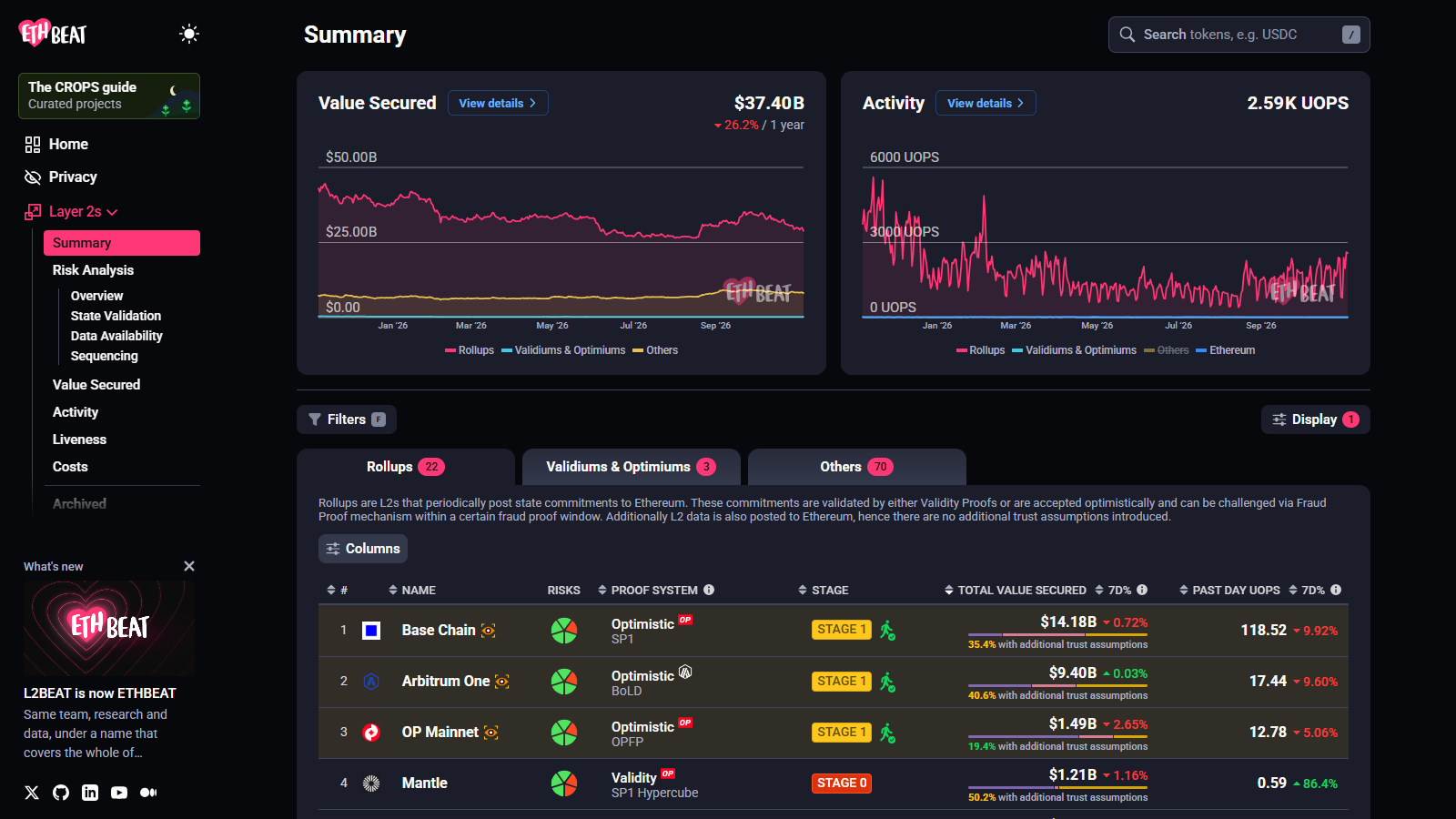
- Layer 2 scaling progress — how Ethereum handles more transactions cheaply via networks like Arbitrum and Base
- Verifiable AI execution — how Ethereum can be used to verify AI outputs cryptographically
- Based rollup prototypes — a more decentralized design for L2 networks
For a beginner, the practical takeaway from Devcon 8 is that Ethereum is actively developed and improving. The platform you use in 2027 will be faster and cheaper than the one from 2022.
How to buy and hold Ethereum safely in 2026
Step 1 — Choose an exchange. For beginners, Coinbase, Kraken, or a local regulated exchange is the safest starting point. These exchanges have customer support, fiat on-ramps, and insurance on custodied funds.
Step 2 — Buy ETH. Purchase ETH with your local currency. You do not need to buy a whole ETH — purchases as small as $10 are possible.
Step 3 — Decide on storage. For small amounts, keeping ETH on a reputable exchange is acceptable. For larger amounts ($1,000+), moving to a self-custody wallet (MetaMask for software, Ledger/Trezor for hardware) removes exchange counterparty risk.
Step 4 — Consider staking. ETH holders can earn approximately 3.5–4% annual yield by staking. Liquid staking via Lido or Rocket Pool allows you to stake without a 32 ETH minimum or technical setup. Coinbase also offers staking directly on their platform.
Ethereum scams to avoid in 2026
Fake Devcon giveaways. Around every major Ethereum event, scammers create fake “send 1 ETH, receive 2 ETH” giveaway campaigns. Ethereum developers and the Ethereum Foundation never run ETH giveaways. Ignore any social media post promising free ETH in exchange for sending ETH first.
Phishing wallet sites. Fake MetaMask, Coinbase Wallet, and Ledger Live websites appear in search results. Always download wallets from the official domain and verify the URL carefully.
Seed phrase requests. No legitimate service ever needs your 12 or 24-word seed phrase. Anyone asking for it is attempting theft.
Unverified DeFi protocols. Before depositing ETH into any DeFi protocol, check that the smart contract has been audited by a reputable security firm and has been running without incidents for at least 6–12 months.
FAQ
Is Ethereum a good investment for beginners in 2026?
ETH is a high-risk asset. Its value has historically been volatile — significant gains and losses within single years are normal. Beginners should only invest what they can afford to lose entirely and should understand what they are buying before purchasing.
What is the difference between Ethereum and ETH?
Ethereum is the network (the blockchain). ETH (also called Ether) is the currency that runs on it. When people say “I own Ethereum,” they typically mean they own ETH tokens.
What is an Ethereum Layer 2?
Layer 2 networks (like Arbitrum, Base, and Optimism) are built on top of Ethereum and process transactions much more cheaply and quickly. Most DeFi activity in 2026 happens on L2s, not directly on Ethereum’s main chain.
Do I need ETH to use Ethereum applications?
Yes. Every on-chain transaction requires ETH for gas fees. When using L2 networks like Base or Arbitrum, the fees are very small (often $0.01–$0.05), but ETH is still required.
What happened at Devcon 8?
Devcon 8 runs November 3–6 in Mumbai. Check ethereum.org for official recaps after the event.
Disclaimer: This article is for informational purposes only and does not constitute financial or investment advice. Cryptocurrency and digital asset markets carry significant risk. Always do your own research before making decisions.