USDC is a dollar-denominated token issued by regulated Circle affiliates. Its one-dollar target depends on liquid reserve assets, an institutional mint-and-redeem channel, and active secondary markets on every blockchain where the token trades.
It is not an insured bank deposit or a decentralized dollar. Circle controls issuance, redemption, and contract-level restrictions, while direct Circle Mint access is generally institutional. CoinLineup’s stablecoin fundamentals explain how the peg, reserves, and redemption route differ.
USDC Scale and Adoption in 2026
USDC’s scale is better measured with a completed reporting period than a live supply figure that changes after publication. Circle’s Q1 2026 results recorded $77.0 billion in circulation at March 31 and $21.5 trillion of quarterly onchain volume, up 28% and 263% year over year, respectively.
The gap between the outstanding balance and transaction volume shows that the same USDC can move repeatedly through exchanges, wallets, payment systems, and DeFi. It does not mean $21.5 trillion of new dollars entered USDC or that every transfer represented a completed purchase. Circle also reported that USDC accounted for 63% of stablecoin transaction volume during the quarter, citing Visa Onchain Analytics.
Adoption also extended beyond token transfers. Circle Payments Network reached $8.3 billion in annualized transaction volume based on the 30 days ending March 31, 2026, while Kyriba began embedding USDC into enterprise treasury workflows. Polymarket also advanced its use of USDC as collateral and the settlement asset for its markets.
These quarter-end figures establish scale without presenting a changing daily balance as permanent. Network availability, circulating supply, and wallet distribution remain live variables; readers should use Circle’s current USDC page when choosing a chain or checking present supply.
How USDC works: reserves, minting, transfers, and redemption
USDC turns eligible customer dollars into a transferable blockchain token and reverses that process during redemption. Circle manages the reserve and primary channel, blockchains record ownership, and exchanges or DeFi pools provide most retail liquidity.
- Reserve: Cash and highly liquid assets back circulating USDC. This layer depends on Circle, reserve banks, and the fund custodian.
- Primary issuance: An approved Circle Mint customer deposits fiat and receives USDC. Access depends on customer eligibility and completed bank settlement.
- Onchain transfer: USDC moves through its canonical contract on one network. Completion depends on blockchain finality and recipient support for that network.
- Cross-chain transfer: CCTP burns USDC on the source chain and mints it on the destination. Both the source burn and destination mint must complete after Circle attestation.
- Secondary-market exit: A holder sells USDC through an exchange or liquidity pool. The result depends on available depth, executable price, and a working withdrawal route.
- Direct redemption: An eligible customer returns USDC to Circle for fiat. Access depends on the Circle account, linked bank account, and supported jurisdiction.
When USDC trades below $1, eligible market makers can buy it at a discount and redeem it with Circle for dollars. Their buying pressure reduces the discount. Above $1, they can mint USDC at par and sell into the premium. This mechanism works only while redemption, banking, and market liquidity remain available.
What backs USDC reserves
USDC is backed through a reserve structure built for dollar redemption, not through crypto collateral or an algorithmic supply rule. Circle places most reserve assets in the Circle Reserve Fund and keeps the remainder as bank deposits needed for fiat settlement.
| Reserve layer | Assets used | Role in the redemption system | Main dependency |
|---|---|---|---|
| Circle Reserve Fund | Cash, short-dated US Treasuries, and overnight Treasury repurchase agreements | Holds liquid assets that can be converted to cash for redemptions | Fund custody, Treasury-market liquidity, and settlement timing |
| Bank deposits | US dollar deposits at banking partners | Receives mint payments and funds fiat redemptions | Bank access, transfer cutoffs, and institutional concentration |
| Disclosure and assurance | Weekly holdings disclosure and monthly third-party assurance reports | Compares reported reserve assets with USDC in circulation at a stated date | An assurance report is retrospective and does not guarantee immediate market liquidity |
The Circle transparency portal publishes the changing balances separately from this structural explanation. Readers can check the latest reserve mix there without making this article depend on a daily snapshot.
The structure explains what supports redemption, but it does not make every holder a direct Circle customer. Eligibility, banking hours, intermediary access, and secondary-market depth can still affect how quickly USDC converts back to dollars.
How USDC minting and redemption work
Circle mints USDC after an eligible Circle Mint customer deposits supported fiat. Redemption reverses the flow: USDC is removed from circulation and fiat is sent to an approved bank account. Minting increases the token liability; redemption reduces it.
Retail holders normally buy or sell through an exchange, wallet, payment app, or DeFi venue because Circle Mint is institution-focused. Holding USDC therefore does not automatically give an individual the same direct redemption route as a verified institutional customer.
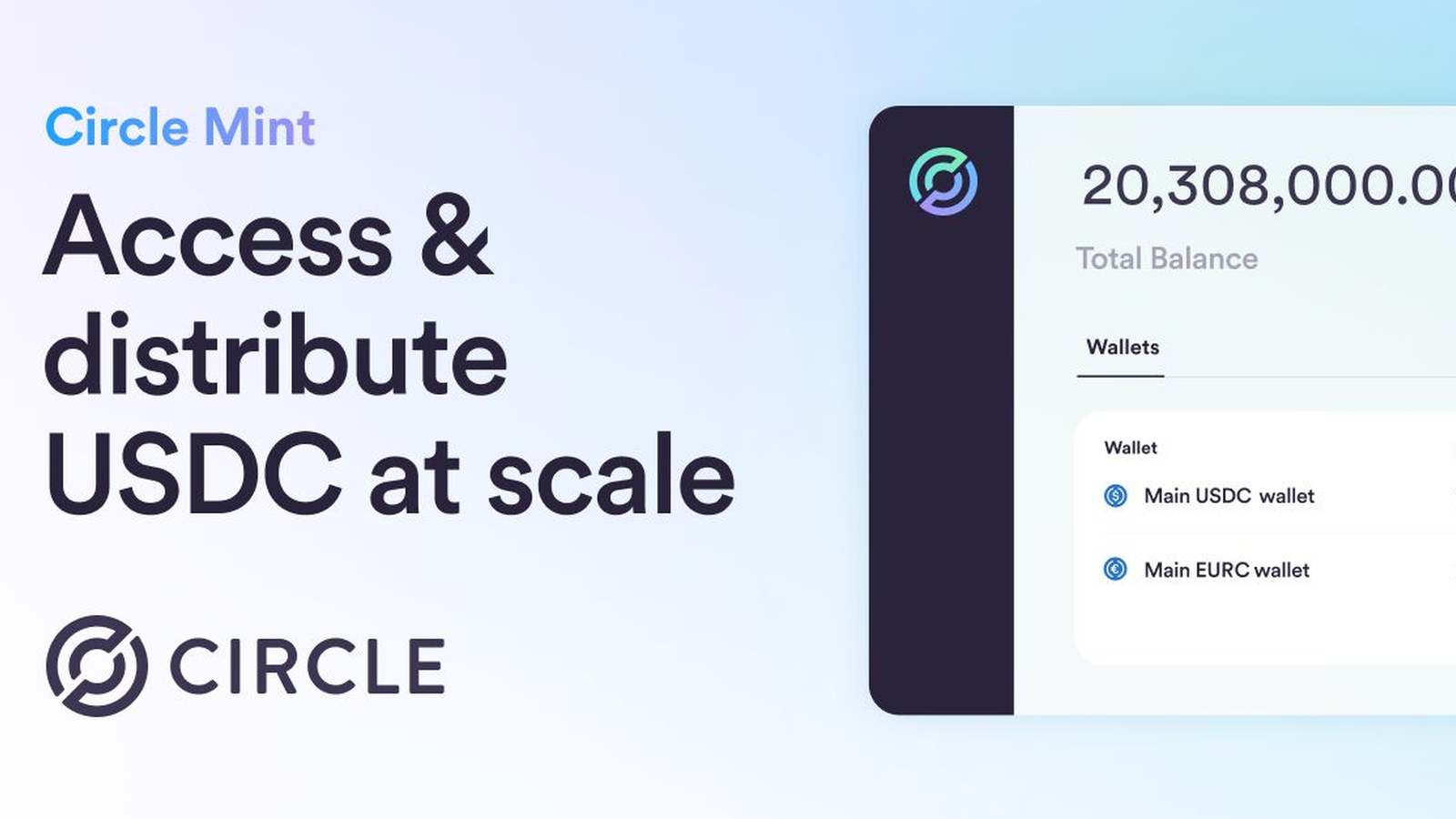
Jurisdiction changes the route. Circle says MiCAR-compliant redemptions may cover holders without Circle Mint accounts, while most individuals still use exchanges, neobanks, wallets, or on/off-ramps. The counterparty and procedure depend on eligibility and location.
| User action | Token supply effect | Main counterparty | Operational check |
|---|---|---|---|
| Buy USDC from another trader | No necessary change | Exchange or market maker | Price, withdrawal status, chain |
| Receive USDC as payment | No necessary change | Sender and wallet provider | Contract address, finality, sanctions screening |
| Circle Mint issuance | Supply increases | Circle and approved bank | Fiat receipt, mint network, customer eligibility |
| Circle redemption | Supply decreases | Circle and approved bank | Redemption request, burn, bank settlement |
| CCTP transfer | Total supply should remain neutral after both legs | Circle contracts and relayer/front end | Source burn and destination mint |
A large mint does not prove immediate market buying because tokens may enter issuer-controlled inventory first. A burn does not prove fiat redemption when another chain records a matching mint. CoinLineup’s report on a $1 billion weekly USDC supply decline illustrates that distinction.
Which blockchains support native USDC
Circle issues native USDC across Ethereum and its L2 ecosystem, Solana and Sui, Stellar and XRP Ledger, and other supported networks. Check the live Circle network list before choosing a transfer route because availability can change after publication.
USDC is not operationally interchangeable across those networks. Deposits, CCTP routes, liquidity, and off-ramps vary by chain; Ethereum’s stablecoin concentration gives its native USDC deeper infrastructure than many newer networks.
Native USDC versus bridged USDC
Native USDC uses Circle’s canonical contract. Bridged USDC depends on a third-party bridge and tokens locked elsewhere. Circle’s native-versus-bridged guidance confirms that bridged versions are not issued directly by Circle.
| Version | Direct issuer | Backing path | Check before transfer |
|---|---|---|---|
| Native USDC | Circle | Circle reserves and eligible redemption channel | Canonical contract and supported network |
| Bridged USDC or USDC.e | Bridge provider | Claim on USDC locked or routed elsewhere | Bridge issuer, contract, liquidity, and migration path |
How CCTP moves native USDC across chains
Circle’s Cross-Chain Transfer Protocol burns native USDC on the source chain and mints native USDC on the destination after message attestation. It avoids a third-party wrapped claim, but the burn and mint remain separate steps.
A July 2026 first-hand CCTP incident involved 1,743 USDC moving from Arbitrum to Base. The burn confirmed, but the relayer missed the mint; the user completed it after message attestation. This is one recoverable failure, not a universal remedy.
The transfer is complete only after the destination mint appears. A frontend status cannot replace the source transaction, Circle message status, and destination transaction.
USDC depeg history: the March 2023 SVB shock
USDC depegged after Silicon Valley Bank failed in March 2023, with $3.3 billion of reserve cash held there. A Federal Reserve study placed the trough near $0.86 and hourly secondary-market volume near $2 billion on March 11. The trigger was uncertain bank access, not a token-contract failure.
The Federal Reserve, Treasury, and FDIC protected SVB depositors, after which Circle said the depeg had closed. By March 15, Circle reported $3.8 billion of redemptions and $0.8 billion of minting. Cash reserves still carried access and concentration risk.
USDC compared with USDT, PYUSD, and USDS
USDC combines a narrow reserve portfolio with broad native-chain support. USDT offers deeper exchange reach, PYUSD connects directly to PayPal distribution, and USDS serves Sky’s onchain credit system.
| Stablecoin | Backing and control | Strongest practical fit | Main trade-off versus USDC |
|---|---|---|---|
| USDC | Circle-held cash, Treasury repos, and short Treasuries | Regulated payments, multichain settlement, institutional treasury | Centralized issuer and banking dependencies |
| USDT | Tether reserve portfolio with a broader asset mix | Global exchange liquidity and high-volume trading pairs | Less reserve simplicity and narrower direct-redemption access |
| PYUSD | Paxos-held cash equivalents and short Treasuries | PayPal and Venmo payment flows | Smaller market and chain footprint |
| USDS | Sky protocol collateral, governance, and conversion facilities | Sky-native savings, borrowing, and DeFi | Smart-contract, collateral, and governance exposure |
- USDT (reserve simplicity versus market reach): USDC uses a narrower reserve model than the portfolio shown on Tether’s transparency dashboard. USDT leads in exchange reach; USDC is simpler when reserve composition and regulated settlement matter.
- PYUSD (network reach versus payment distribution): USDC has wider chain and market coverage. PYUSD gains PayPal and Venmo distribution, while the Paxos transparency portal publishes its reports and attestations. PYUSD remains less useful where venues require USDC liquidity.
- USDS (issuer reserves versus protocol collateral): USDC relies on Circle’s issuer and banking structure. Sky describes USDS as protocol-issued and connected to collateral, governance, savings, and borrowing. Its risks shift toward collateral, smart contracts, and governance.
Where USDC is used in practice
USDC is most useful when the sender, recipient, venue, and cash-out route already support the same native token and blockchain. USDC does not generate yield itself. Exchange rewards and DeFi returns introduce separate counterparty or smart-contract exposure.
| Use case | Practical example | What still has to work |
|---|---|---|
| Cross-border settlement | Thunes used USDC to shorten funding windows from T+2 to T+0 in some markets and keep liquidity available outside bank hours. | Recipient network, compliance screening, local off-ramp, and FX conversion |
| Remittances | Félix routes US-to-Mexico transfers through USDC on Stellar, then converts it to Mexican pesos through Bitso. | Correct chain, exchange liquidity, peso payout, and recipient details |
| Dollar exposure | Nubank offers USDC in Brazil, where customers can buy a dollar-denominated asset without opening a US bank account. | Wallet or platform custody, local tax treatment, and BRL exit price |
| Business invoices | Acctual reported USDC invoices across more than 100 countries, giving businesses a crypto-to-fiat accounting and settlement route. | Invoice reconciliation, accounting records, recipient acceptance, and bank conversion |
| Trading and DeFi collateral | Traders use USDC as a quote asset, lending asset, or collateral where supported markets have sufficient depth. | Venue custody, liquidation rules, oracle quality, smart contracts, and executable liquidity |
USDC risks: issuer control, chain support, and market exits
Circle can mint and burn USDC and restrict specified addresses. A holder therefore depends on Circle’s legal controls as well as the selected contract, blockchain, wallet, and exit venue.
Retail holders without Circle Mint must rely on an exchange or off-ramp to reach fiat. Bridge failures, contract exploits, suspended withdrawals, or bank disruption can block that exit even while USDC remains fully reserved.
Conclusion
USDC is a regulated Circle liability backed mainly by cash, short Treasuries, and Treasury repos. It operates across multiple native networks, but its one-dollar value still depends on reserve access, redemption, and secondary-market liquidity.
The March 2023 depeg showed that delayed access to reserve cash can break the market peg temporarily. Native contracts and completed CCTP mints reduce token-version risk, but they do not remove Circle, banking, exchange, or blockchain dependencies.
Frequently asked questions
Is every USDC token redeemable directly with Circle?
No. Direct Circle Mint access is generally limited to eligible institutions and jurisdictional conditions apply. Retail users normally exit through an intermediary, making its liquidity, fees, and withdrawal availability part of the redemption route.
Is USDC on every supported chain the same asset?
Native contracts, exchange support, fees, finality, and liquidity differ by chain. A third-party wrapped token is a separate claim and should not be assumed to carry Circle redemption support.
Does CCTP remove bridge risk?
CCTP replaces pooled wrapped assets with a source burn and destination mint. It does not remove frontend, relayer, finality, gas, integration, or address risk, so both legs require verification.